Why This Fails Locally
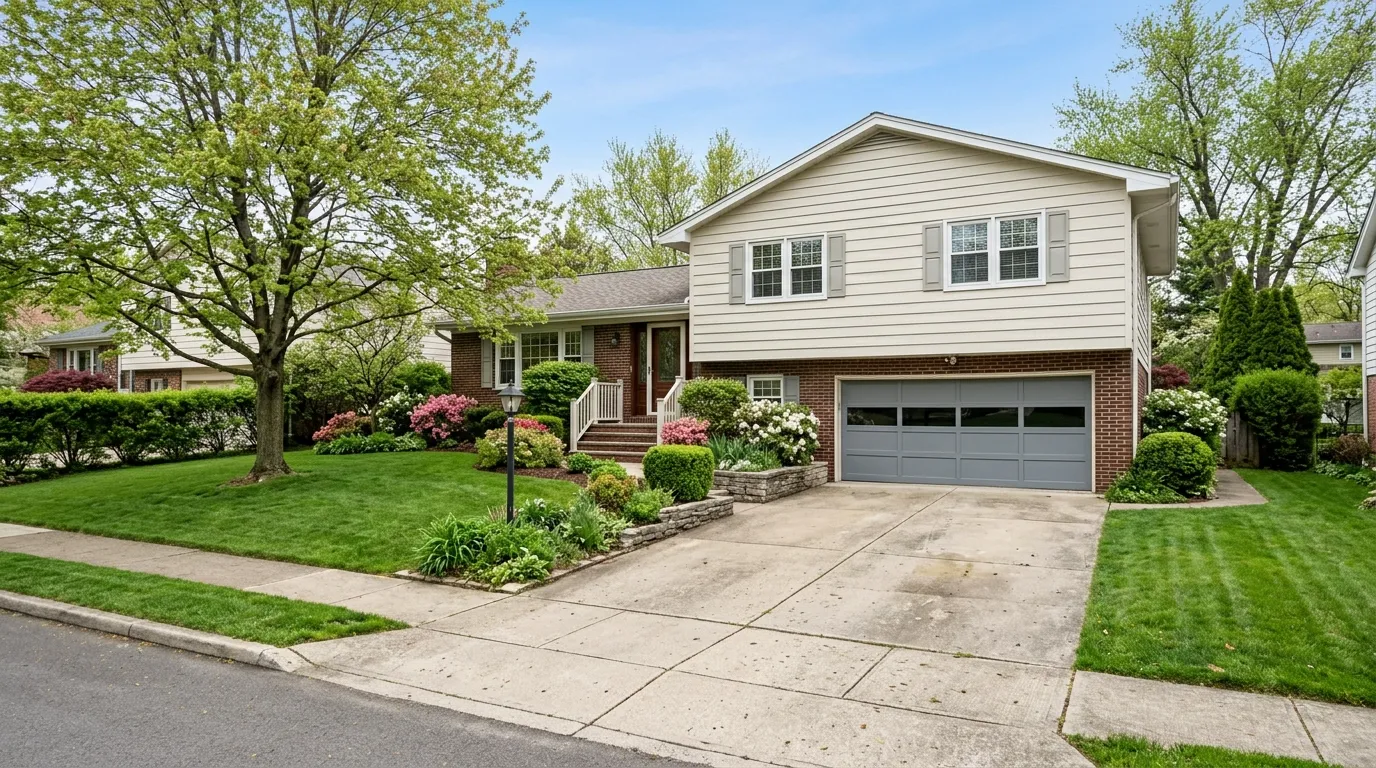
Shelley sits at a median household income of $63,864, and that number decides more repair calls than people think. On a torsion spring job, a straight fix usually lands well under what a full door replacement runs, and at this income level that gap matters. Most Shelley houses were built around 1976, which puts them square in the era of single torsion springs on steel doors that were never engineered for today's insulated panel weight if an owner upgraded the door later without upgrading the spring to match. That mismatch is common here because it's a working-class stretch of Idaho Falls's service area, not a newer subdivision.
The fault pattern follows the build date. A spring rated for a 1976-era hollow door starts working harder the day someone swaps in a heavier insulated replacement panel, and it fails years sooner than it should. We see that combination often enough here that it's worth checking the spring rating against the door weight before assuming the spring itself is just old and tired. Sometimes it is. Sometimes it was undersized from the start.
If your door is original to a house from that mid-1970s wave, the spring has likely already been replaced once. If it hasn't, it's overdue, and a snap on a cold morning is the way you'll find out.
Doing It Yourself
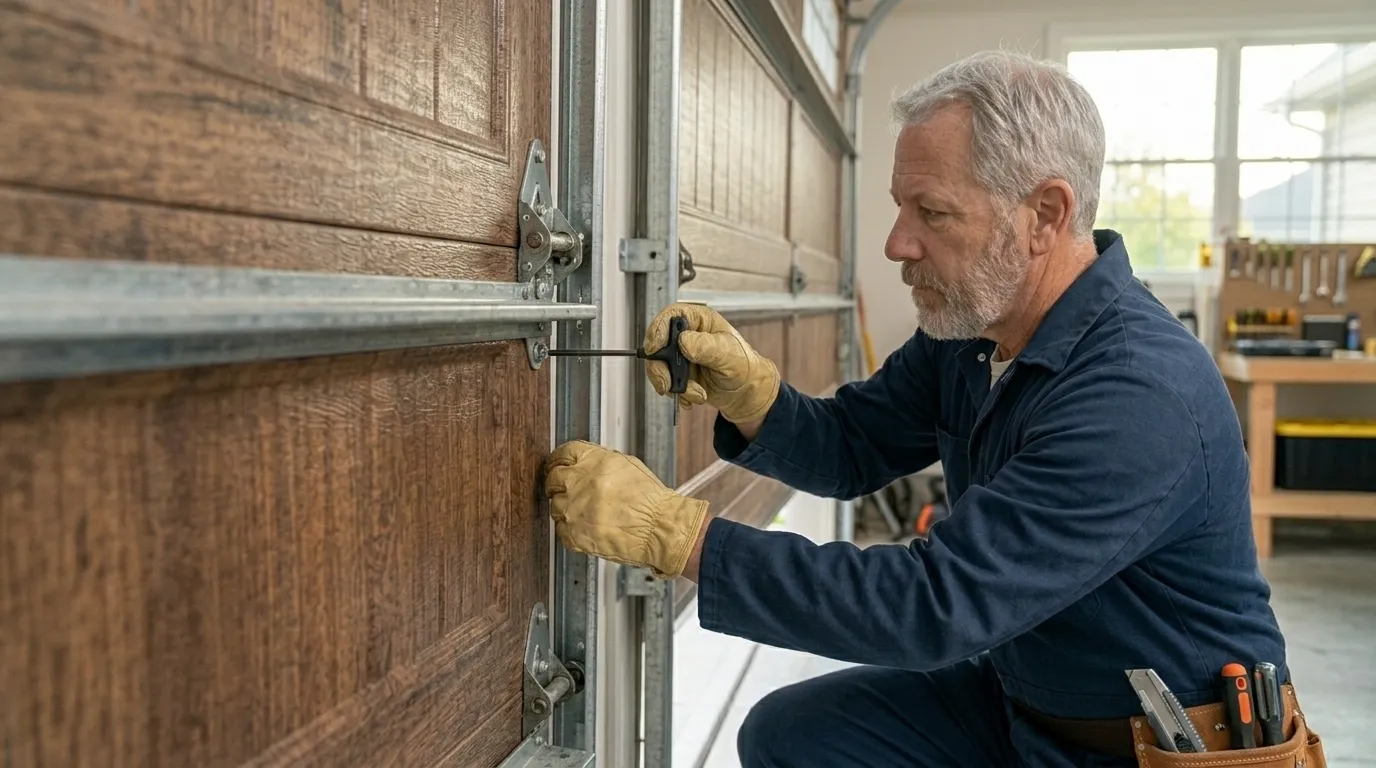
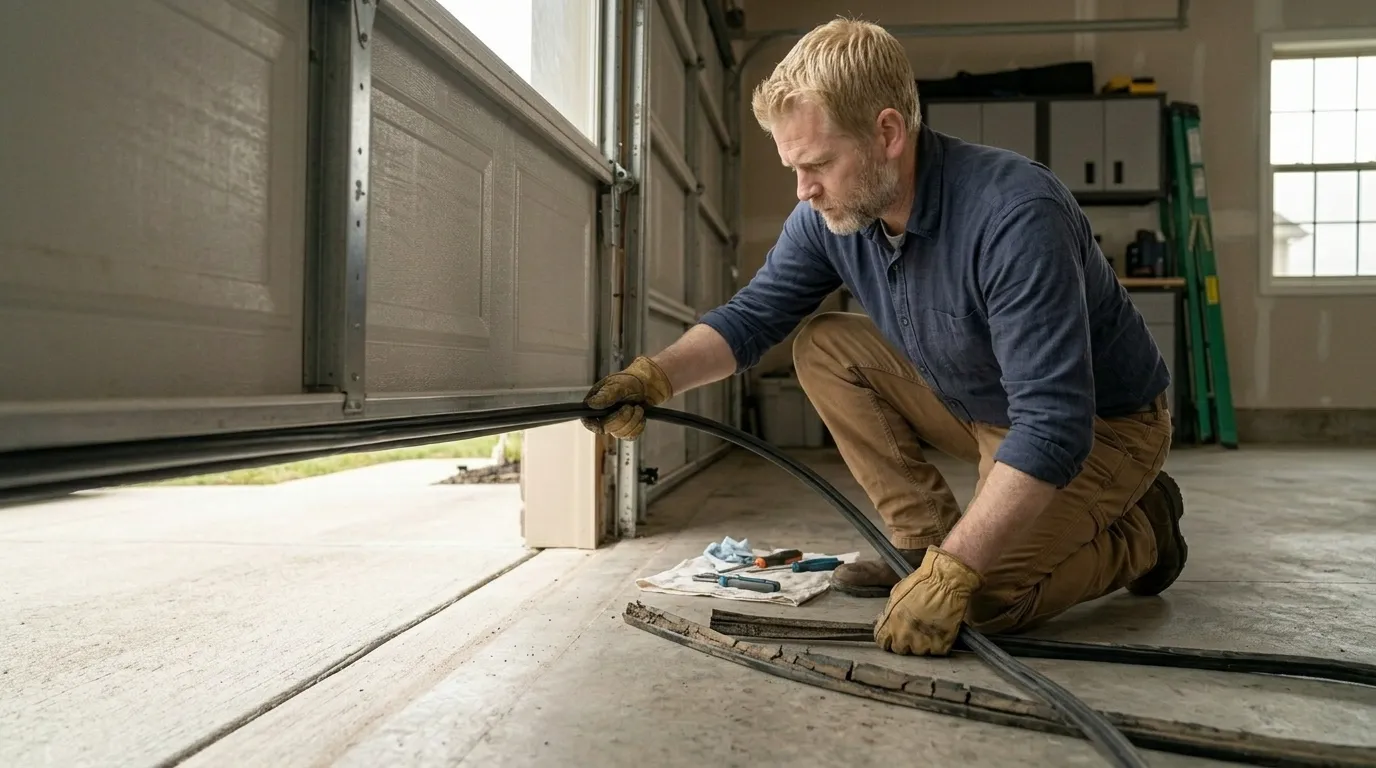
A torsion spring holds enough stored energy to break bones, and that doesn't change because the door is old or the house is small. We don't recommend DIY spring replacement on any door, and that's not a sales line - it's the one honest limitation on this page. Winding bars, the right cone, and knowing how many quarter-turns your specific spring needs aren't optional extras.
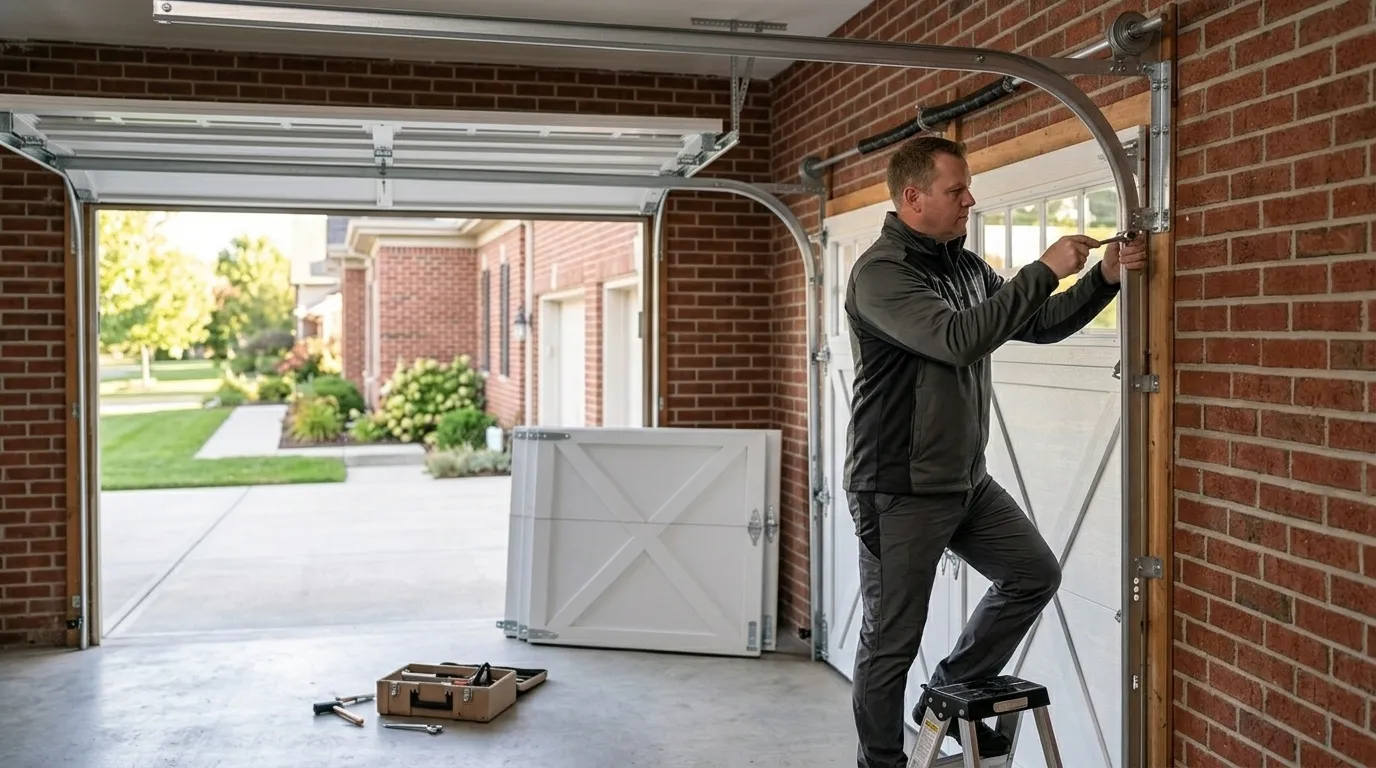
What you can safely check yourself: whether the spring is torsion (a single or double coil above the door on a shaft) or extension (a spring on each side above the horizontal track). That distinction changes the whole job, and telling us which one you have before we drive out saves a diagnostic trip. You can also look for a visible gap in the coil - that's a broken spring, not a stretched one, and no amount of lubricant fixes it.
On a house built around the same time as most of Shelley's stock, the original hardware may still be in place, meaning the spring size and mount could be an older style that isn't stocked on every truck. Flagging the door's age when you call shortens the wait for the right part instead of a second trip.
What You Are Seeing
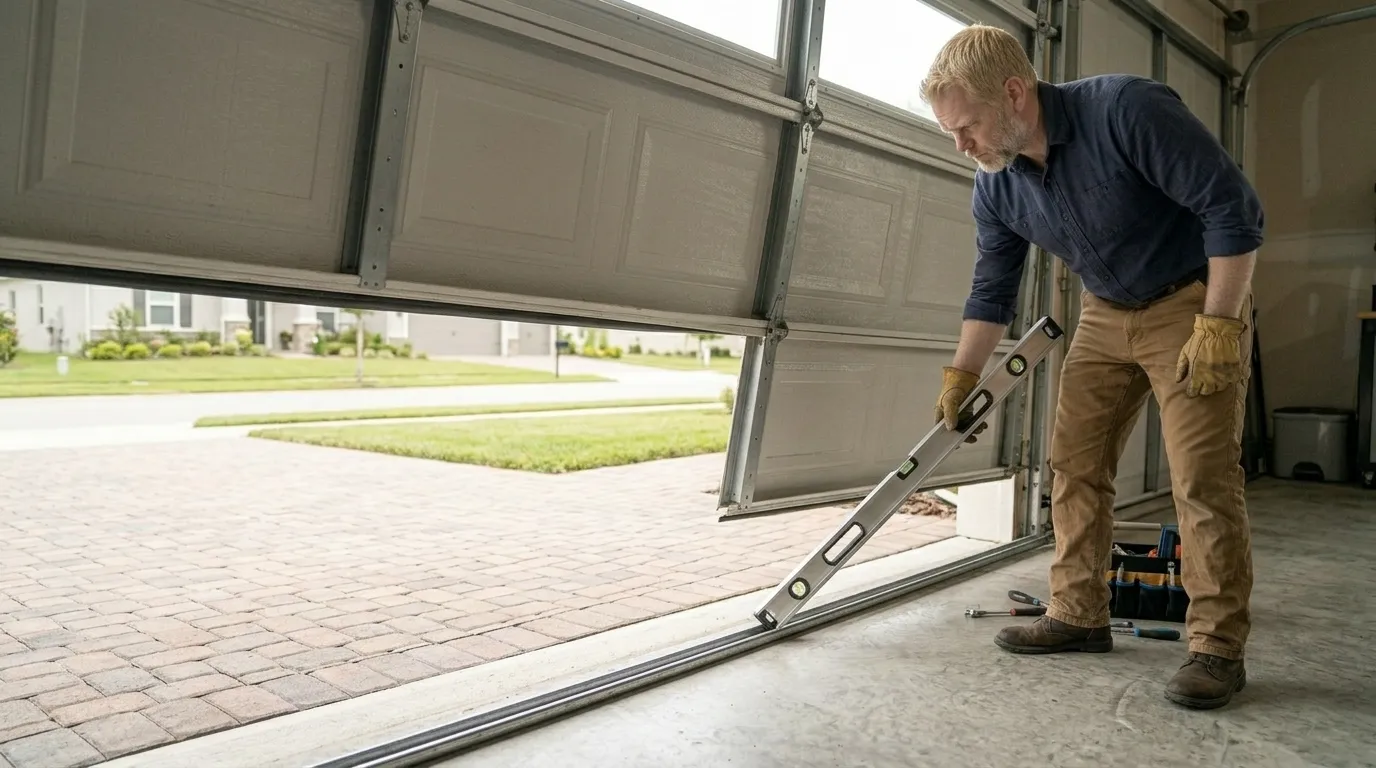
A spring that's fully broken shows an obvious gap in the coil and the door will feel like dead weight - it won't budge by hand and the opener will strain or reverse itself trying to lift it. A spring that's failing but not yet snapped shows up as a door that closes crooked, drops fast the last foot, or takes noticeably more muscle to lift manually than it used to.
On the older end of Shelley's housing stock - anything close to that 1976 median build year - a loud bang from the garage on a cold morning is almost always the spring, not the opener. Idaho's winters run cold enough that metal fatigue shows up hardest in the early morning hours, and that's when most of these calls come in.
If the door is sagging on one side more than the other, that's usually one spring on a two-spring double door, not both going at once - worth mentioning when you call, since it changes what we load on the truck.