Why This Fails Locally
Shelley is a nine-mile drive from our shop in Idaho Falls, which changes how a call here works more than most homeowners expect. It's close enough that we don't treat it as a special trip, but it's far enough that we'd rather get the details over the phone first - what the door was doing right before it jumped track, whether it's one side or both - than roll a truck blind. That's not a Shelley-specific inconvenience, it's just the honest version of what 'covered from Idaho Falls' means.
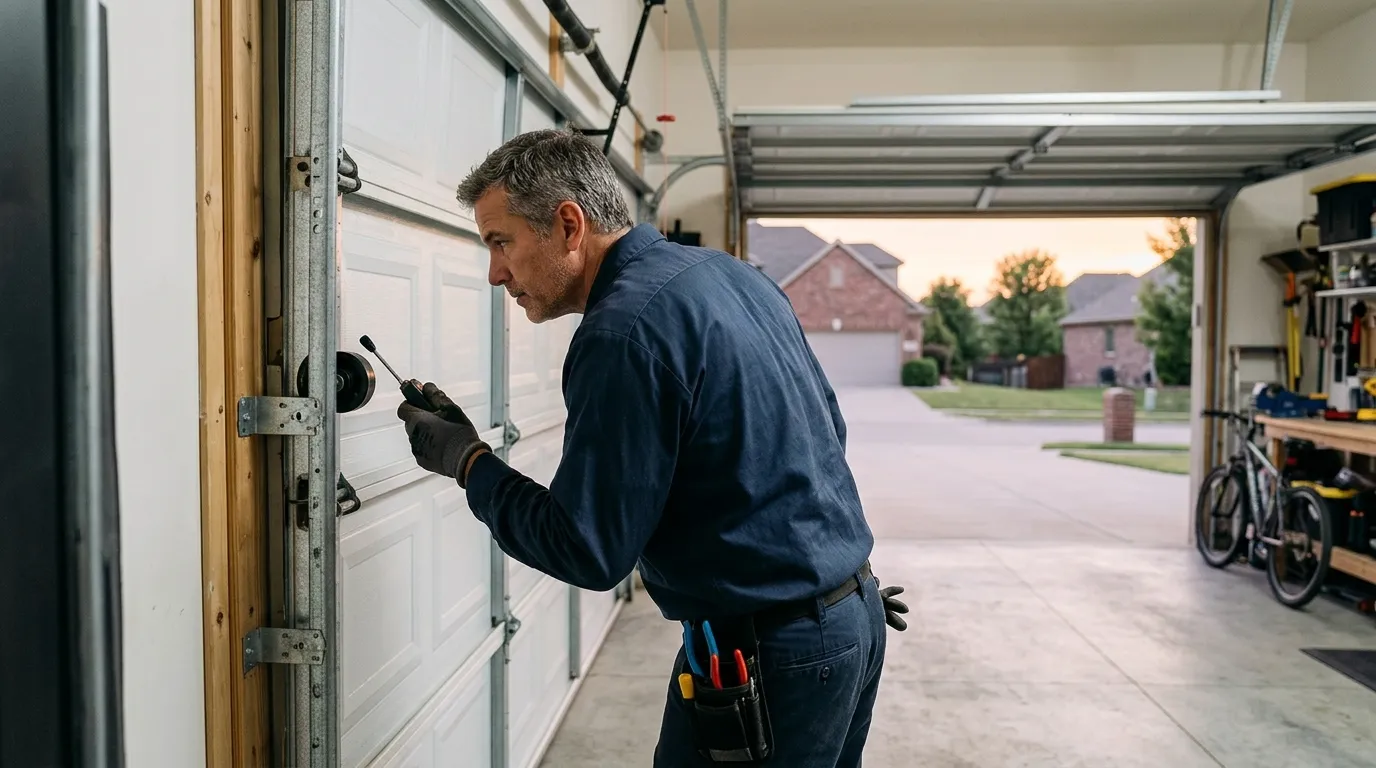
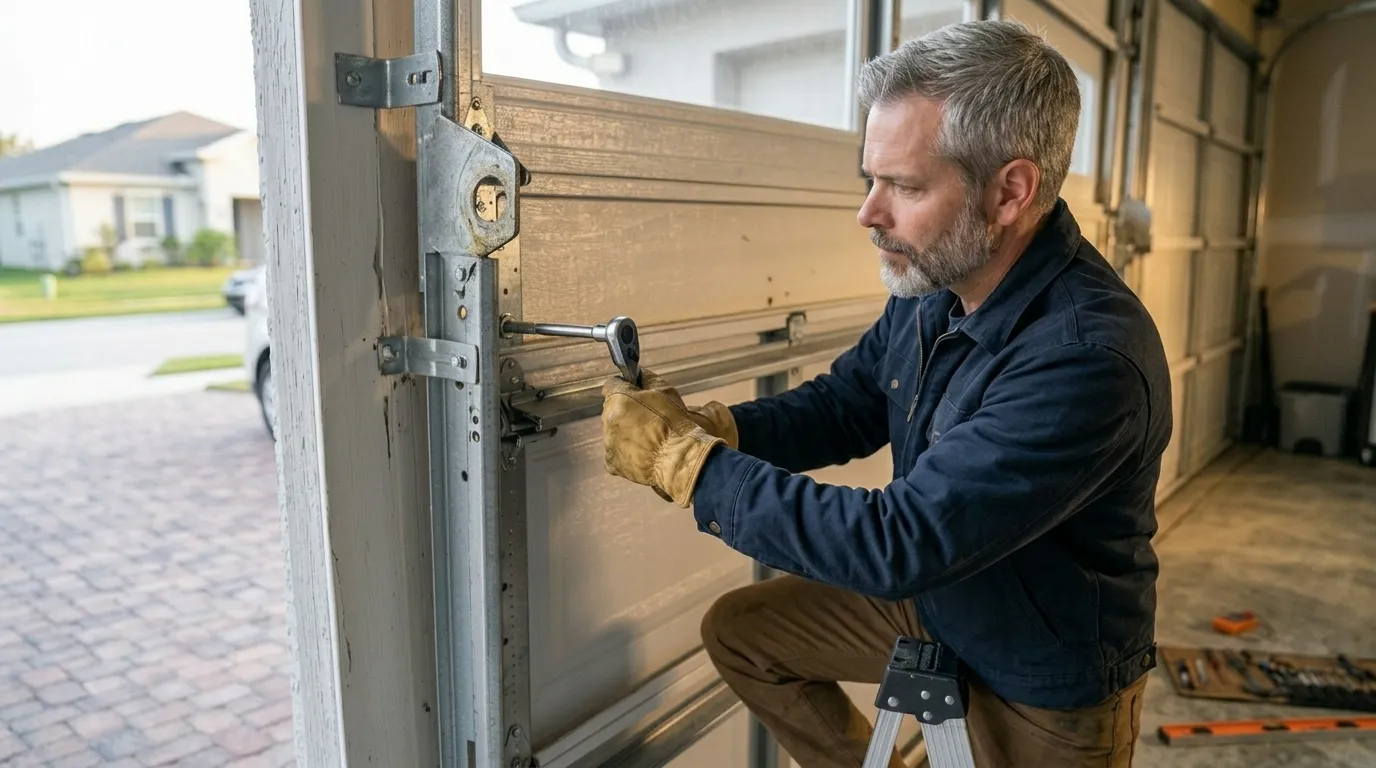
What is specific to Shelley is the housing. The median home here was built in 1976, and most of the neighborhoods are still that same 1960s-70s stock. Track brackets from that era were often nailed straight into the door jamb rather than lag-bolted into real framing, which is standard now. Forty-plus years of seasonal swelling and shrinking works those nails loose a little at a time, and eventually a stiff gust or a hard stop is all it takes for a roller to walk right off the rail. That's a different failure than you'd expect from a newer build, and it's the one we see most in this part of town.
Doing It Yourself
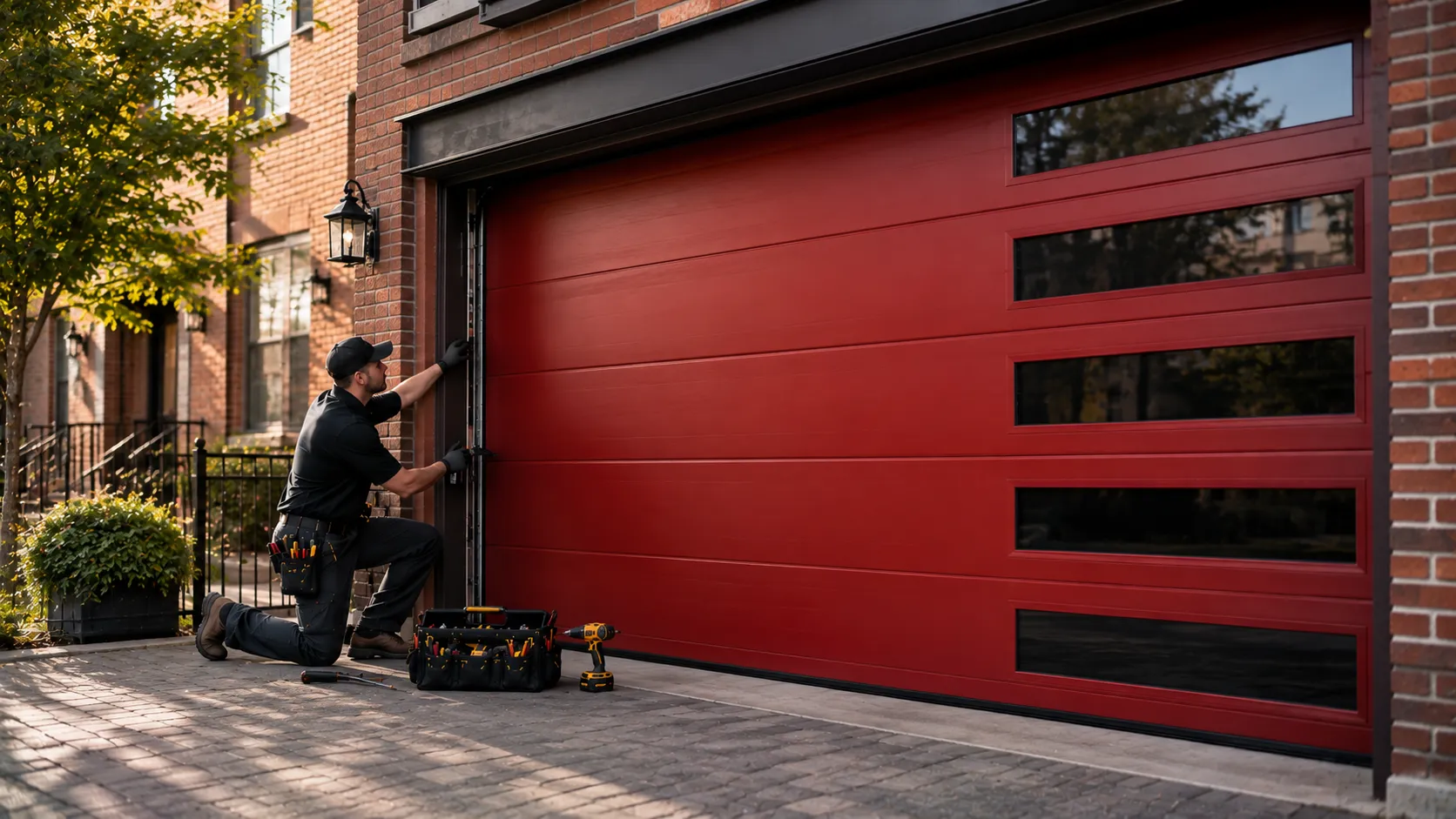
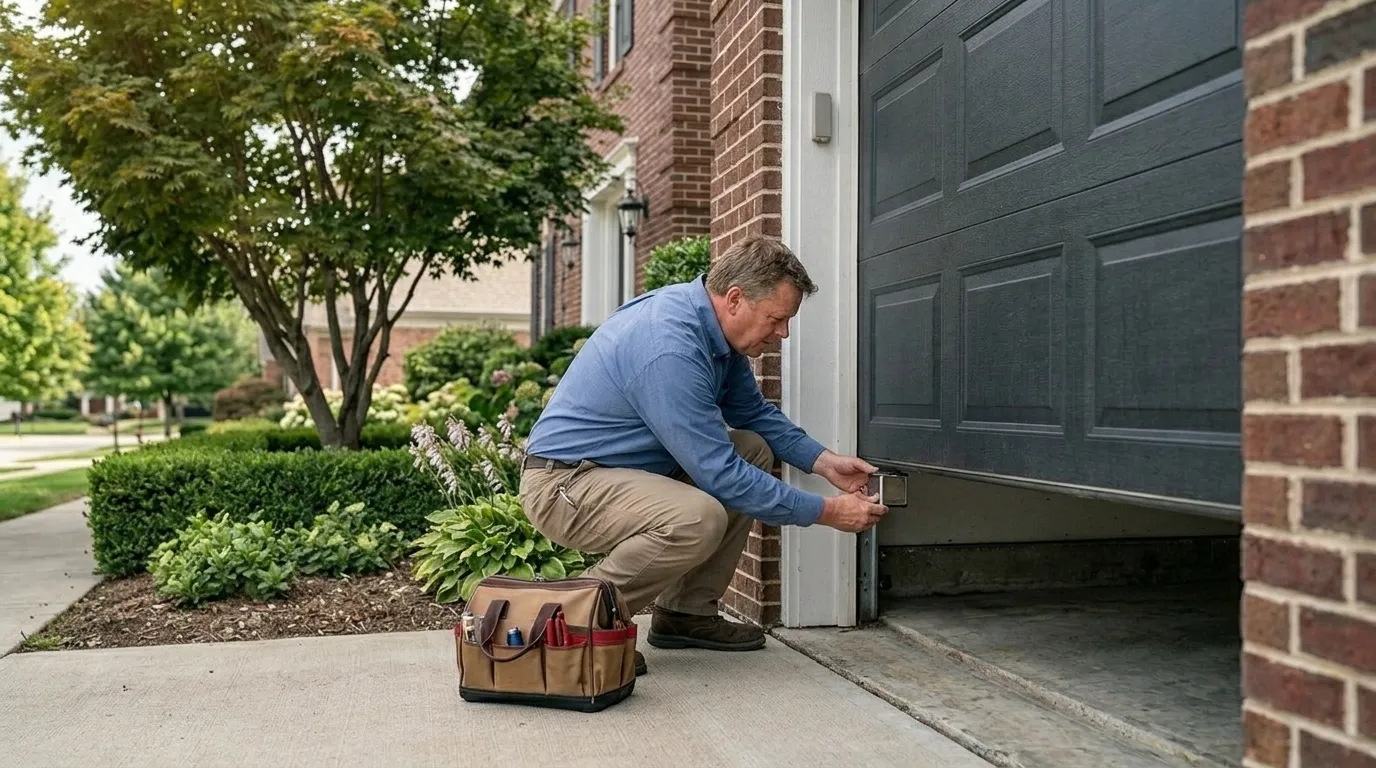
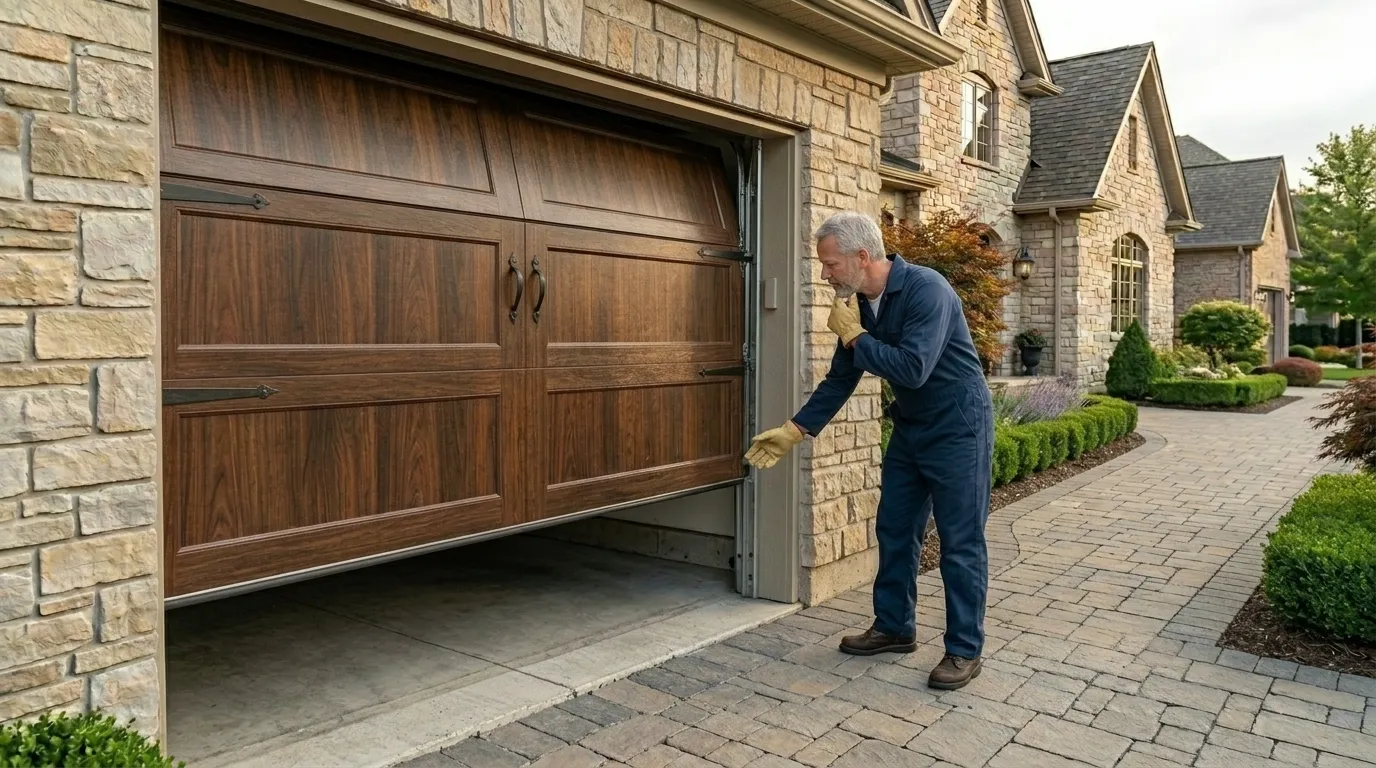
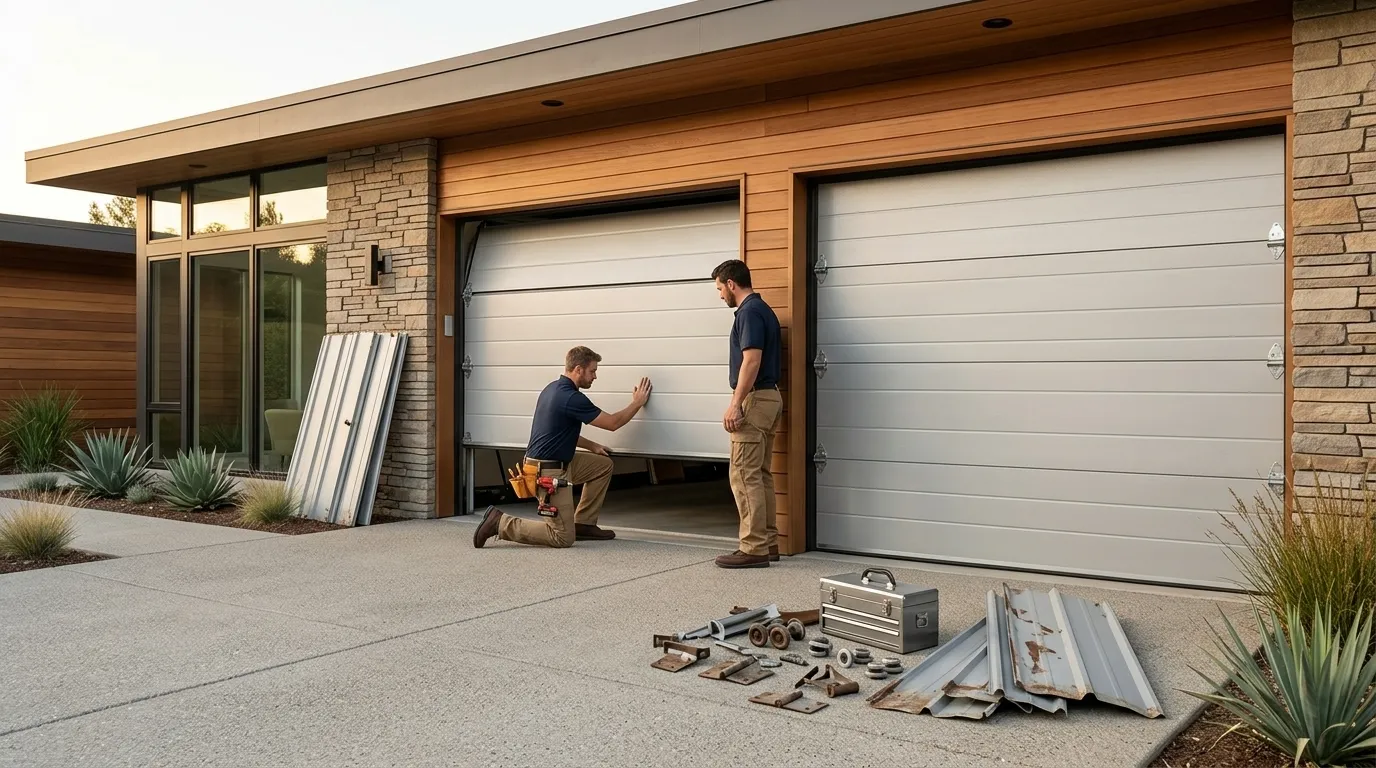
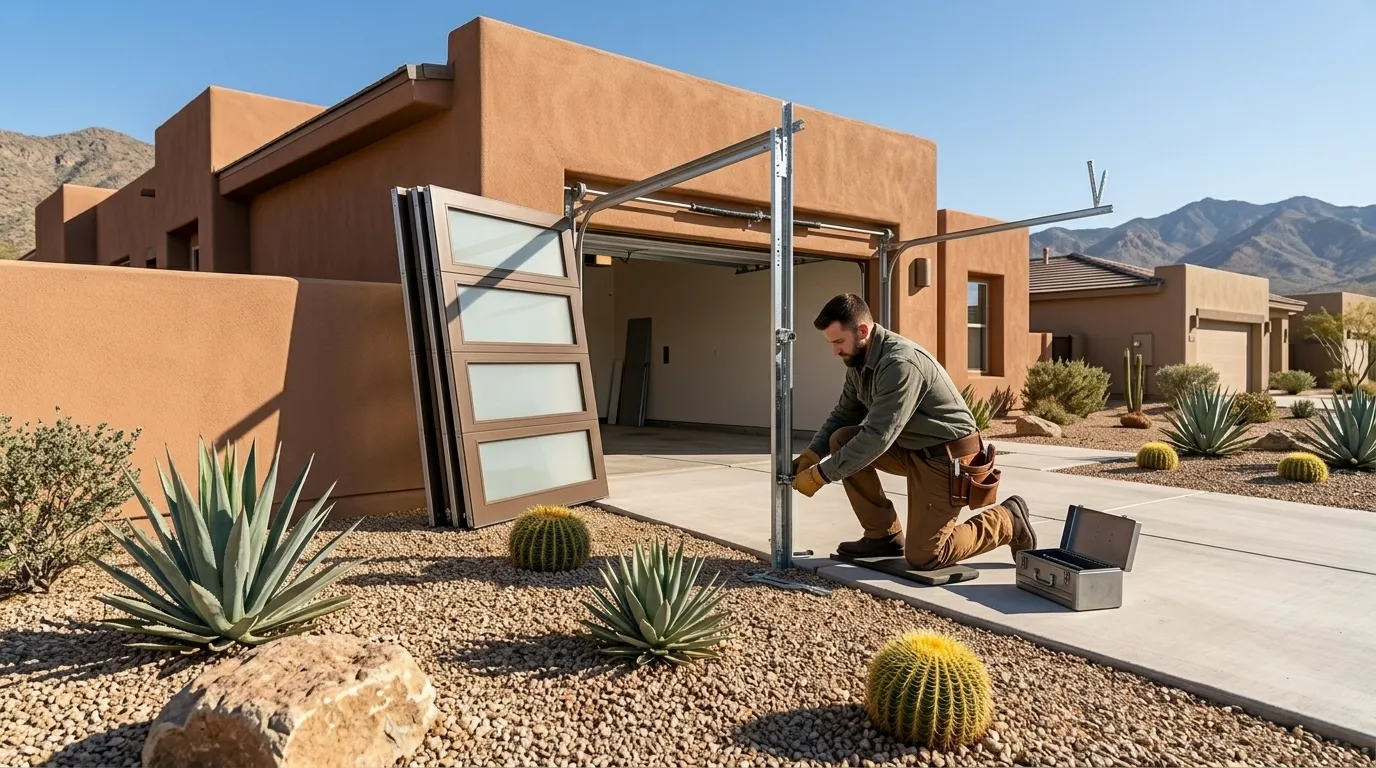
If a panel has popped off the track but the door is still hanging in the opening, don't run the opener again - trying to force it back with the motor usually bends the track further or cracks the panel where it caught. Pull the release cord so the door is disconnected from the opener, and see if you can walk the door down by hand without forcing anything. If it moves freely, you can often get enough slack to lift the roller back onto the rail with steady hand pressure.
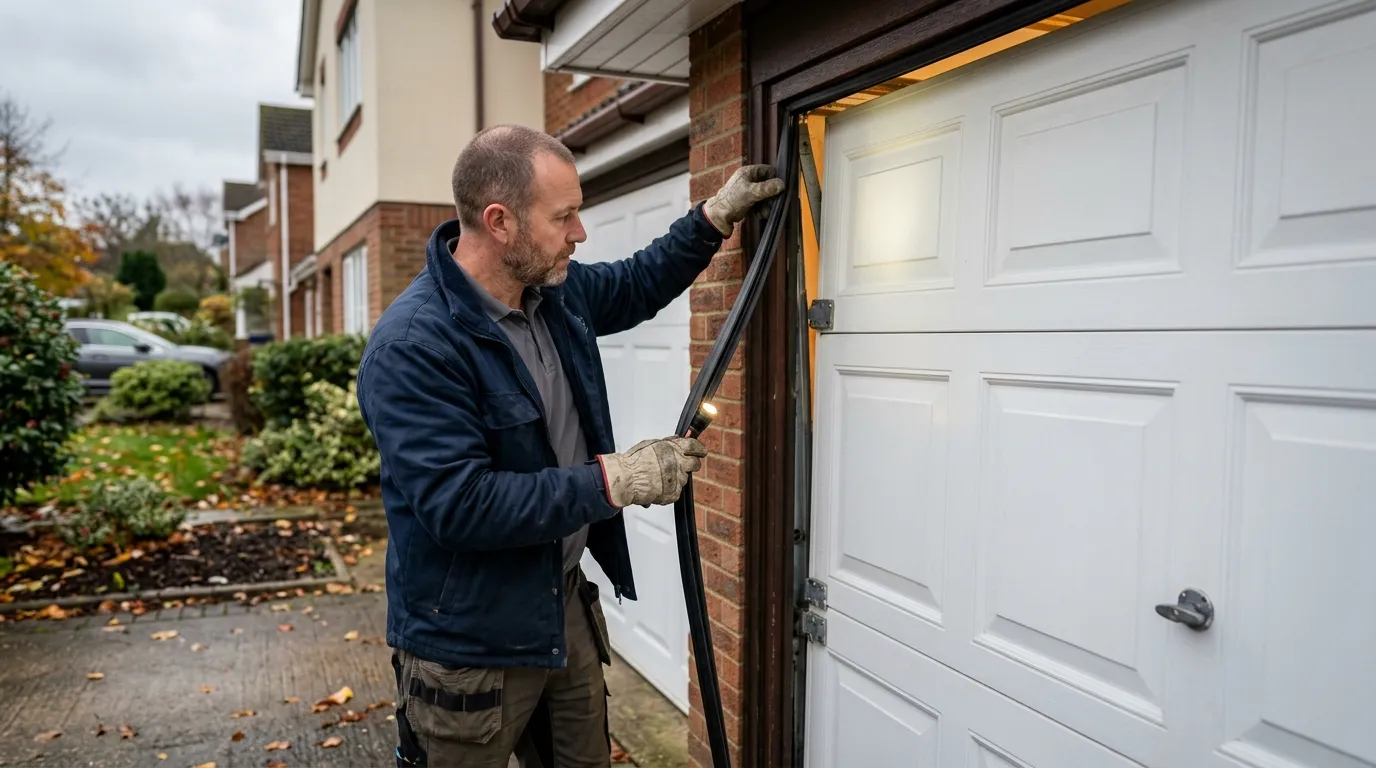
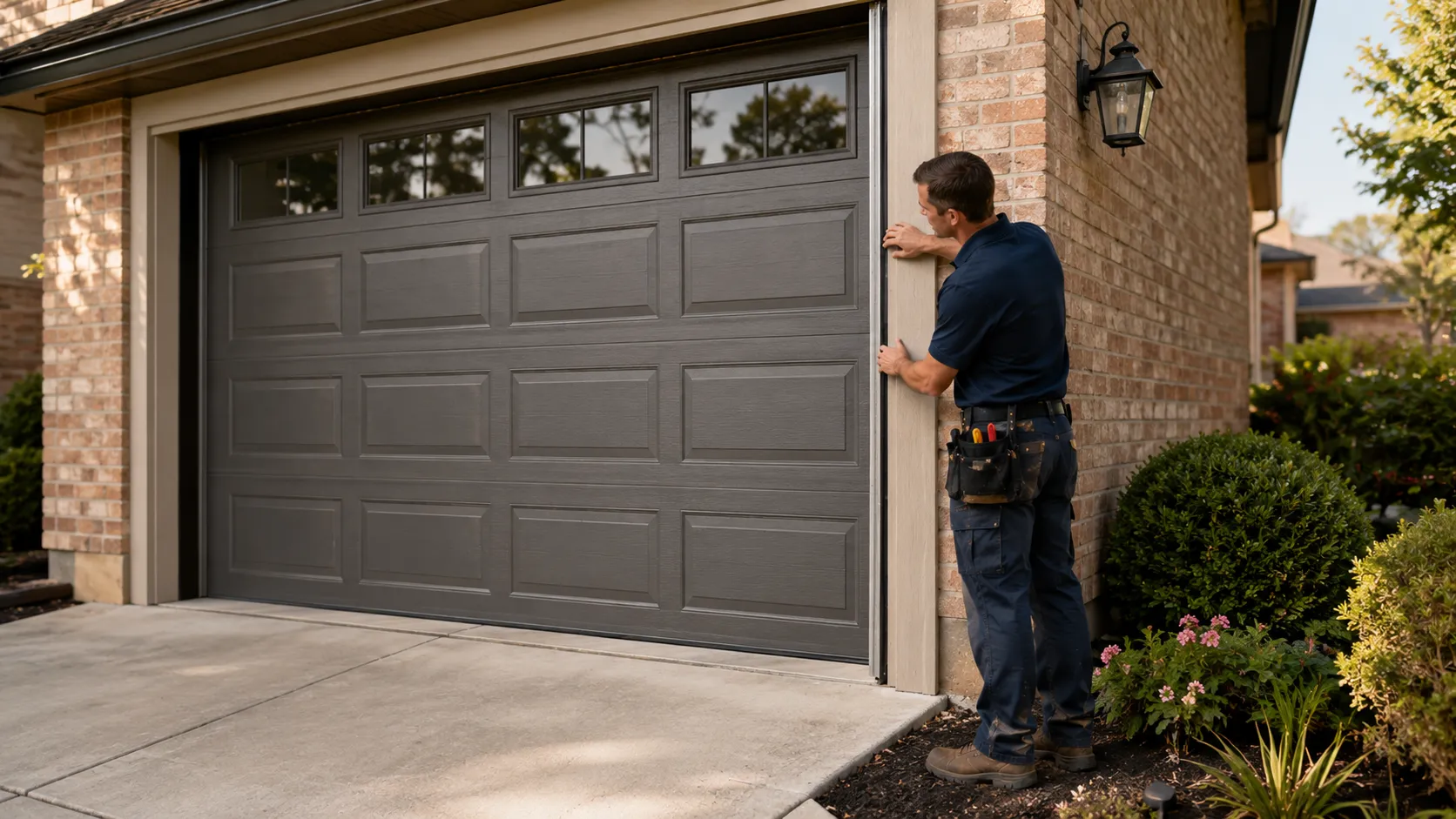
What you shouldn't do is climb up and start bending the track back into alignment yourself, especially on the loose-bracket setups common in Shelley's older homes. A track that looks straight from the ground can be pulled a quarter-inch off true, and the brackets holding it in are the same age as the house. If a spring is under tension anywhere near where the door caught, leave it alone entirely - that's not a DIY repair regardless of the house's age.
What You Are Seeing
Winters here are cold enough, per federal climate data for this region, that ice buildup at the bottom of the track is a real contributor, not a minor one. Snowmelt off the roof or driveway runs down and refreezes right where the bottom roller sits overnight, and when the door tries to move in the morning, that roller can jump the rail instead of rolling through the ice. On a bracket that's already loosened by decades of seasonal movement, that's often the push that finally lets go.
If your door looks straight but keeps slipping the track at the same spot, check whether it's the bottom two feet - that points to ice, not a structural problem. If it's happening higher up, on the older brackets typical of this area's 1970s builds, that's more likely the mounting hardware working loose rather than anything about the door itself. We can tell which on-site, but the symptom itself is a useful first clue over the phone.