Why This Fails Locally
Most houses in Shelley went up around 1976, which puts them squarely in the era of steel doors on extension-spring hardware, single-lever wall openers, and rollers that were never sealed or lubricated at the factory. That's not a criticism of the builders - it's just what was standard then. Forty-plus years later, those same extension springs have gone through tens of thousands of cycles, and the galvanized coating on the original rollers is long past protecting the steel underneath.
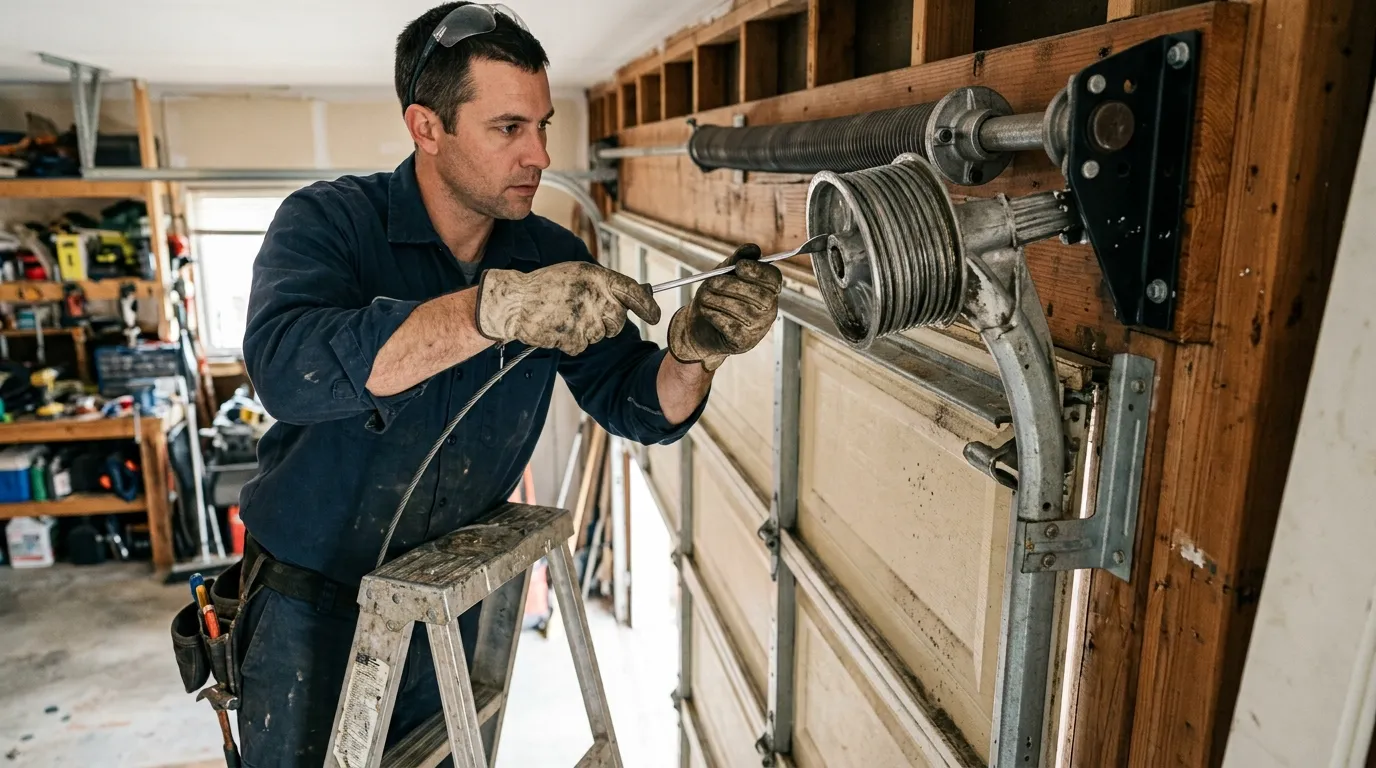
Winters here fall into a severe cold climate band, and that matters more for a 1976 door than a newer one. Older doors were built with thinner steel and less weatherstripping, so the door itself flexes more in a hard freeze, and grease that was fine in July turns stiff by January, adding drag right where an aging spring can least afford it. A door that limps along all summer will often show the first real signs of failure - a cable jumping its drum, a bent hinge tab - the first cold snap of the year.
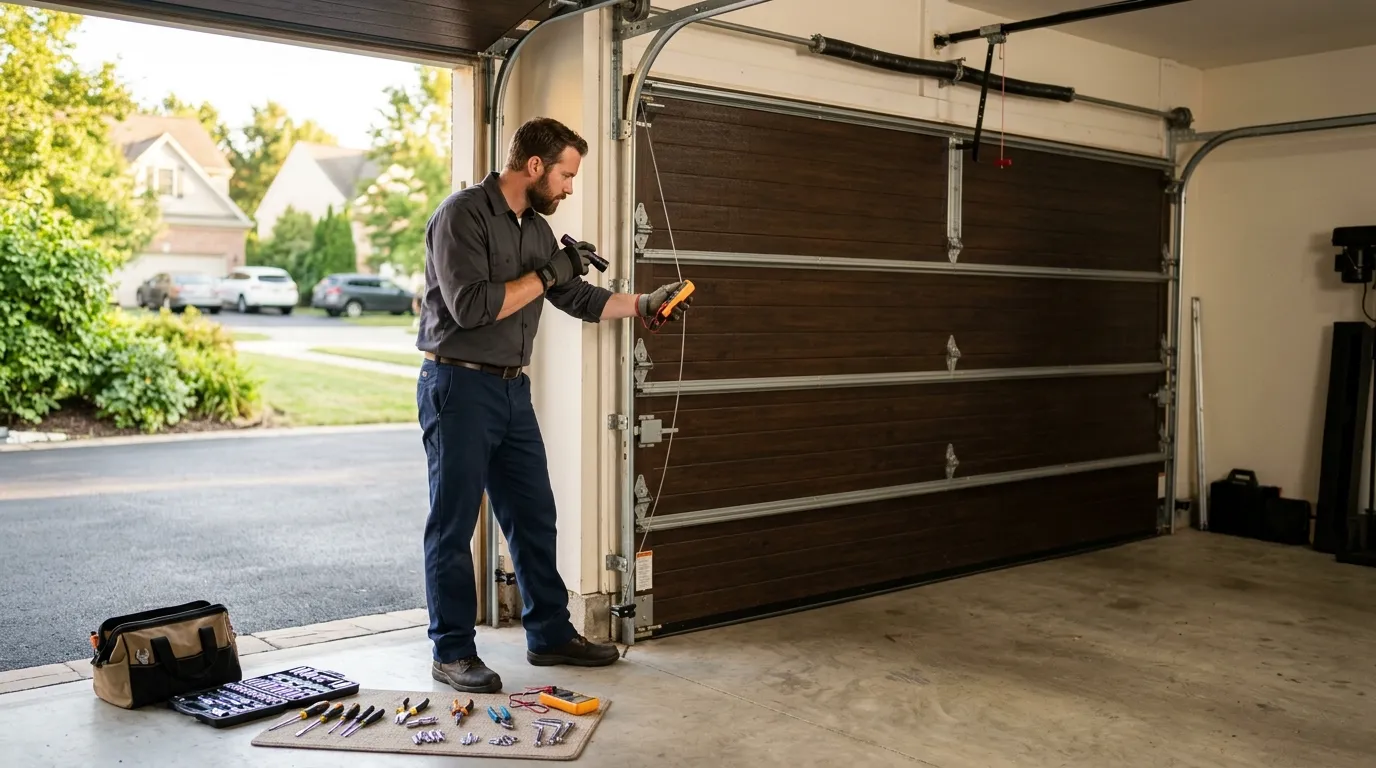
This is the gap maintenance is built to close: catching the wear in the cable and the drag in the track before the cold turns a minor issue into a stuck door.
Doing It Yourself
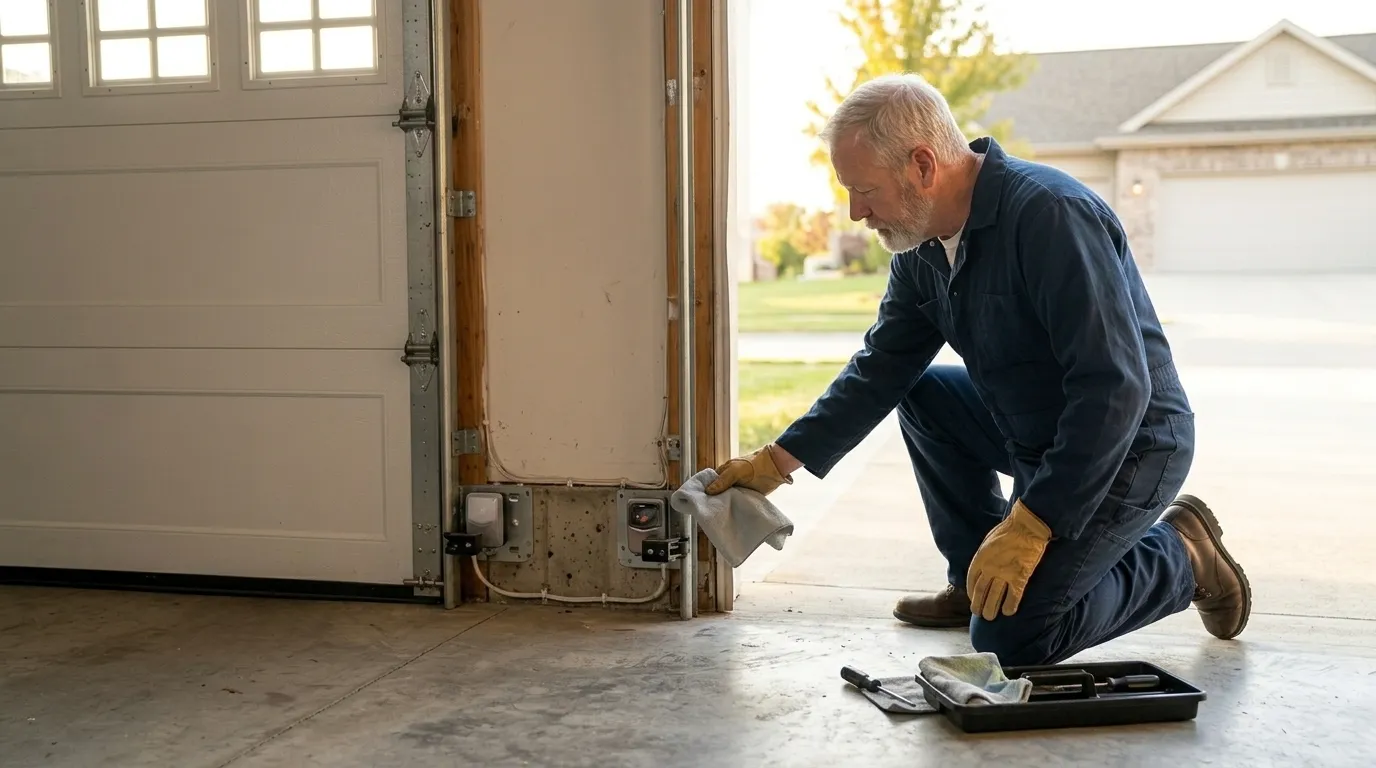
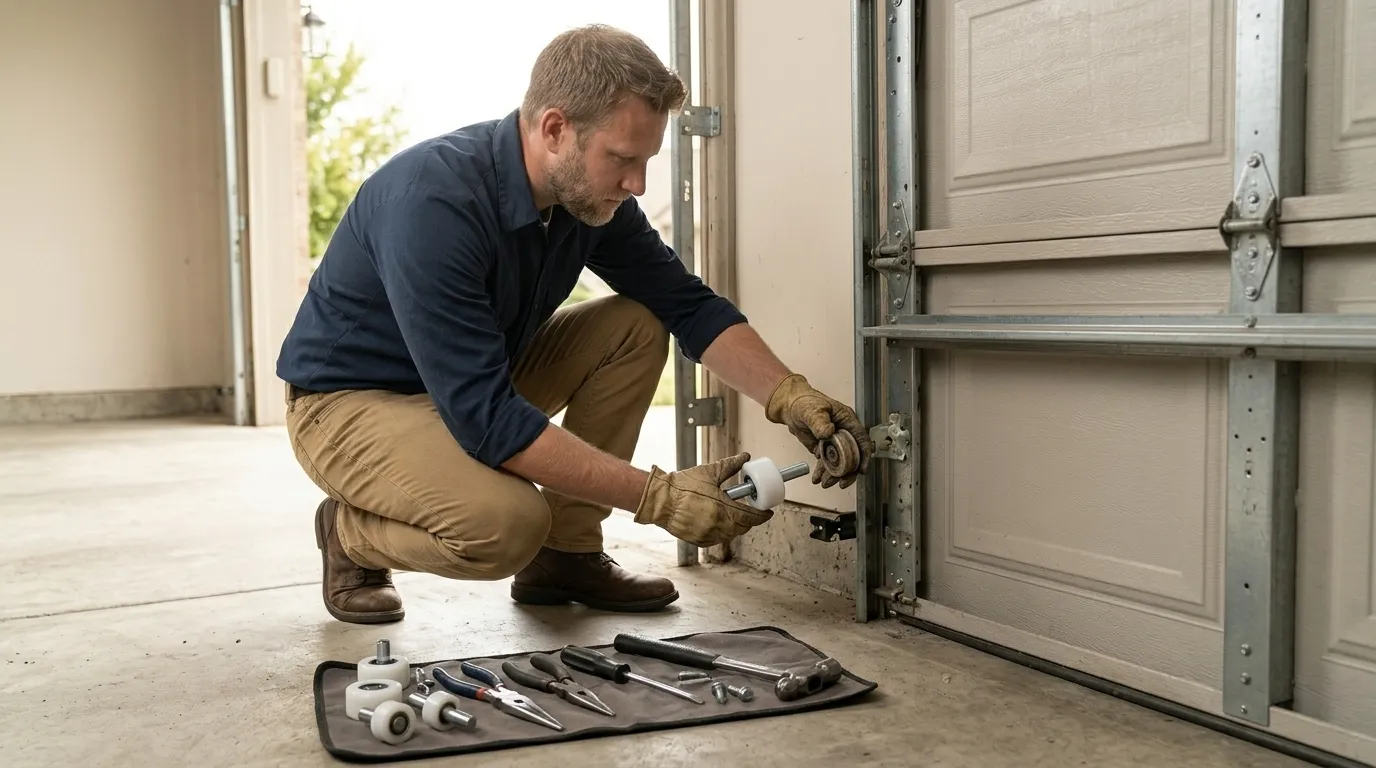
There's a fair amount an owner can do between visits. Wipe down the tracks and check for anything bent or out of line - a track that's pulled away from the wall by even a quarter inch will bind a roller every time it passes. Look at the springs (from a distance, hands off) for gaps in the coils or rust that's flaking rather than surface-level. Lubricate hinges and rollers with a garage-door-specific lubricant, not household oil or WD-40, which attracts grit and actually speeds up wear.
Test the auto-reverse safety feature monthly: set something a couple inches high in the door's path and make sure it reverses on contact instead of pressing through. If it doesn't, stop using the opener until that's fixed.
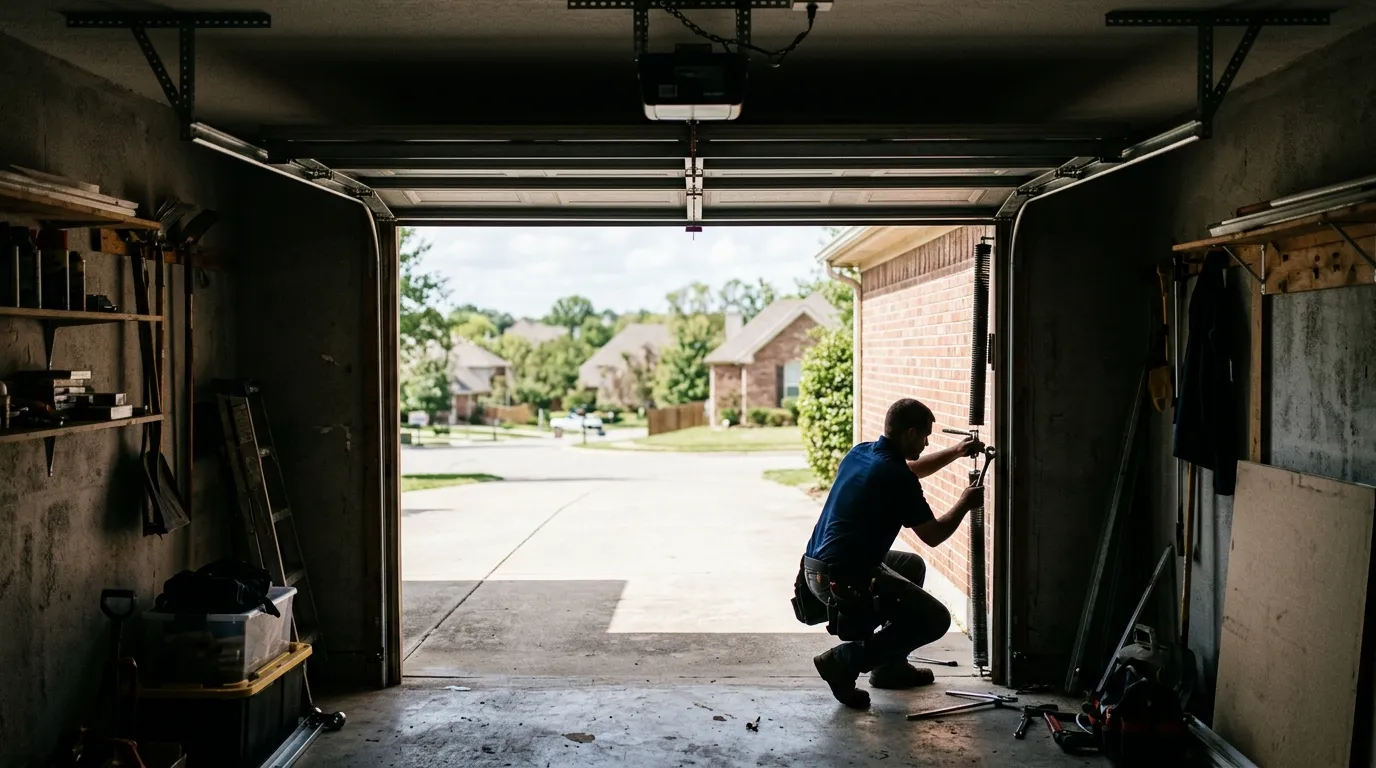
What you shouldn't touch: the torsion or extension springs themselves, or anything under tension. On a door built in the mid-70s, that hardware has had decades to fatigue, and a spring that lets go under load can do real damage to a hand or a face. That one's worth a call, not a wrench.
What You Are Seeing
If your door sticks partway up and then drops slightly before continuing, that's usually a cable or pulley starting to fray on older extension-spring hardware - common on doors from Shelley's 1976 vintage that never had the springs replaced. A door that closes unevenly, with one corner dragging, often means a bent track or a roller that's worn oval instead of round, both more likely on hardware that's outlived its original coating.
A loud bang followed by the door refusing to move at all is very often a spring that's let go - on a house this age, it's not a matter of if but when, since these springs weren't designed to outlast the building. And an opener that runs but doesn't engage the door usually points to a stripped gear or worn drive component, which on units this old is sometimes cheaper to replace outright than to keep repairing piece by piece.
We won't tell you every noise is an emergency - a lot of what you're hearing on a door this age is just wear announcing itself early, which is exactly what maintenance is for.