Why This Fails Locally
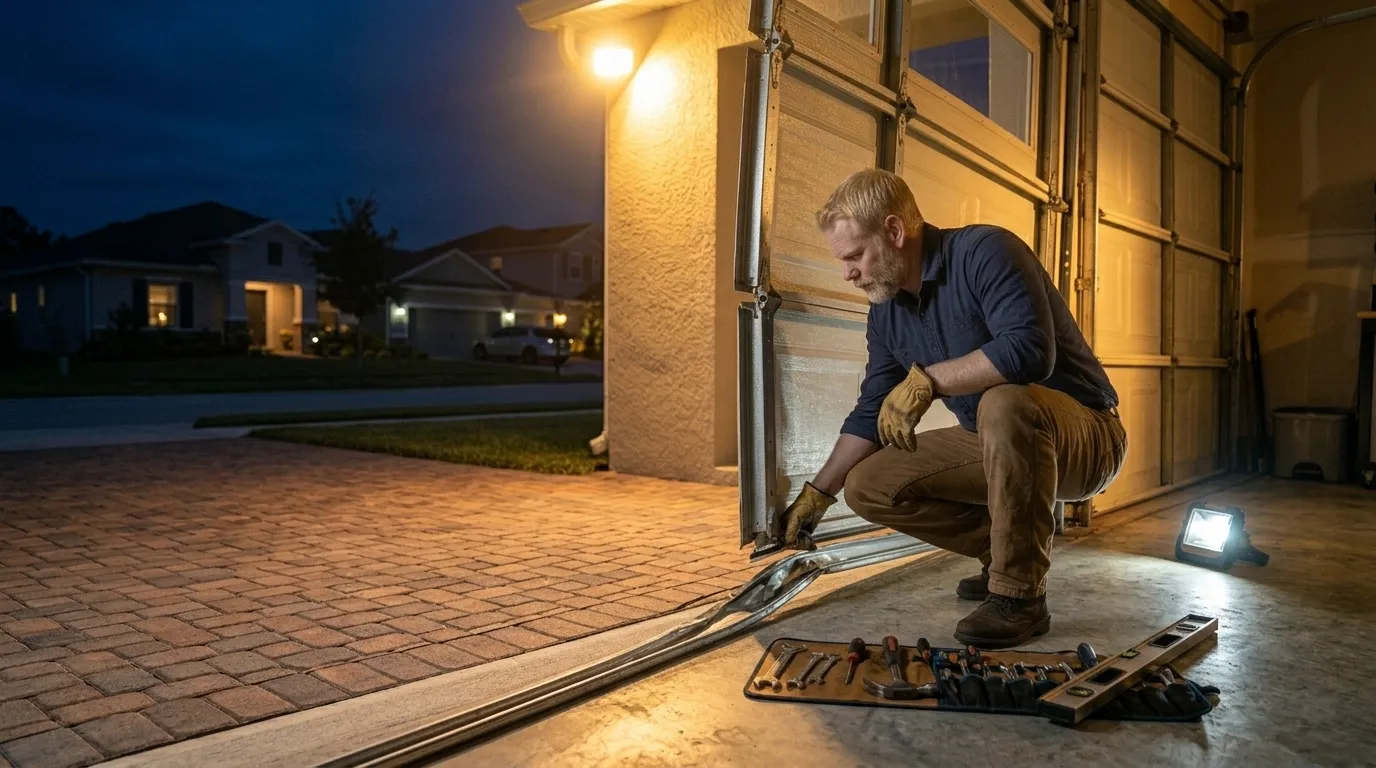
The call we get most from Shelley isn't a dead opener. It's a door that's gone crooked on one side, dragging on the track, or a spring that let go with a bang loud enough to bring a neighbor over. That pattern traces straight back to when the house was built.
Shelley's housing stock centers on 1976, right in the middle of the broader 1963-2003 build window for this area. A door installed when a house went up in the mid-70s is a door running on original torsion or extension spring hardware that's now been through 45-plus winters. Steel sectional panels from that era are thinner than what goes in today, the rollers are usually plain nylon or steel with no bearing, and a lot of these openers were replaced once already, sometime in the 90s, on track and drum hardware sized for the original door.
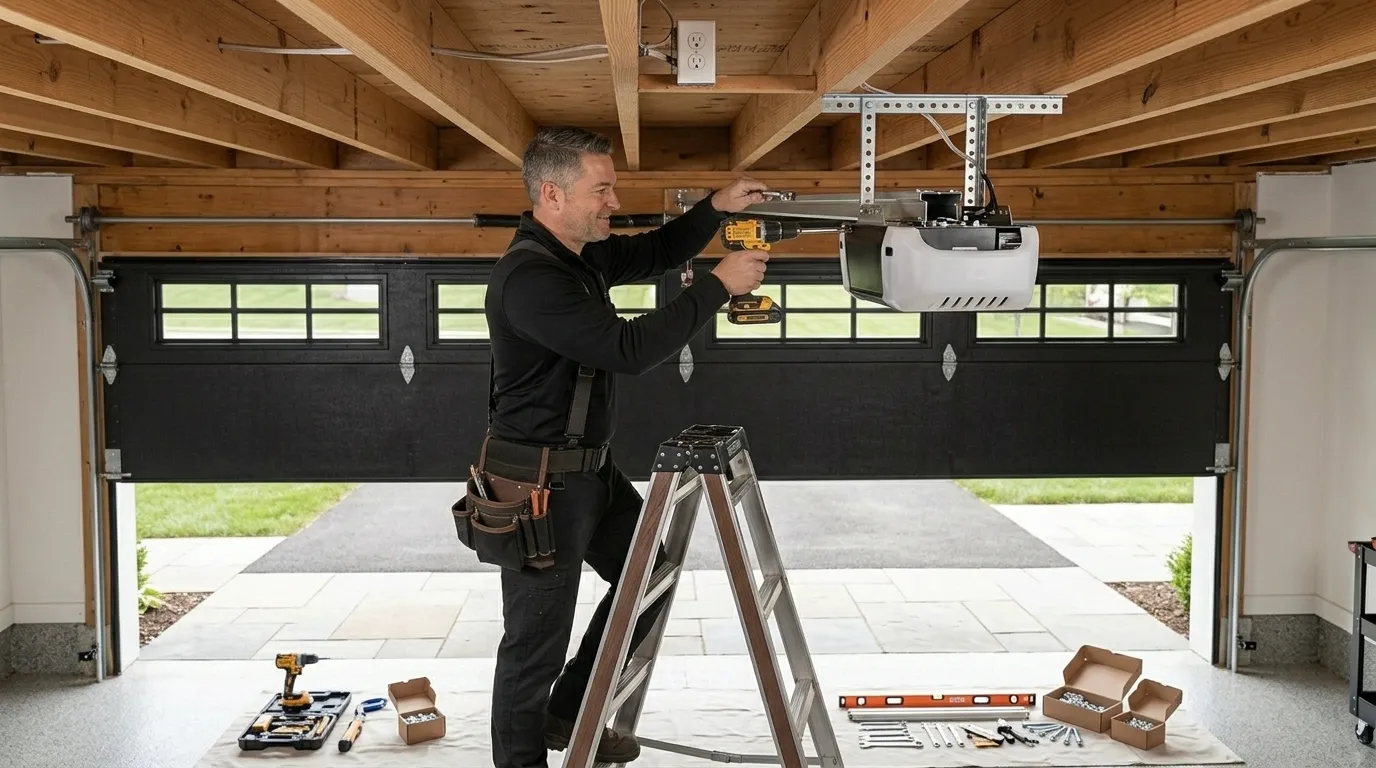
That mismatch is the actual fault. A newer opener bolted to an old door doesn't fail because the opener is bad. It fails because the door is heavier or more worn than the opener was ever set up to handle, and something downstream - a cable, a bracket, a hinge - gives first.
Doing It Yourself
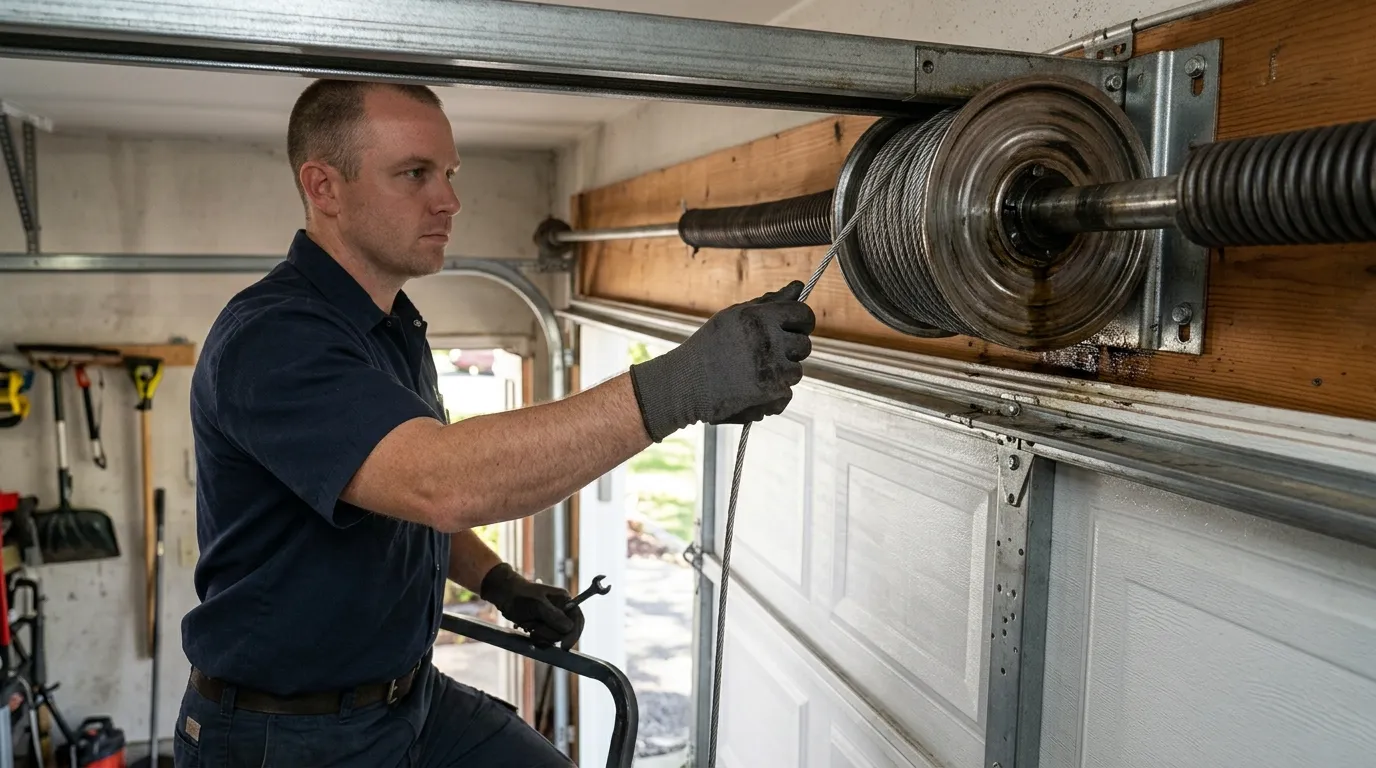
There's a limit to what you should touch here, and it's worth being straight about it. Anything involving the torsion spring itself - the coiled bar under tension over the door - isn't a DIY repair. Those springs store enough force to break a bone or worse, and on a house from the 1970s the shaft and bracket holding it are old enough that they can fail unpredictably even while you're just looking at them.
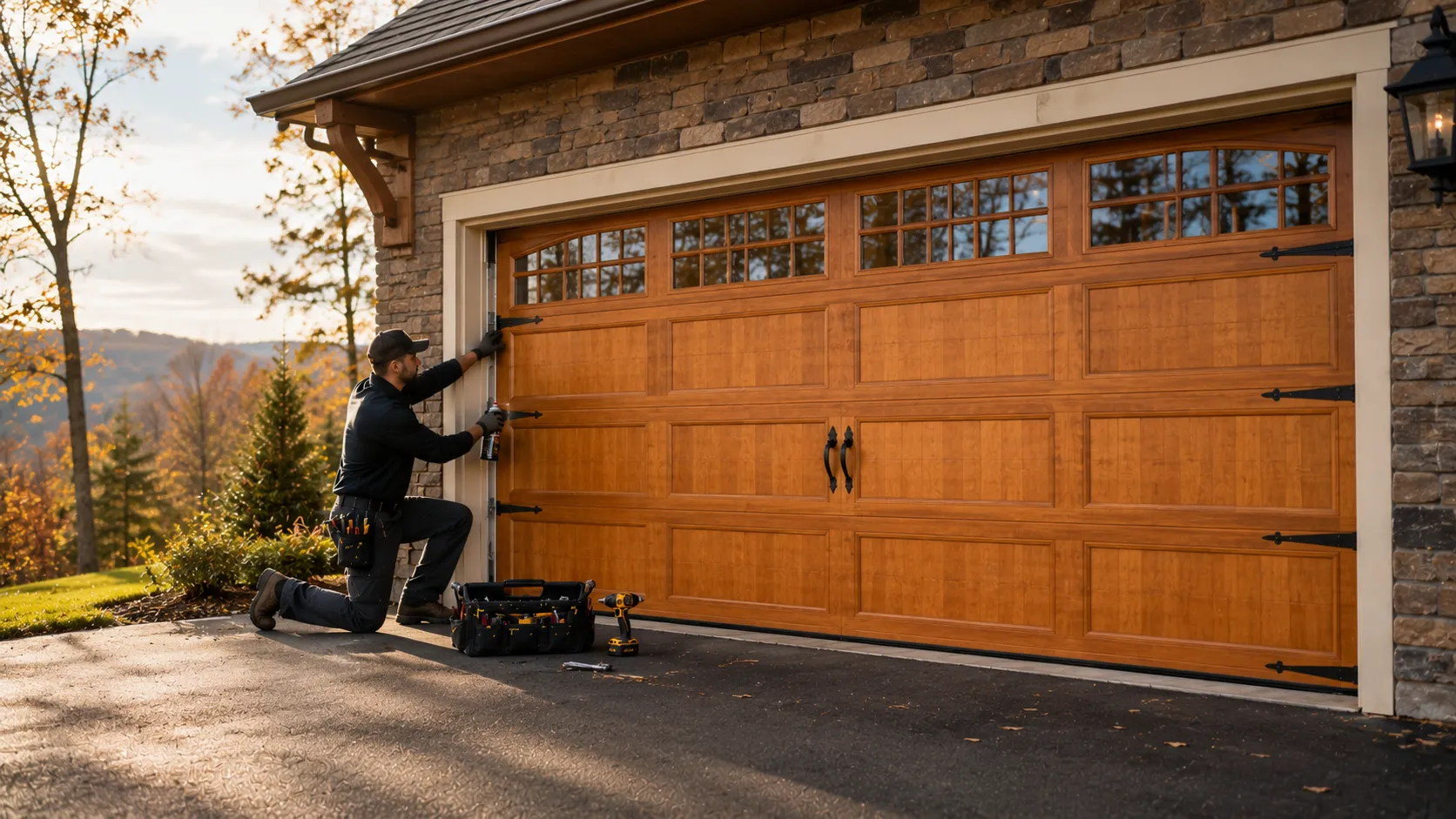
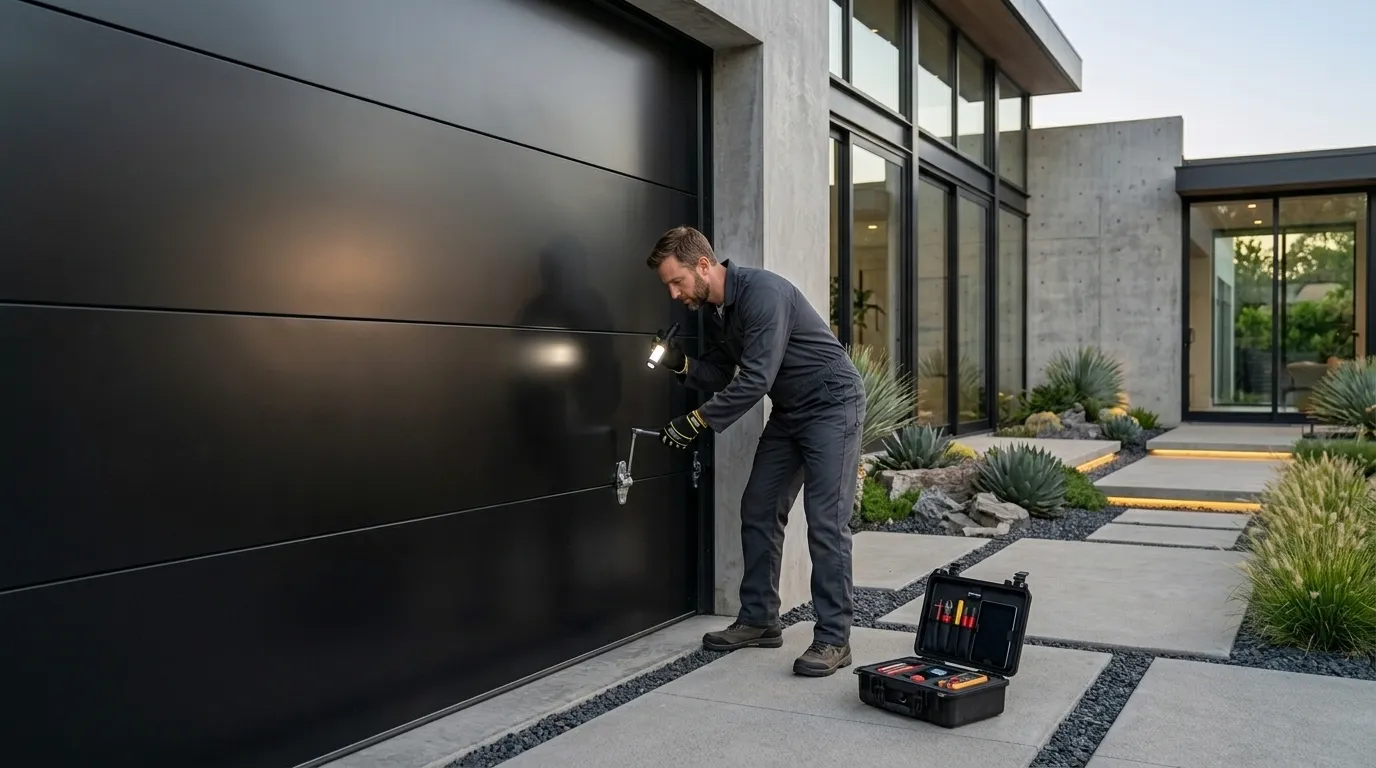
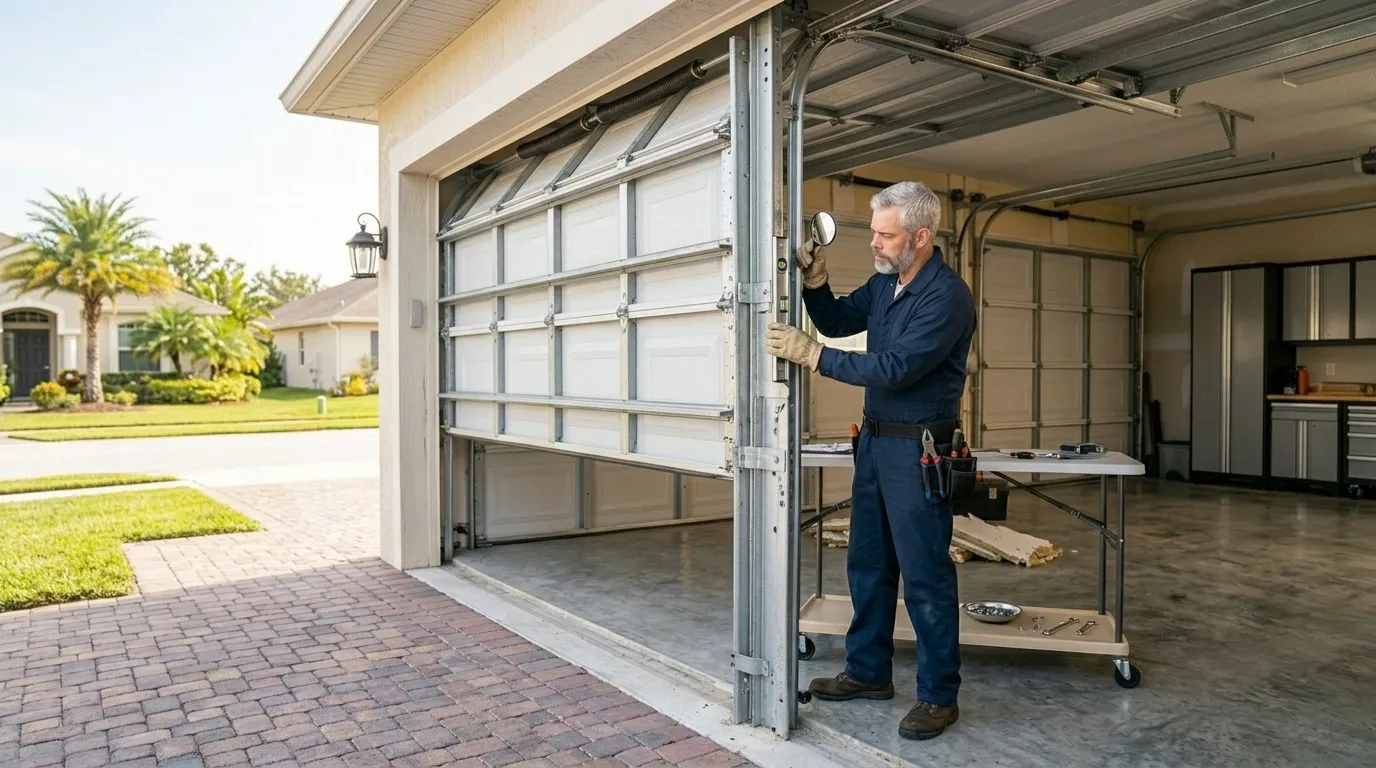
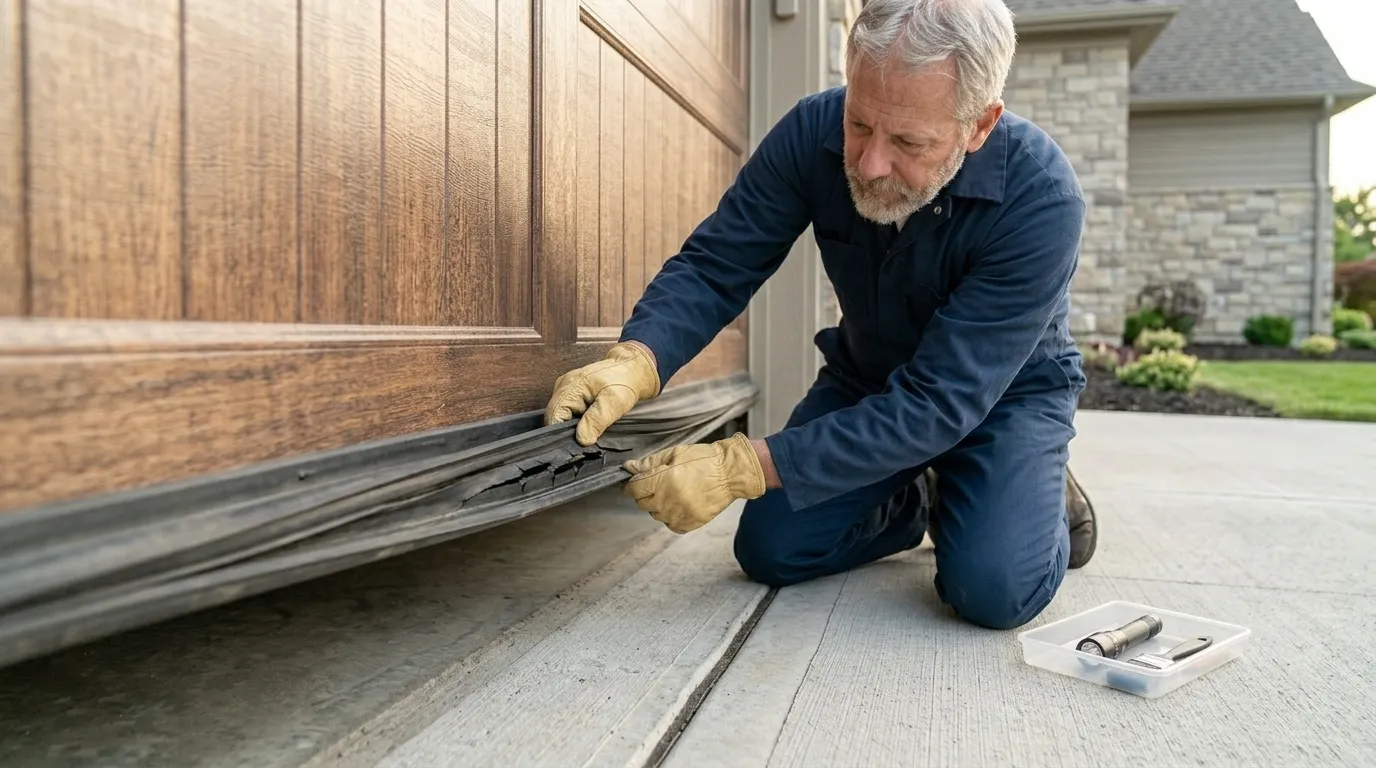
What you can reasonably check yourself: the tracks for dents or gaps where the rollers ride, the weatherstripping along the bottom panel (this matters more here than in a mild climate, since a bad seal lets cold air work on the rest of the hardware), and the balance test - lift the door halfway by hand with the opener disconnected and see if it holds. If it drops or shoots up, the spring tension is off and that's not a tighten-a-bolt fix.
Lubrication is the one job worth doing regularly and safely: a light coat of garage-door-specific lubricant on hinges and rollers, not on the track itself. In a severe cold climate, that's the difference between hardware that moves freely at 10 degrees and hardware that binds, strains, and eventually snaps something.
What You Are Seeing
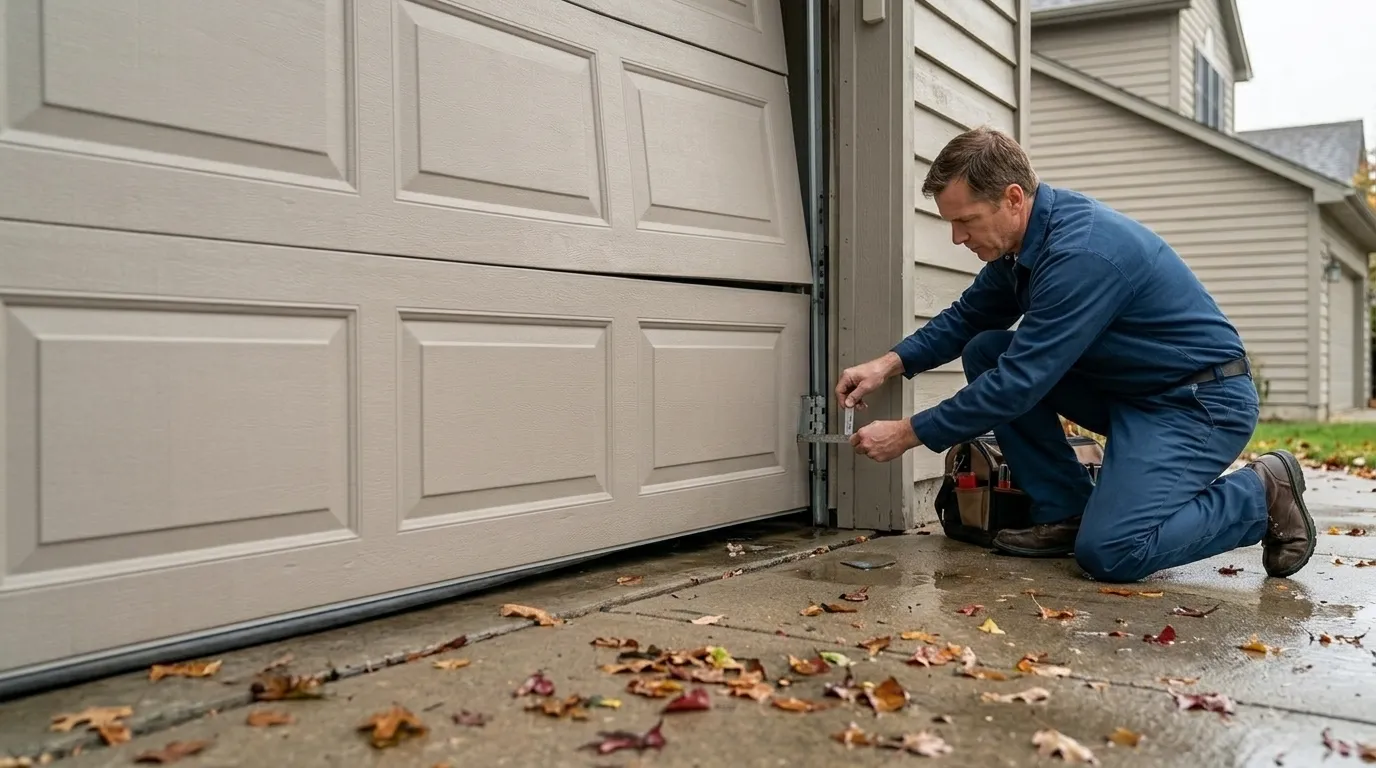
A few things show up often enough in this part of the service area that they're worth naming plainly. Doors that won't stay level - one side higher than the other when it opens or closes - usually mean a cable has stretched or frayed unevenly, common on doors that have been running 20-plus years past their original install.
A door that reverses right after touching the floor, or won't close all the way, often points to worn rollers dragging in a track that's shifted slightly out of square over the decades a house has settled. That's a track and roller job, not an opener problem, even though the opener is what people blame first.
And on the coldest mornings, a door that groans, sticks, or refuses to move until the sun's been up a while is telling you the lubricant has gummed up or the spring tension has drifted with the temperature swing. Given this region's severe cold climate band, that's not unusual for hardware this age - it's a sign the door's due for a real look, not just an oil can.