Why This Fails Locally
Most garages in Shelley went up around 1976, which puts the door itself squarely in the single-layer steel or ribbed-panel era - thin skin, no foam core, hung on hardware sized for a lighter door than what gets sold today. That door was matched to a torsion or extension spring rated for its original weight. Forty-plus winters later, the spring has fatigued, the galvanized coating on the cable is pitting, and the steel skin has picked up dents that throw the panel out of true even when the track looks fine.
That combination is why the failure shows up as an emergency instead of a slow decline. A spring on a door this old doesn't loosen gradually - it lets go all at once, usually on a cold morning when the steel has contracted and the last bit of give in the coil is gone. Shelley sits in a cold-severe climate band, and that swing in temperature is exactly what finishes off hardware that was already thirty or forty years past its rated cycle count. The door doesn't fail because it's neglected. It fails because it's doing what steel built in 1976 does after this many freeze-thaw cycles.
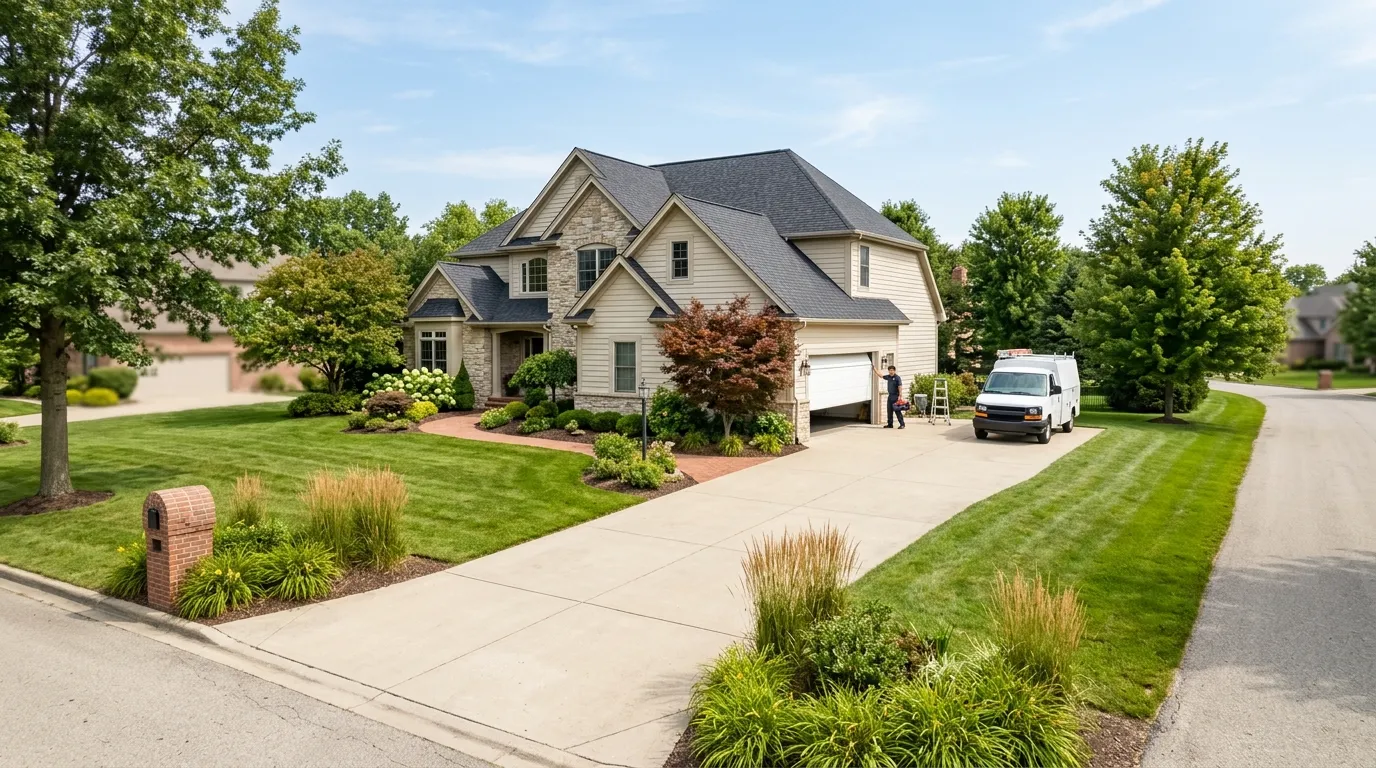
We're not a Shelley branch - we run out of Idaho Falls, about 9 miles away, and cover Shelley as part of that service area.
Doing It Yourself
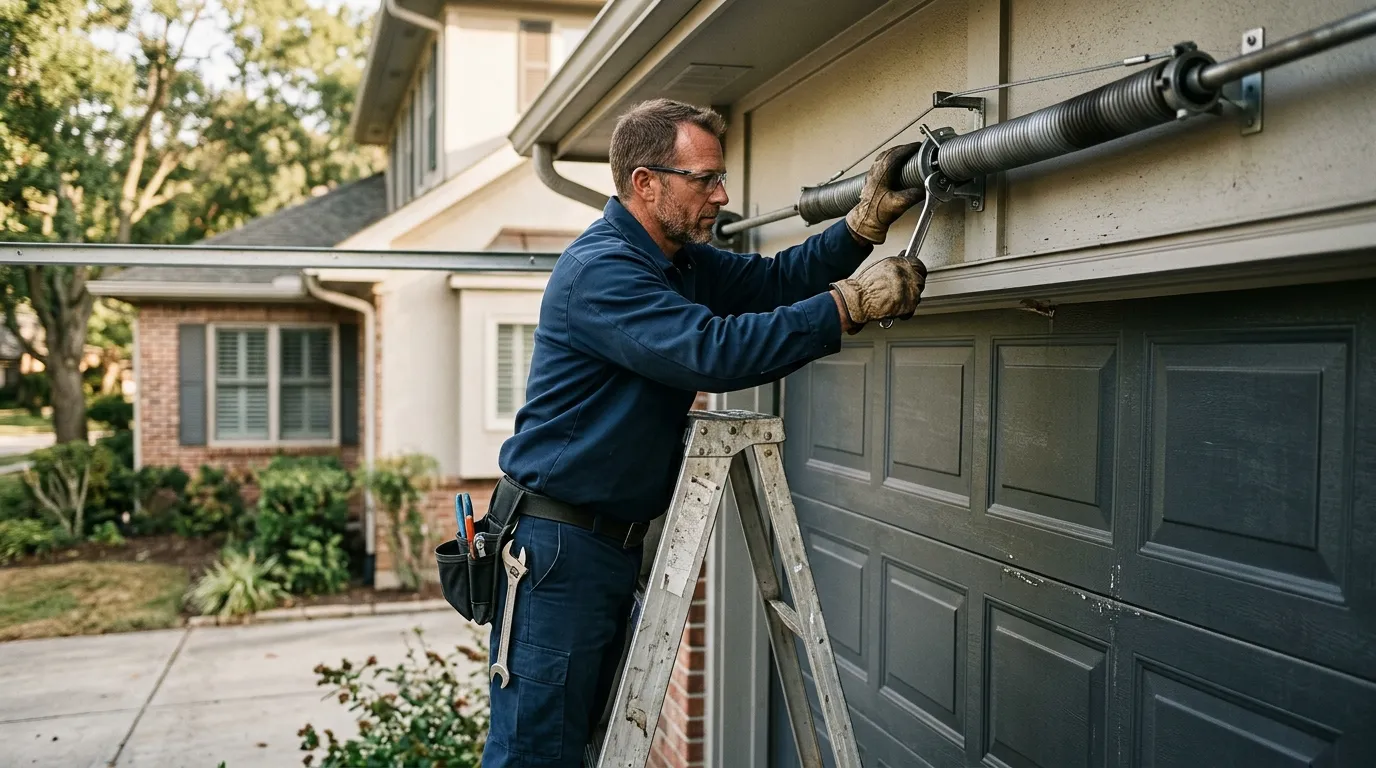
If the door won't move and you can hear the opener straining, don't keep hitting the button. That's usually a broken torsion spring, and running the opener against dead spring tension is how you strip the gears or snap the drive cable next. Pull the emergency release, lift the door by hand if you can do it safely, and leave it there.
On a door this old, you're dealing with springs that were sized for the panel weight and track geometry of the mid-1970s. A spring bought off a shelf today, wound to a generic size, doesn't always match that setup - and a torsion spring under tension is genuinely dangerous to touch without the right bars and clamps. This isn't a job to save fifteen minutes on.
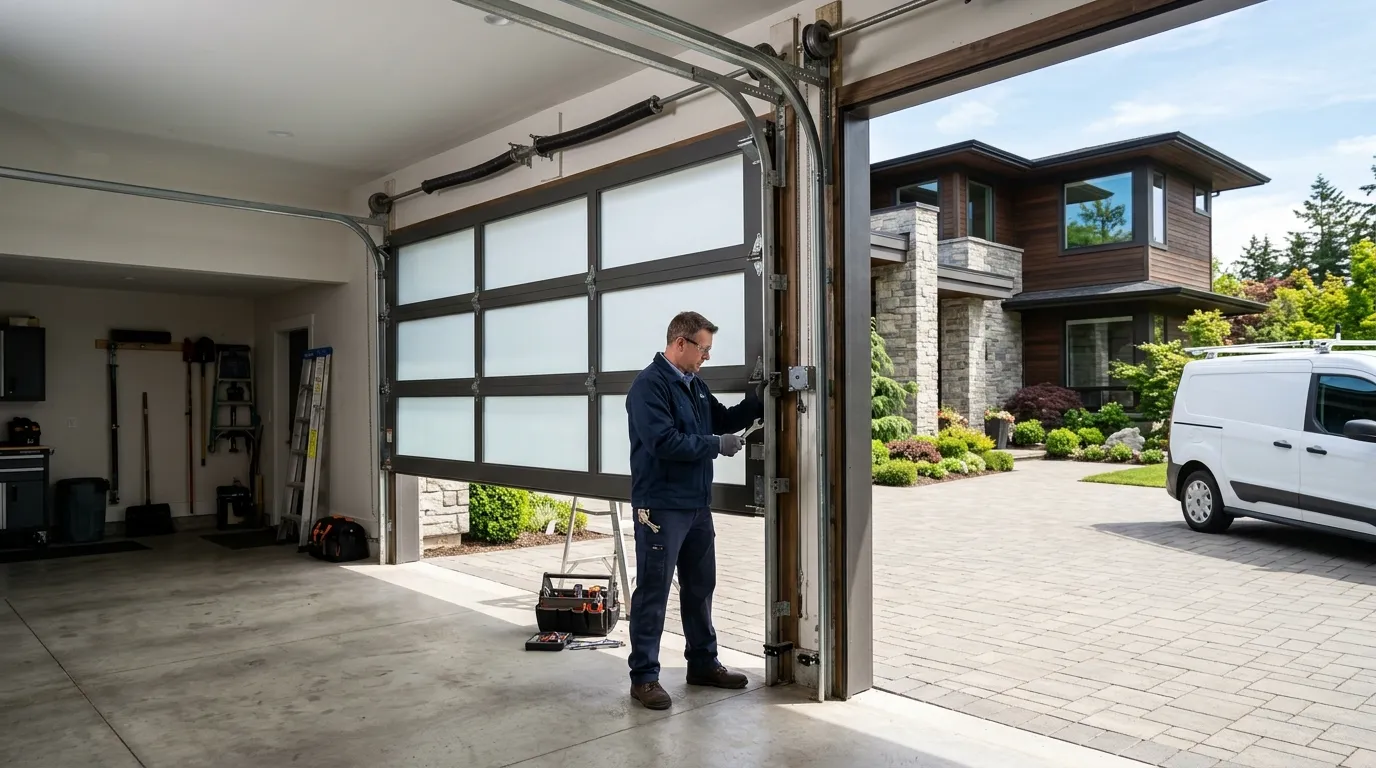
What you can check safely: the wall switch battery, whether the photo-eye sensors are knocked out of alignment (a common cause of a door that reverses or won't close), and whether anything is physically blocking the track. If none of that explains it, stop there. We don't stock every obsolete part for a door this age on the truck - sometimes the honest fix is a new spring set and hardware rather than chasing parts for a door that's been running since 1976.
What You Are Seeing
A door that drops fast the last foot, a loud bang from the garage followed by the door refusing to budge, or a cable hanging loose at one side - these all point to a broken or failing torsion spring, and on a door from the 1976 era that's the single most common call. Rust streaking down from the spring cones is often the early warning sign, months before the snap.
A door that opens but won't stay open, or reverses partway through closing, points more toward the opener or the sensors than the spring itself - a different, usually cheaper fix.
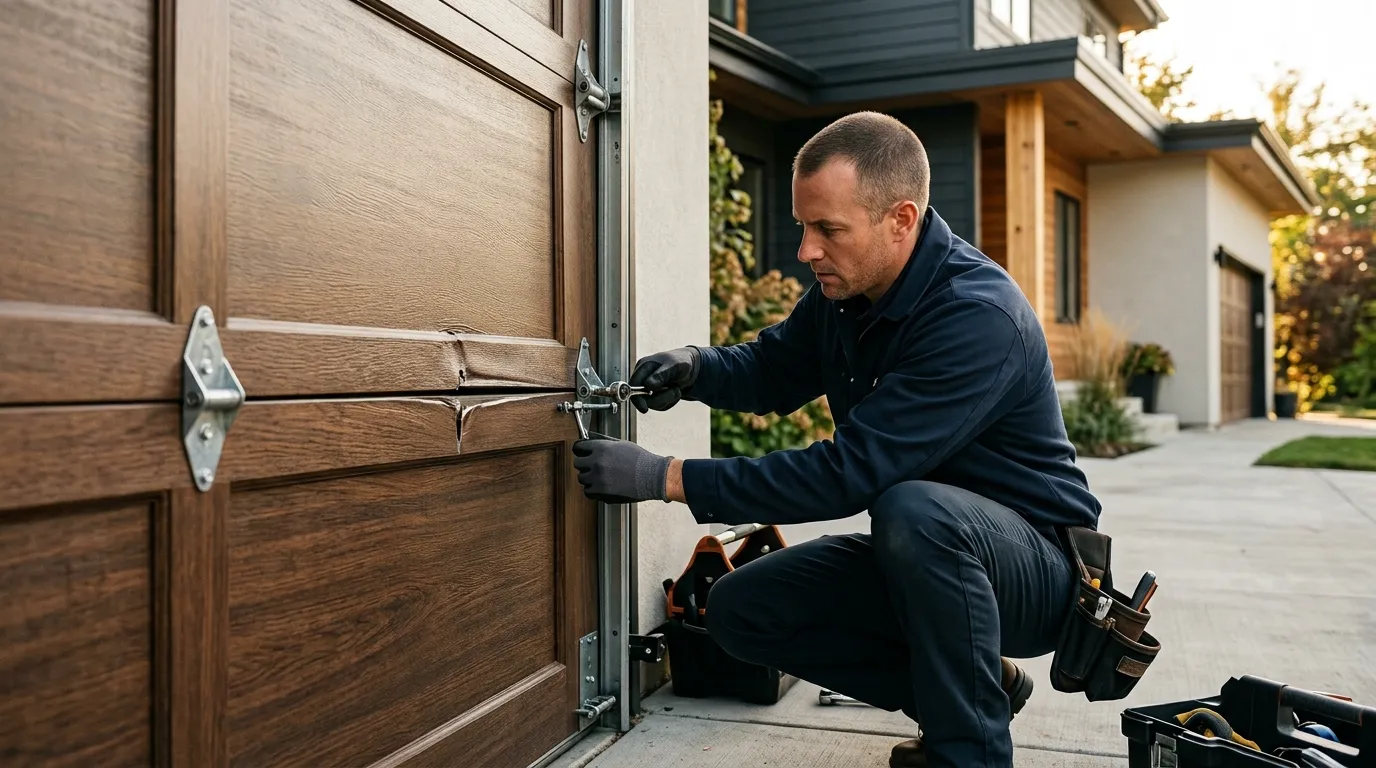
If the panel itself is bowed or the track is bent rather than just the spring gone, that's a case where repair costs start to run close to replacement, especially on a door this old where matching panels aren't available anymore. We'll tell you straight when that's the case instead of patching something that'll fail again in a year.