Why This Fails Locally
Idaho Falls's service area runs from older 1960s construction through builds into the 2000s, but Shelley sits at the newer end of that spread, with a median build year of 1976. That matters more than it sounds like it should. Doors and openers installed on houses from the mid-70s were built to a different standard than the ones going into 1960s houses ten minutes away: heavier steel torsion springs replacing the light extension-spring setups that were still common a decade earlier, and track hardware that assumed a garage used daily, not once a week for the lawnmower.
When a Shelley door fails, the failure usually matches that era. Torsion springs that have carried close to fifty winters of cold-band temperature swings (this stretch of Idaho sits in a severe cold climate zone) lose tension unevenly, so one side of the door drops before the other and the opener strains against it instead of stopping. Cable fraying on the drum shows up around the same age. None of this is a Shelley-specific defect - it's what 1976 hardware does by year forty-plus, and it's a different failure pattern than what shows up on a house built in 1995.
We drive the 9 miles out from Idaho Falls for these calls. There's no branch here, no local yard - just a truck that comes when you call.
Doing It Yourself
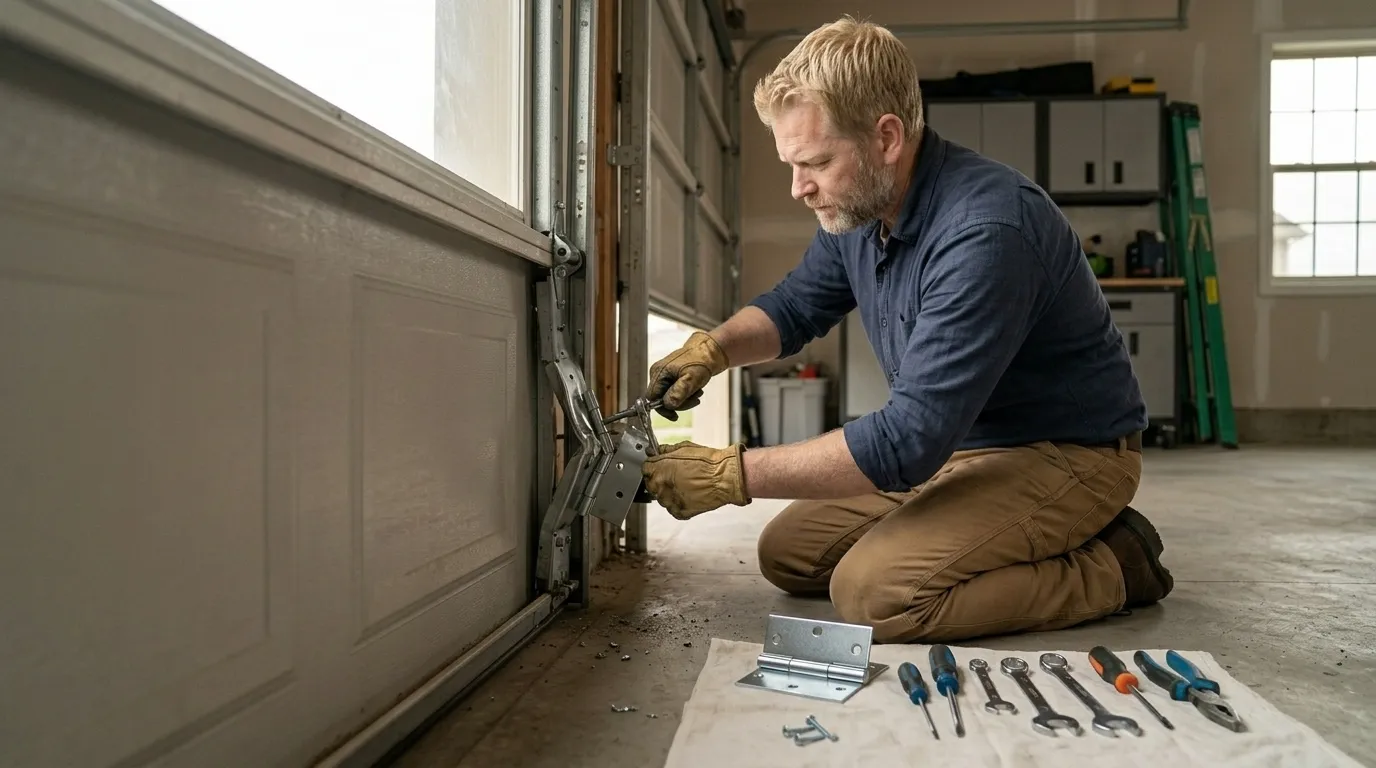
A door that's heavy to lift by hand, or that slams down instead of gliding, almost always means a torsion spring has lost tension - not stretched, not worn out gradually, but lost holding force the way old steel does. Do not try to adjust or replace this yourself. A torsion spring under load can put someone in the hospital, and on the older setups still around Shelley's 1976-median housing stock, the winding cones themselves are sometimes worn enough that they let go without warning.
What you can safely check: the track for visible dents or gaps where rollers have jumped, the bottom weatherseal for tears (worth checking twice a year in a climate this cold, since a torn seal lets frost build on the inside of the door), and the photo-eye sensors near the floor for dirt or misalignment if the opener reverses for no reason. Tighten loose bolts on the track brackets if you can reach them without removing anything under tension.
If the door won't move, moves unevenly, or the opener strains and reverses, stop there. That's a spring, cable, or drum problem, and those aren't a Saturday project on hardware this old.
What You Are Seeing
Shelley runs about 1,716 households against a median income of $63,864 - both close to, but not identical to, the wider service area's $64,273 median across 10,269 households. That closeness matters for one practical reason: the housing that produced those numbers is largely the same generation of construction, which means the same generation of garage door hardware showing up for repair.
What we actually see on these calls: torsion springs original or close to it, worn cable on the drum side, and openers from an era before photo-eye safety sensors were standard - meaning some of these doors were retrofitted later with sensors bolted on, sometimes not quite aligned right. In a severe cold climate, that misalignment gets worse in winter as concrete floors heave slightly and mounting brackets shift half an inch.
We're not the page to read if you're comparing garage door companies broadly across Idaho Falls - that's covered on our main repair page. This one's just about what breaks on a Shelley door and why.