Why This Fails Locally
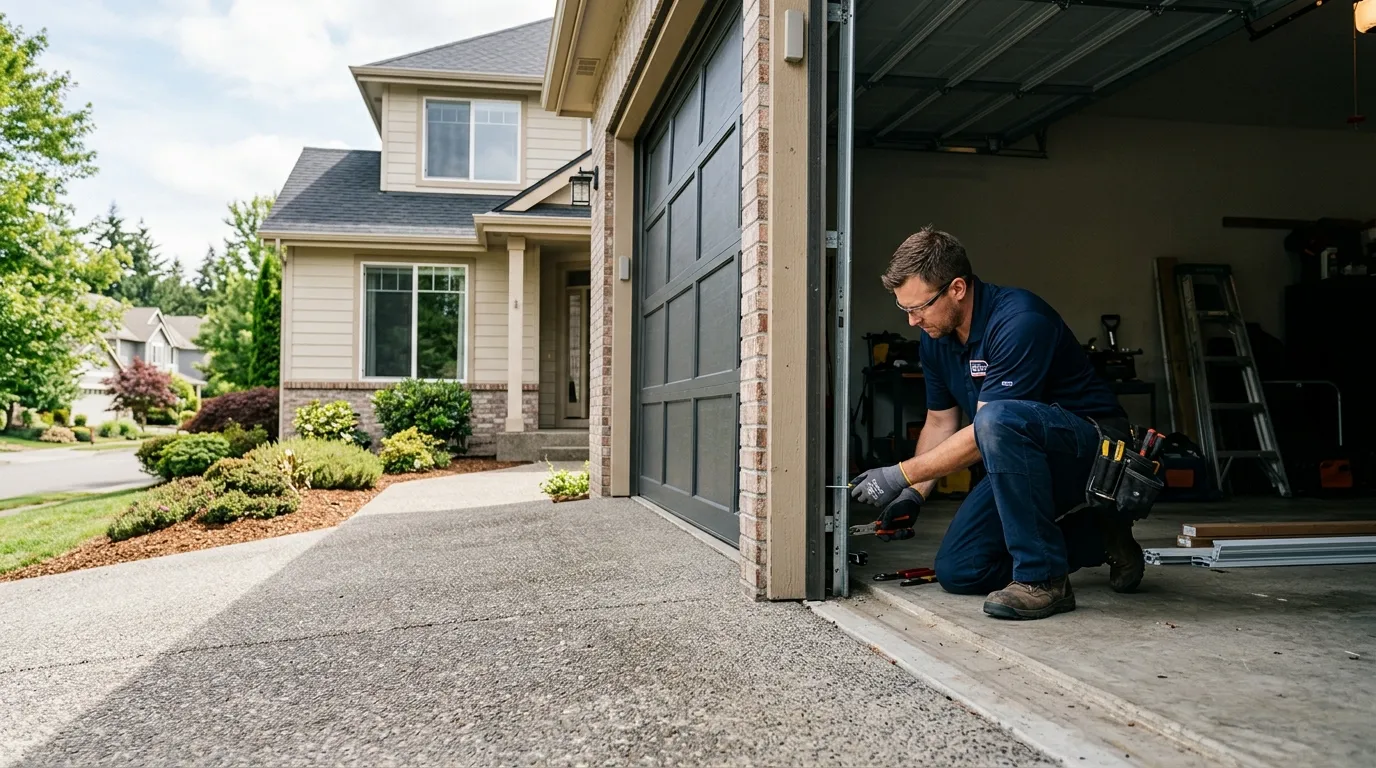
Most houses in Shelley went up around 1976, and a lot of them are still running the door hardware that came with the build. That's not a guess about age - it's the track, the hinges, the end bearing plates, sometimes the whole one-piece door itself, still doing the job forty-plus years later because nobody ever had a reason to touch it until it broke. Nothing failed loudly enough to call anyone.
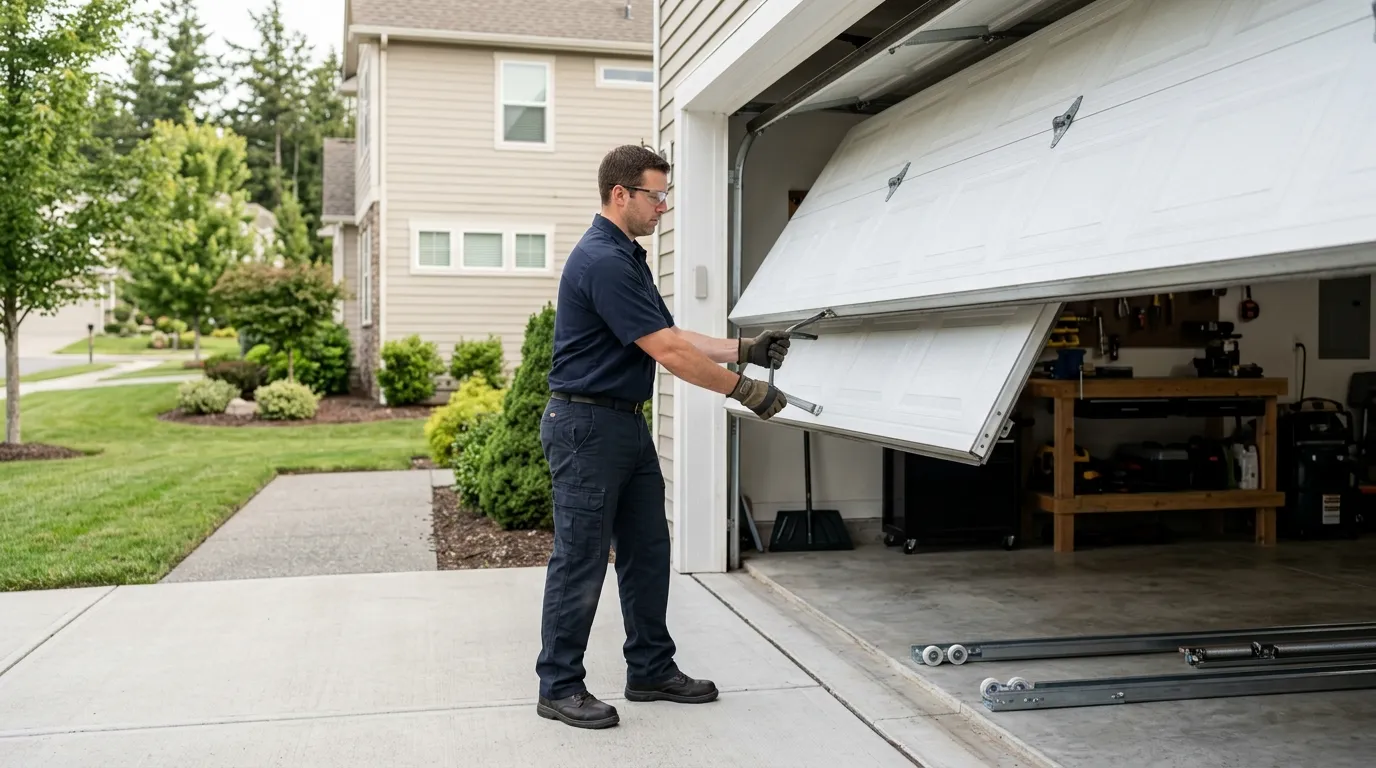
The area sits in a cold climate zone with real winter load on doors and openers, and gear from the mid-70s wasn't built with today's insulation standards or spring cycle counts in mind. When that original hardware finally gives out, it's rarely one part - it's the whole system aging together, which is why a spring swap or a new opener bolted to old track often doesn't hold. The fix that actually lasts is a full new door sized and balanced for the opening as it exists now, not as it was engineered decades ago.
Doing It Yourself
You can find a garage door kit at a box store and a video showing the install. What the video won't show you is what's behind the wall studs on a house from 1976 - track anchors, header clearance, and jamb condition that hasn't been touched since the original build. On a house this age, the opening itself is sometimes not square anymore, and a stock door won't seal or balance right against it without shimming and adjustment work that's easy to get wrong.
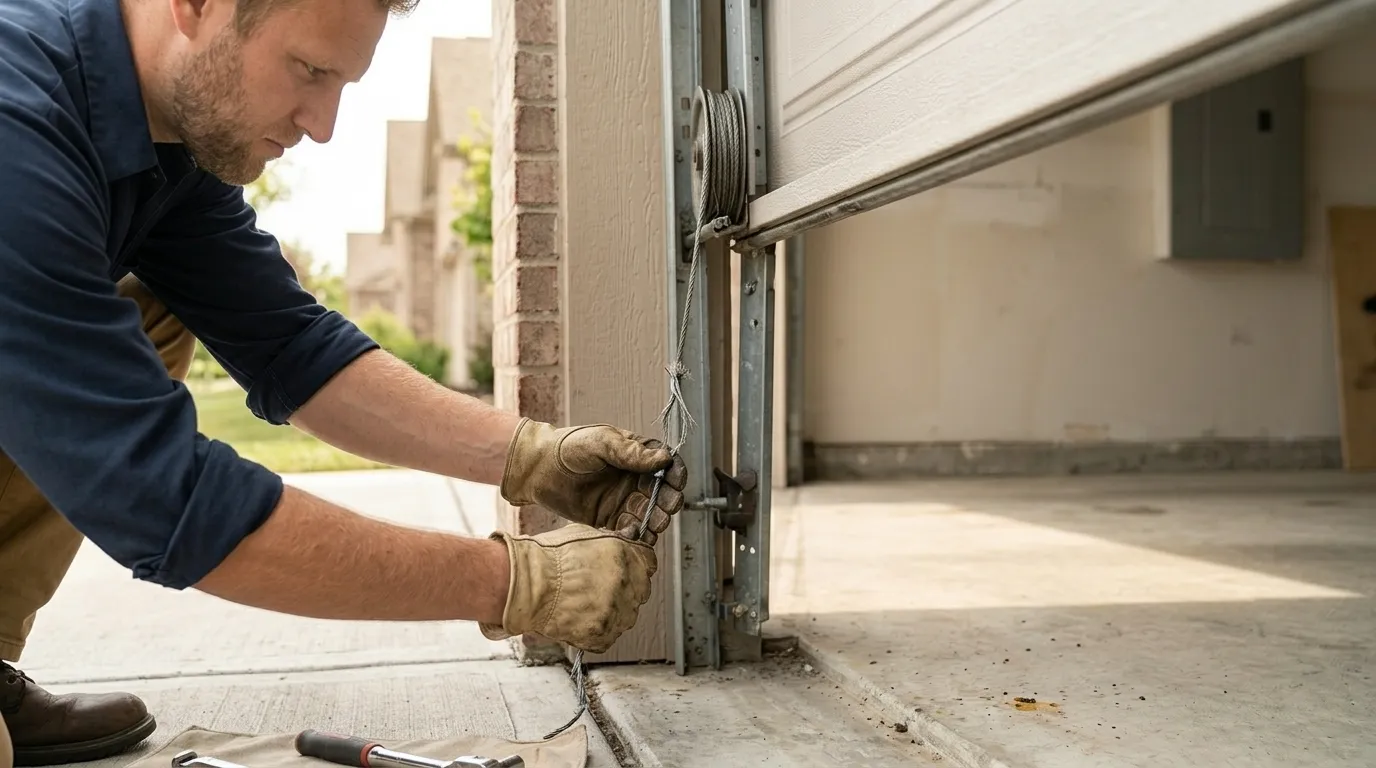
Spring tension is the other piece. A torsion spring wound to the wrong count for a heavier insulated door, in a cold-climate area where the door has to fight winter loads, is how people end up hurt. We're not going to tell you it can't be done - some people do it fine. But if you've never set spring tension before, this isn't the door to learn on.
What You Are Seeing
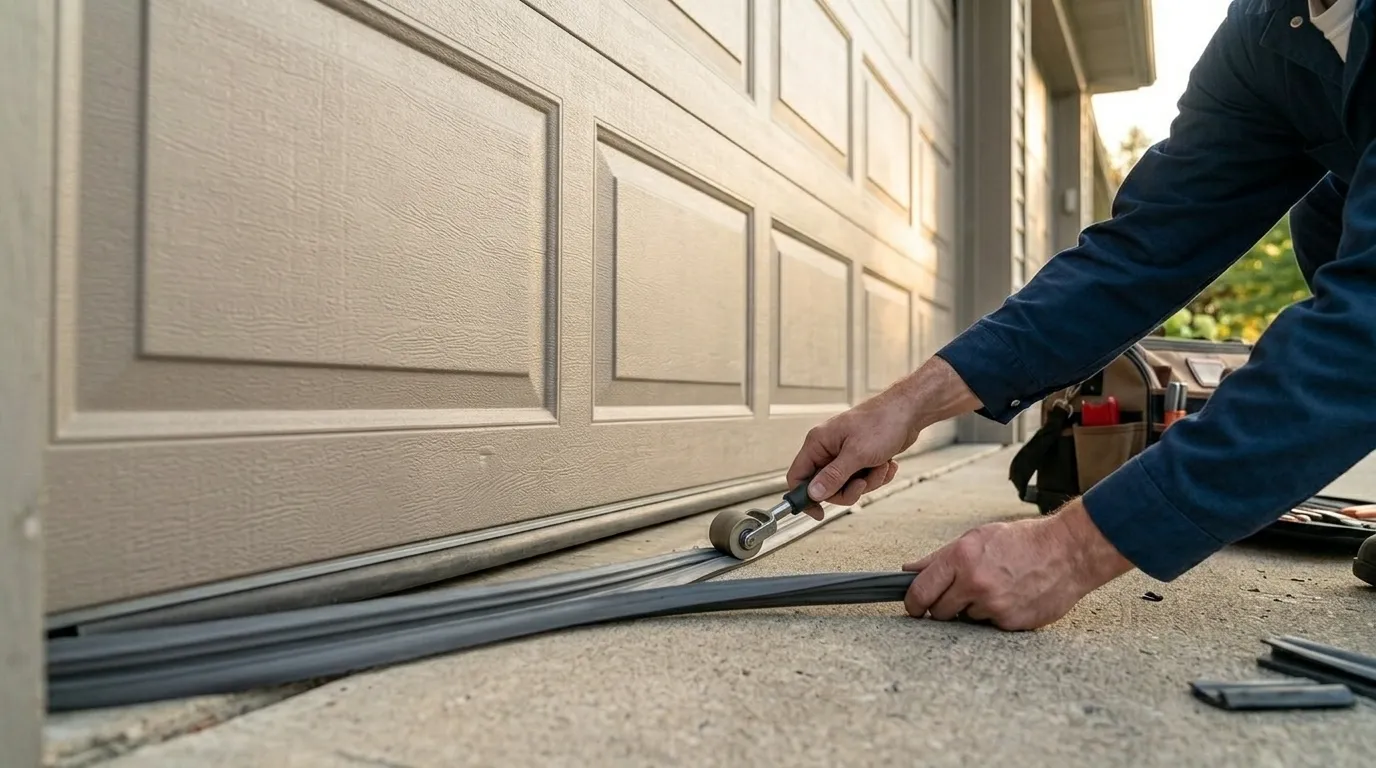
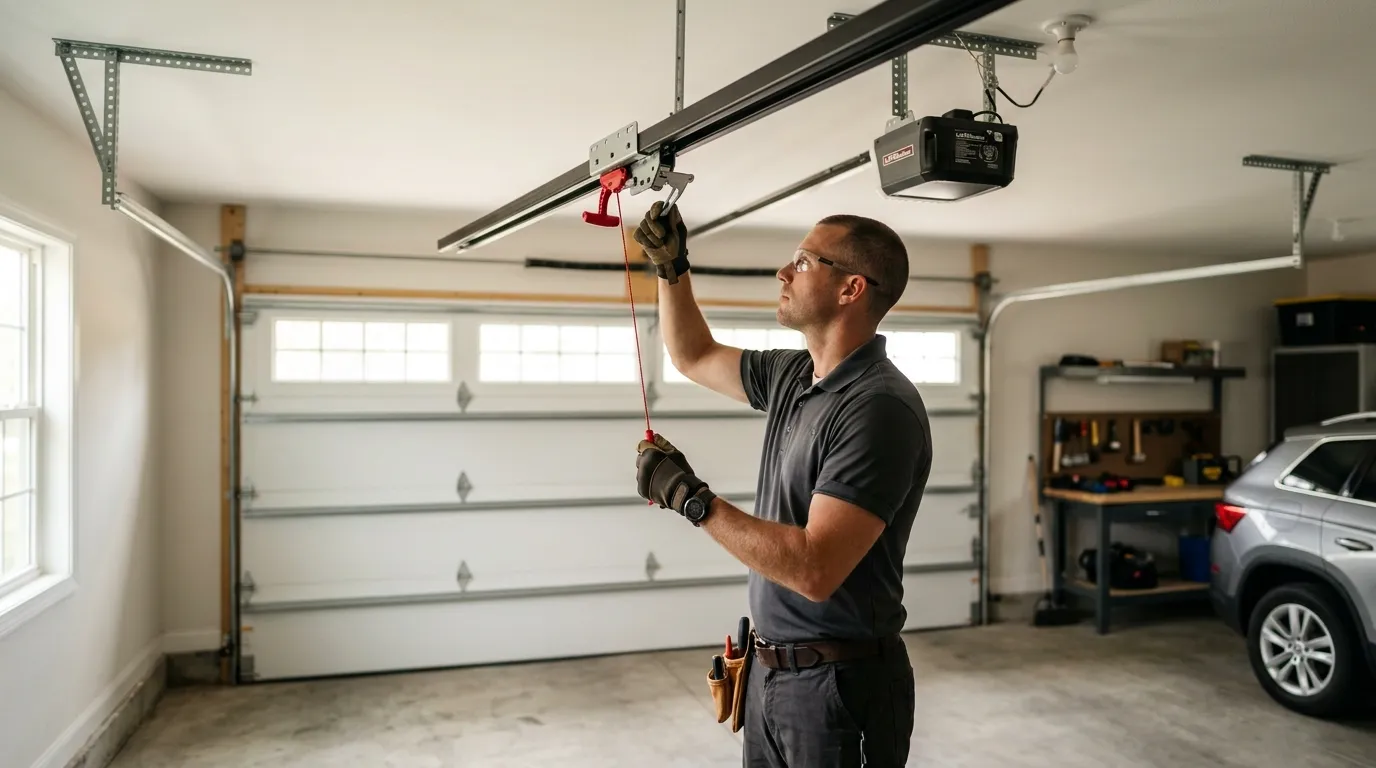
If your door is loud going up, hangs unevenly, or the opener strains and reverses partway through the cycle, that's usually the spring losing its wind, not the opener failing - common on doors that have run the same spring for as long as the house has stood, roughly since 1976 for a lot of Shelley. If the door itself has visible sag along a panel or gaps at the bottom corners in winter, that's usually the door section itself giving out, not just weatherstripping.
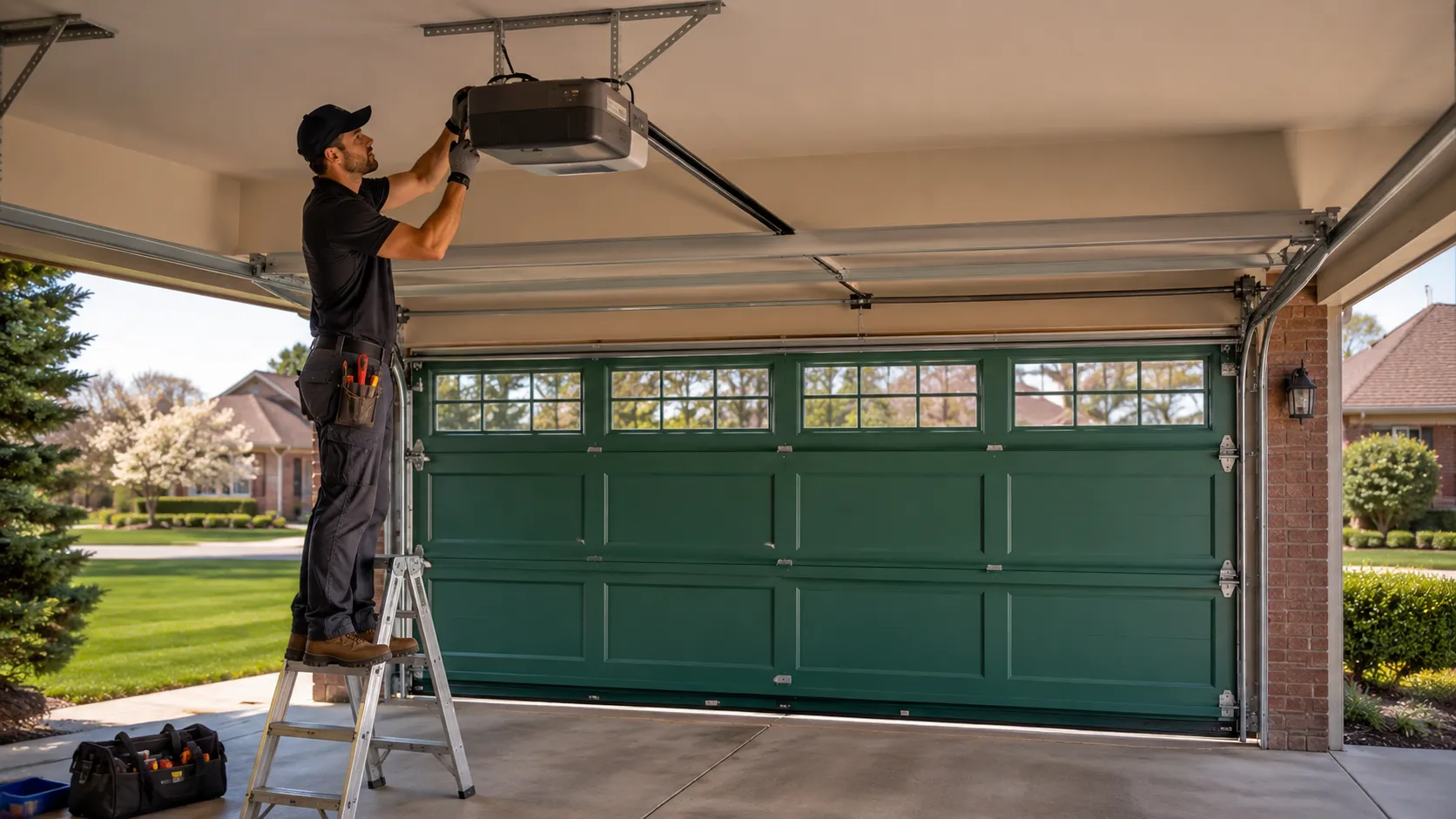
Either way, on a house this age it's worth having someone confirm whether you're looking at a repair or whether the whole unit - door, track, spring, and opener as a system - is past the point where patching one part makes sense.