Why This Fails Locally
Shelley is a small town by household count - 1,716 of them, not the sprawling grid you get closer to Idaho Falls. That size matters for opener work because it means most of the housing went up in a tight window, not in waves over sixty years. The bulk of what's here dates to around 1976, which puts a lot of these garages on the same generation of header framing and the same style of track mount.
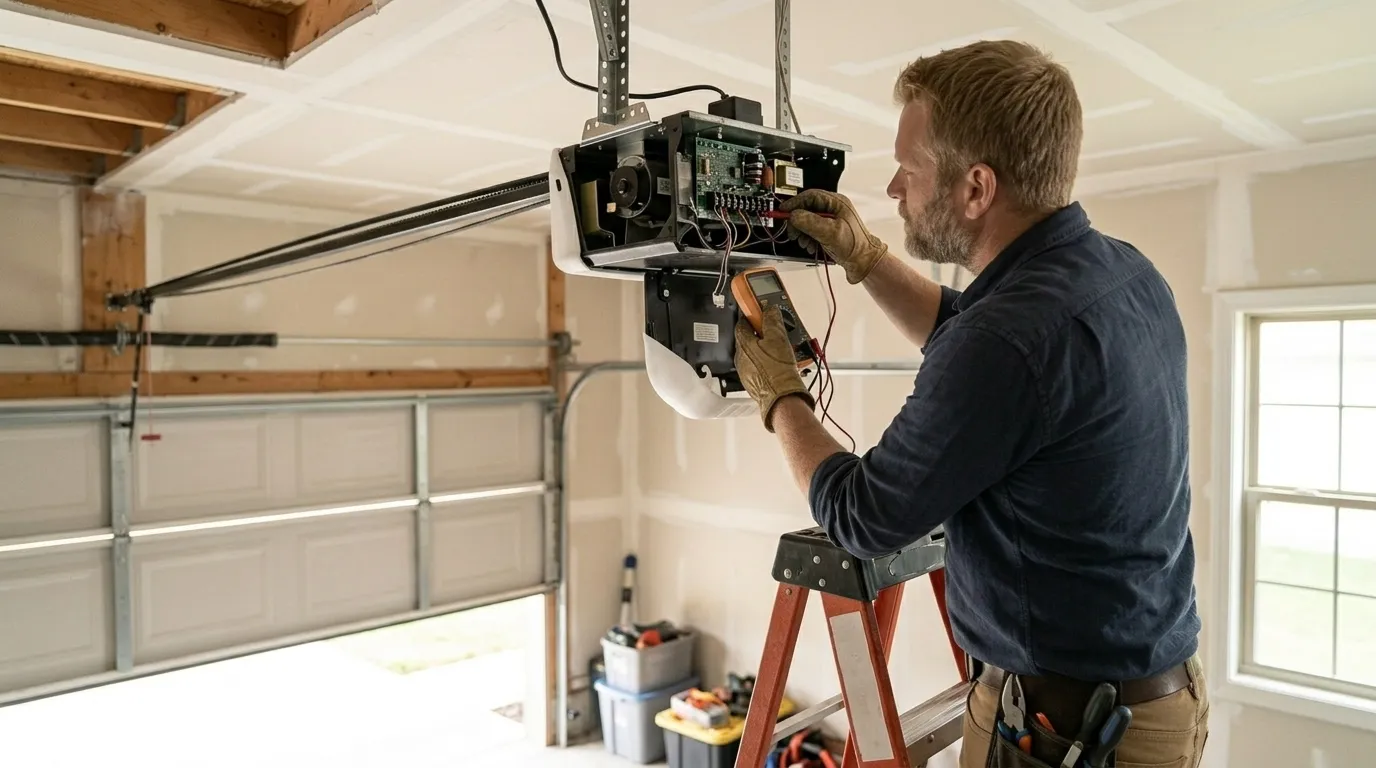
That consistency is exactly why openers fail the same way across Shelley. A house built in the mid-70s usually has a low-clearance header, sometimes not enough room for a standard jackshaft-style opener without adding a bracket kit. The chain-drive units that came standard back then have long since been swapped out piecemeal, so we run into openers that don't match the house - a newer belt-drive bolted to a header that was never built for the mounting hardware it uses now.
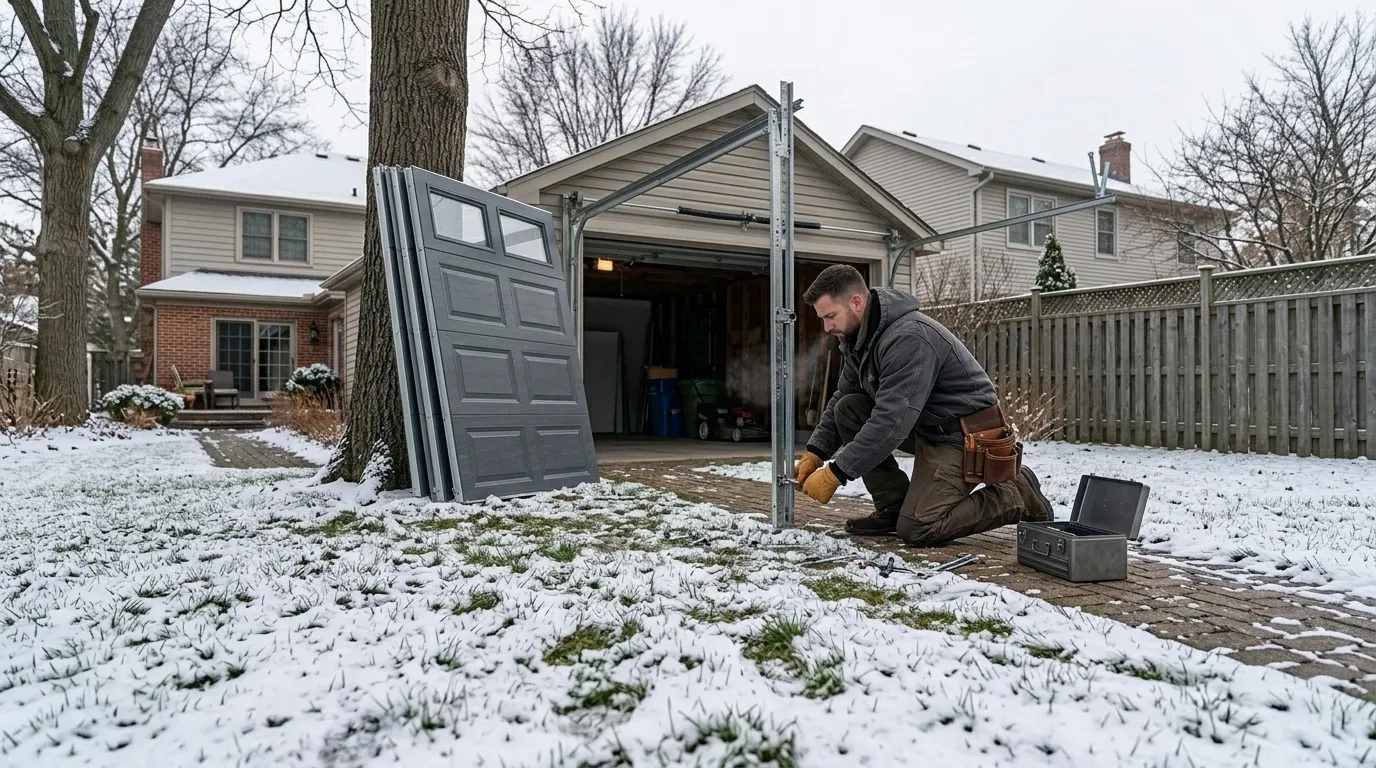
Winters here are the other half of it. This is a cold-severe climate zone, and an opener with worn gears or a weak capacitor will often make it through summer fine and then quit the first hard freeze, when cold grease seizes the drive and the motor can't push through it.
Doing It Yourself
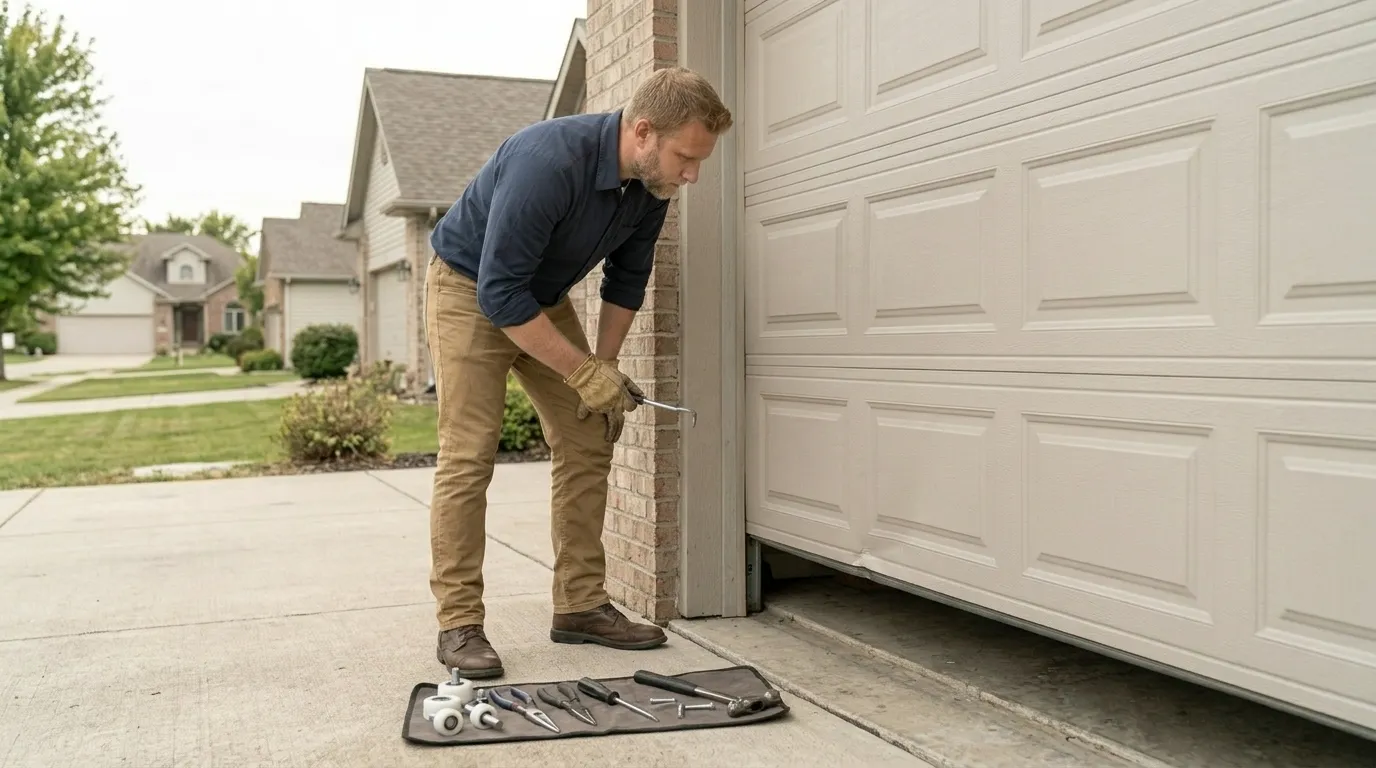
If you're comfortable with a ladder and a drill, swapping a like-for-like opener on a standard header isn't beyond a homeowner. Where it goes wrong in a town built mostly in the 1976 window is the header itself - a lot of these garages were framed for the light chain-drive units of that era, and a heavier modern opener without proper reinforcement can work the mounting screws loose within a season, especially once winter puts extra load on the door from cold, stiff springs.
The other part people skip is disconnecting and testing the safety reversal system, which matters more in a cold-severe climate where ice on the floor track changes how the door seats. If you're not going to test it properly after the install, it's not worth doing it half-right.
We'll say plainly: this isn't a job we push people toward hiring out just to hire it out. A straightforward swap on a door that's already square and balanced is a reasonable weekend project. Where we'd tell you to call instead is if the header needs new bracing, or if you're not sure the existing track is even plumb - guessing on that with a new opener bolted to it just moves the failure point.
What You Are Seeing
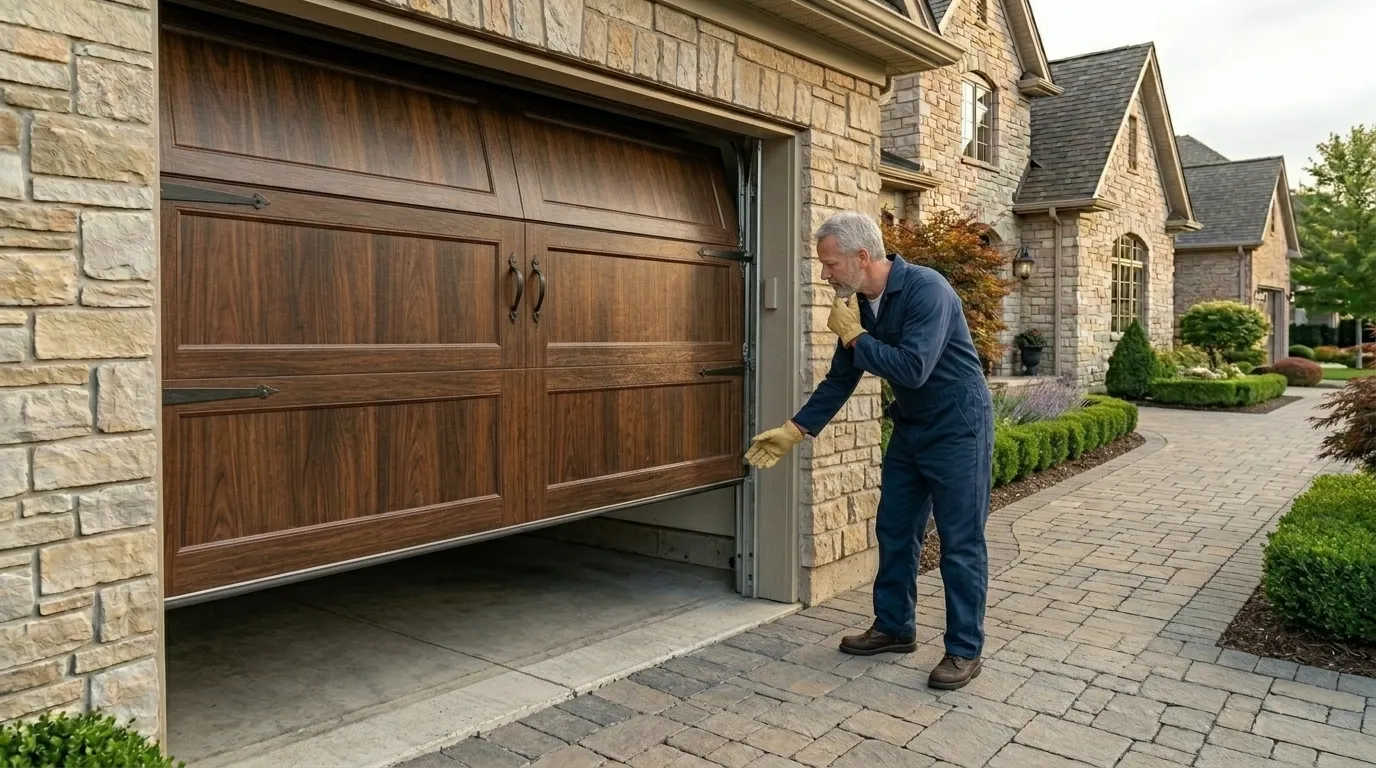
A dead opener in a Shelley garage this old usually falls into one of three buckets. First: the motor still hums but the door won't move - often a stripped drive gear, common on chain-drive units original to houses from the mid-70s that have simply run their course. Second: the door reverses immediately on close - a safety sensor misaligned, sometimes from age, sometimes from someone shifting storage shelving too close to the beam path. Third, and the one we see spike with the cold-severe winters here: the opener runs but stalls partway, because the door itself has stiffened up in the cold and the opener's straining against springs it was never sized for.
That third one is the trap. People replace the opener, the door still fights it in January, and they assume the new unit is defective. It usually isn't - the spring tension needed adjusting for the season and the load on the door, not the motor. If you're seeing a stall rather than a dead unit, tell us that on the call; it changes what we bring.