What You Are Seeing
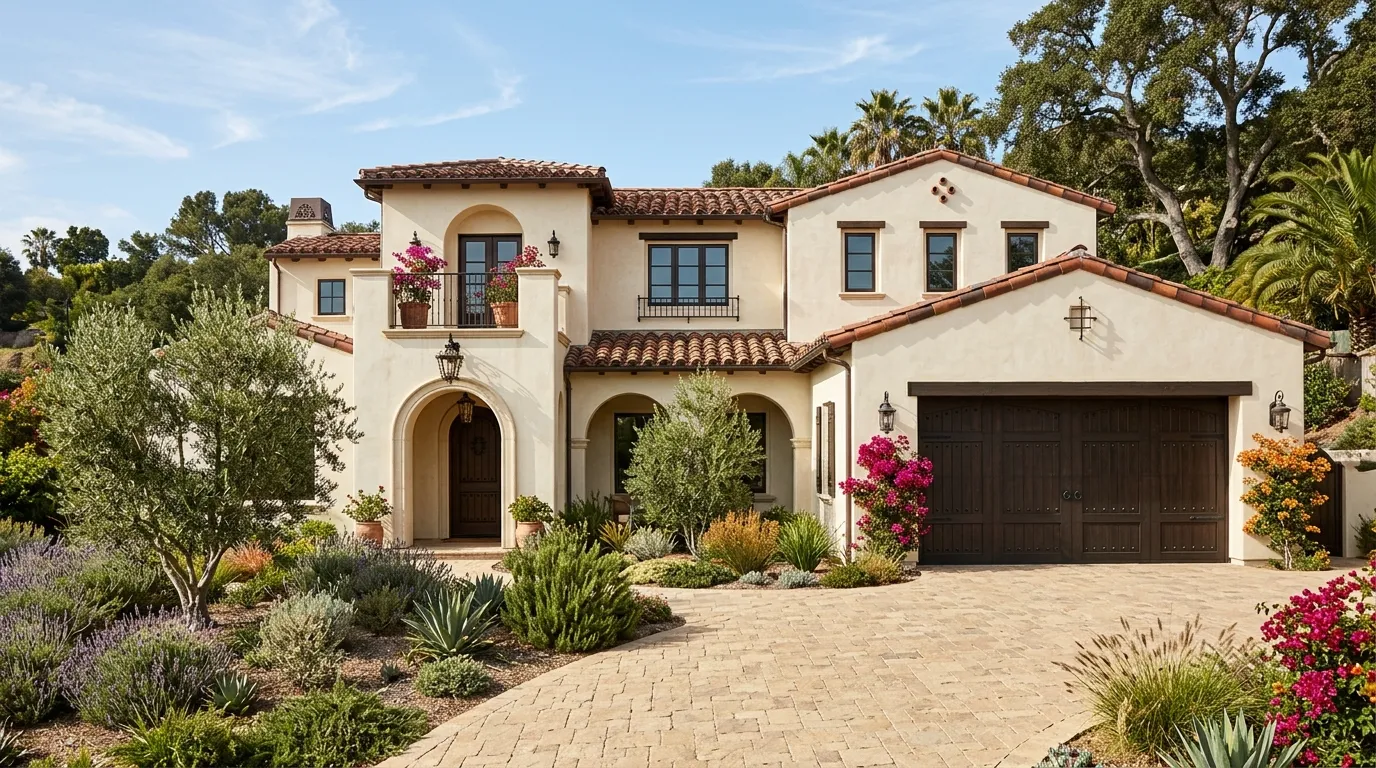
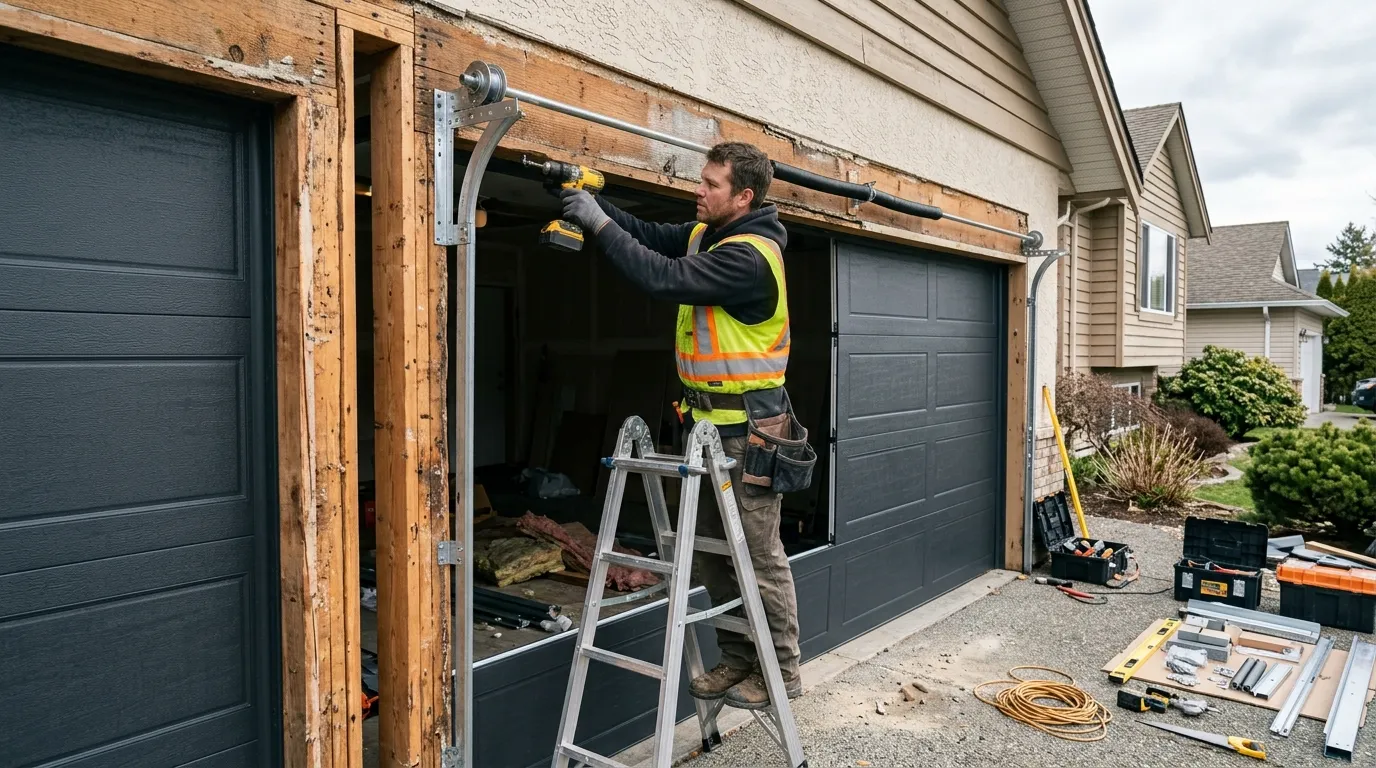
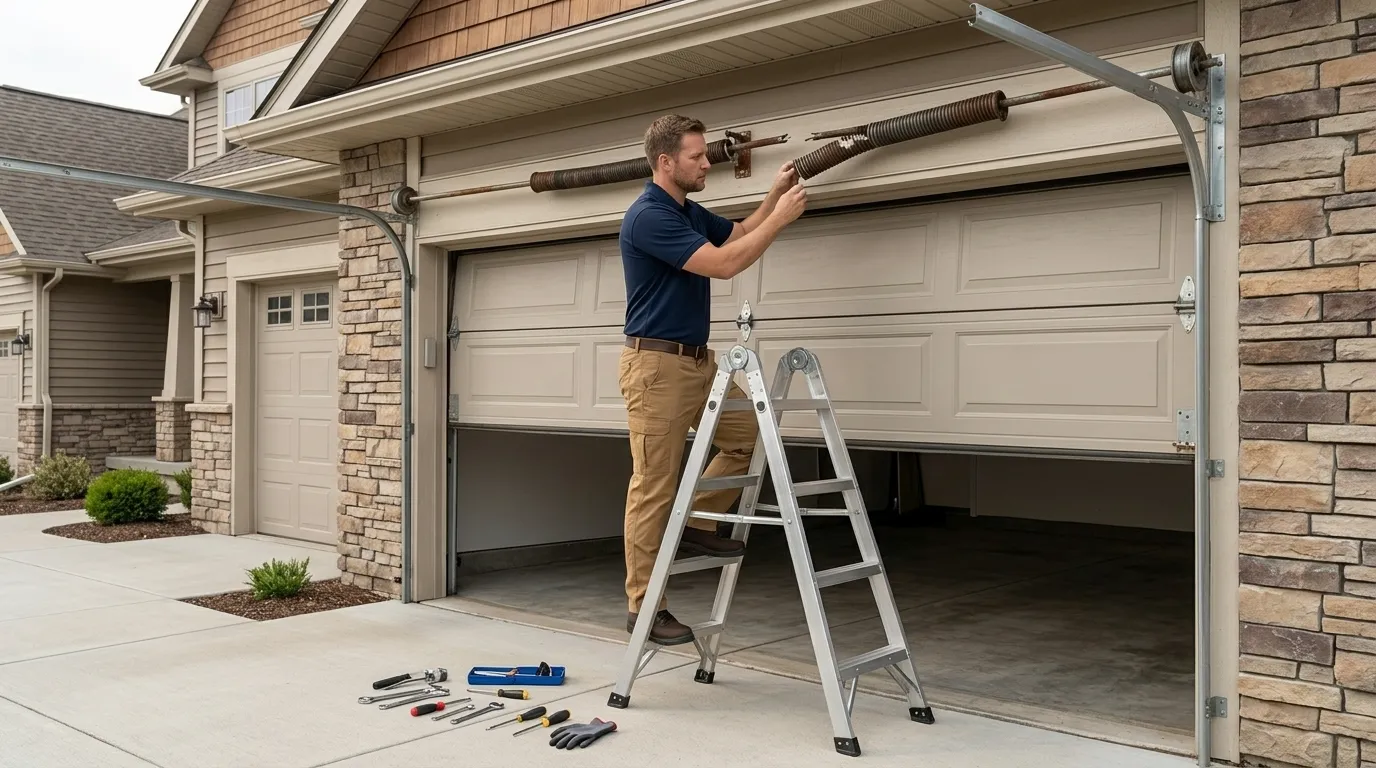
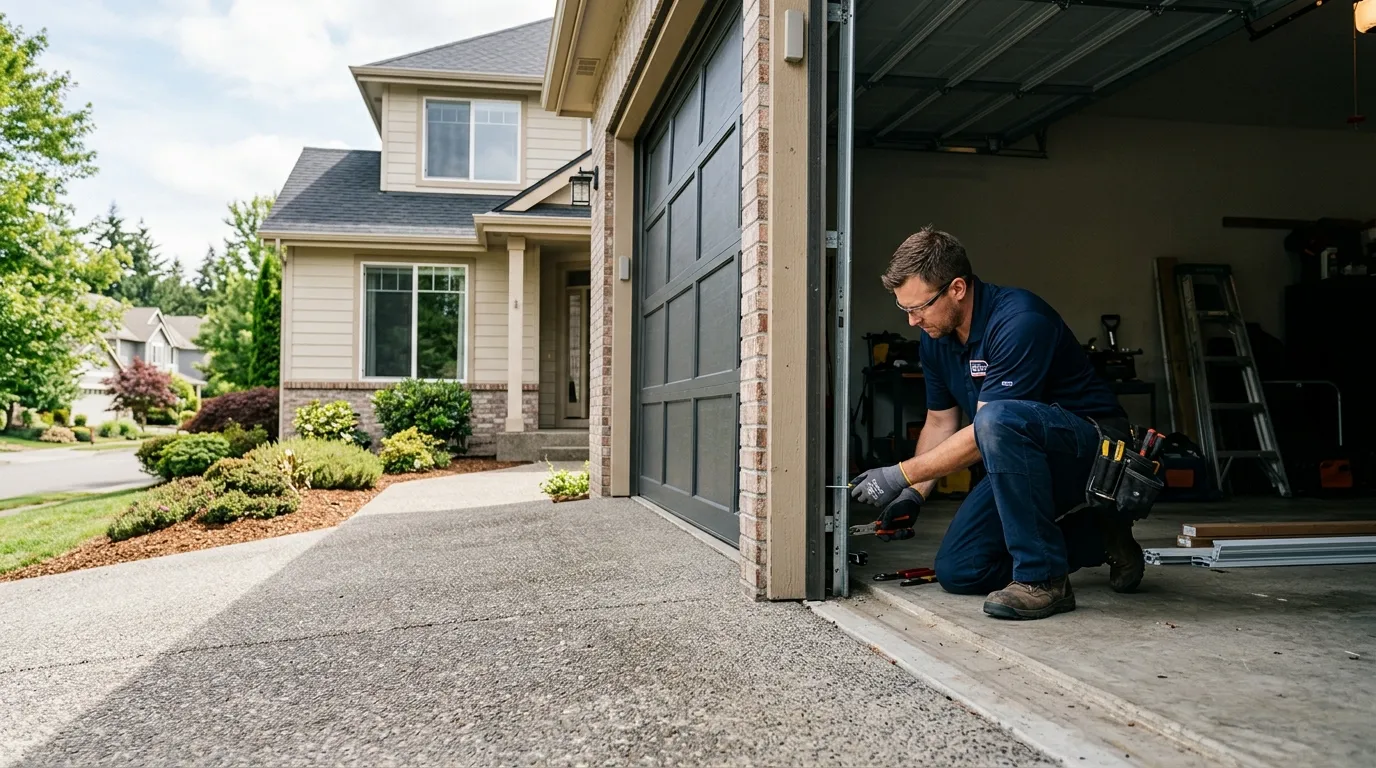
Ammon's median home was built around 2003, a full generation newer than the 1976 median across the rest of the service area. That matters more than it sounds like it should. A door built in 2003 is a factory steel sectional, usually insulated, usually a wide double panel on a single track rather than the narrower single-car openings common on older stock nearby. Most of these doors run on two torsion springs sized for the wider, heavier panel, with nylon rollers instead of the steel wheels you'd find on a 1970s door.
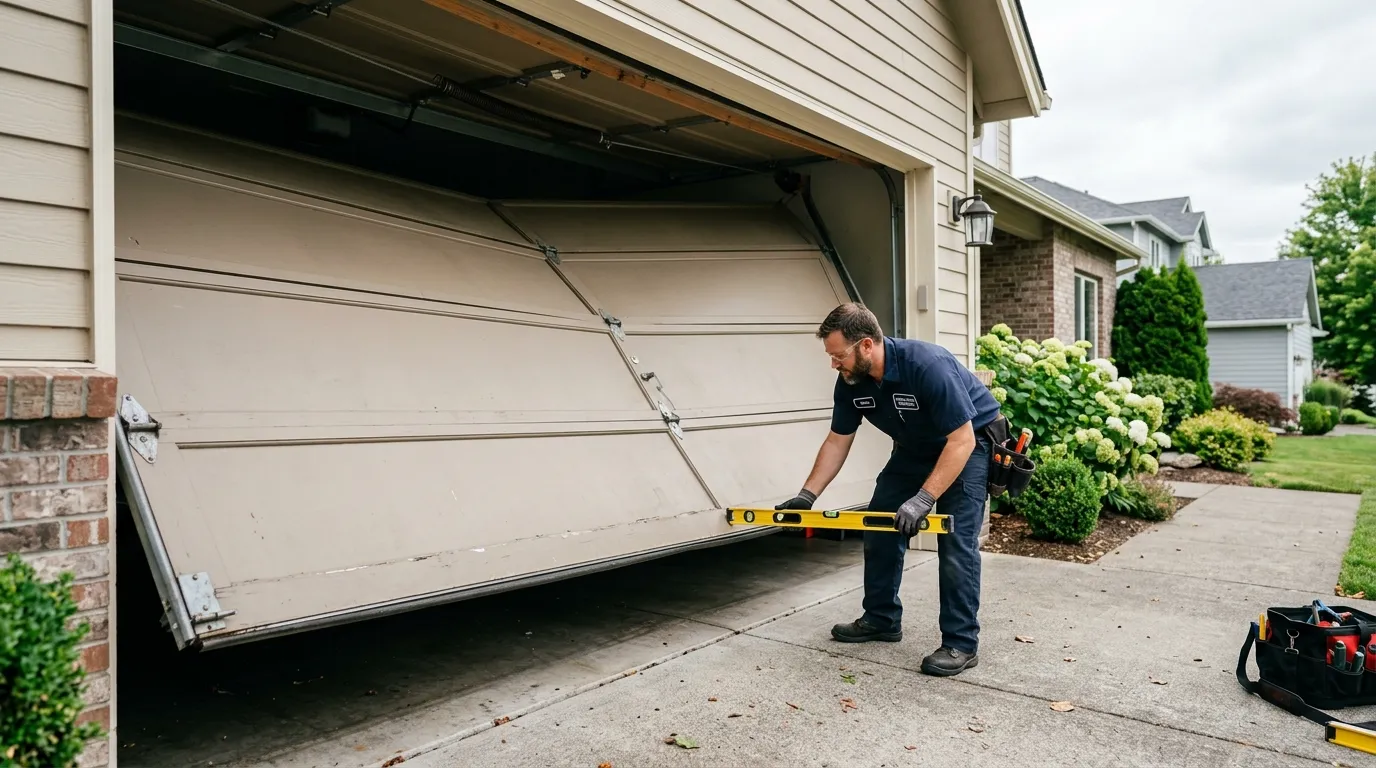
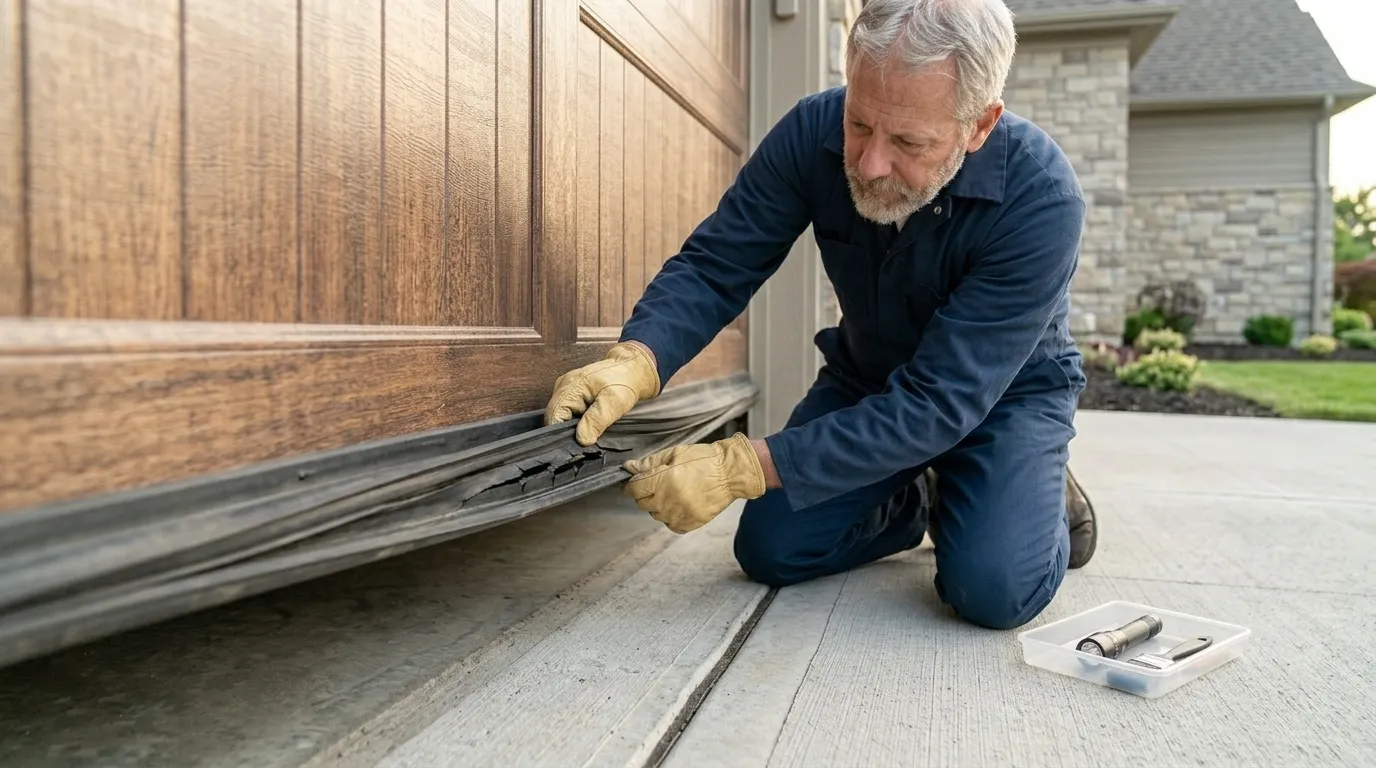
What fails on a door like this looks different from what fails on an older one. You're less likely to be dealing with a rotted wood panel or a single undersized spring straining to lift too much door. You're more likely to be dealing with worn nylon rollers going brittle in the cold, a torsion spring that's simply reached the end of its cycle count, or an opener's plastic drive gear giving out after two decades of daily use. The bones of the door are usually sound. It's the moving parts wearing on schedule that bring you to a maintenance call in Ammon, not structural failure.
How Long It Takes
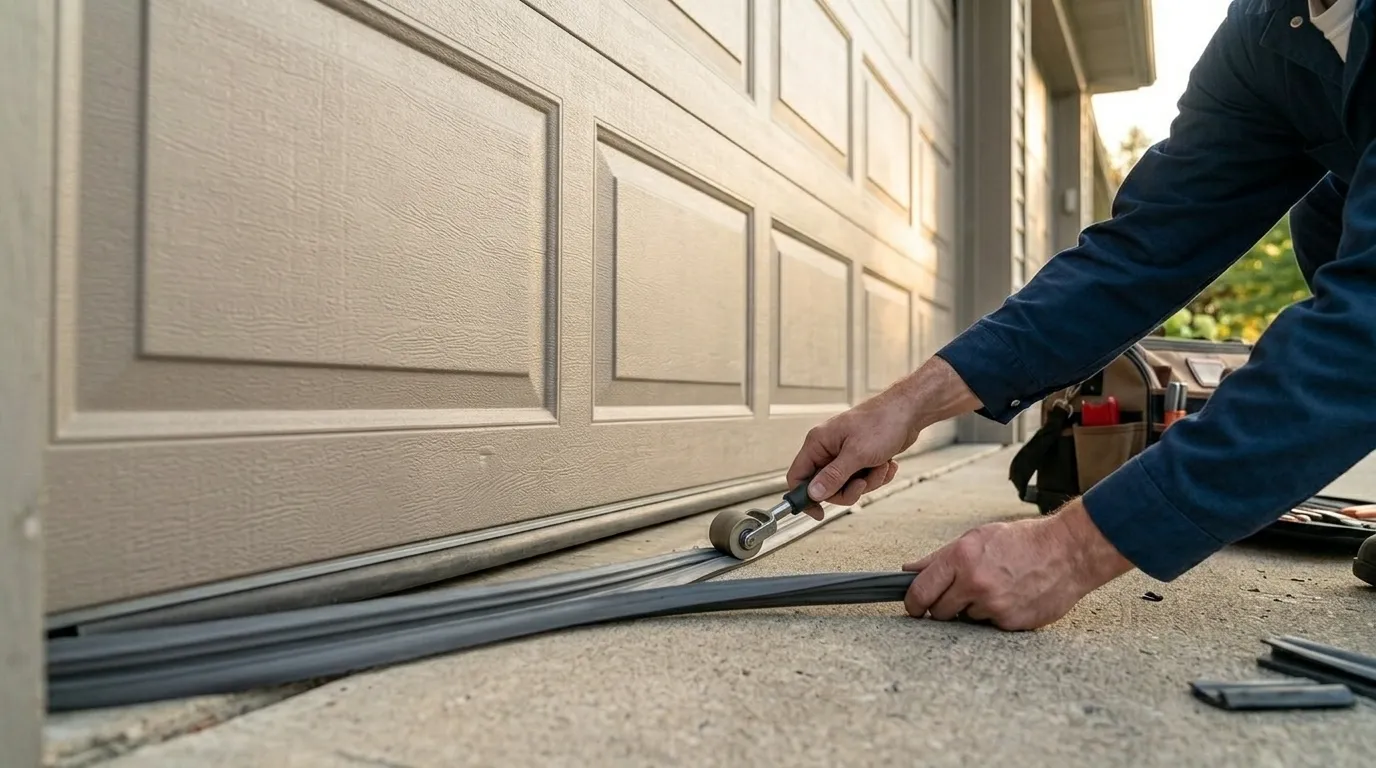
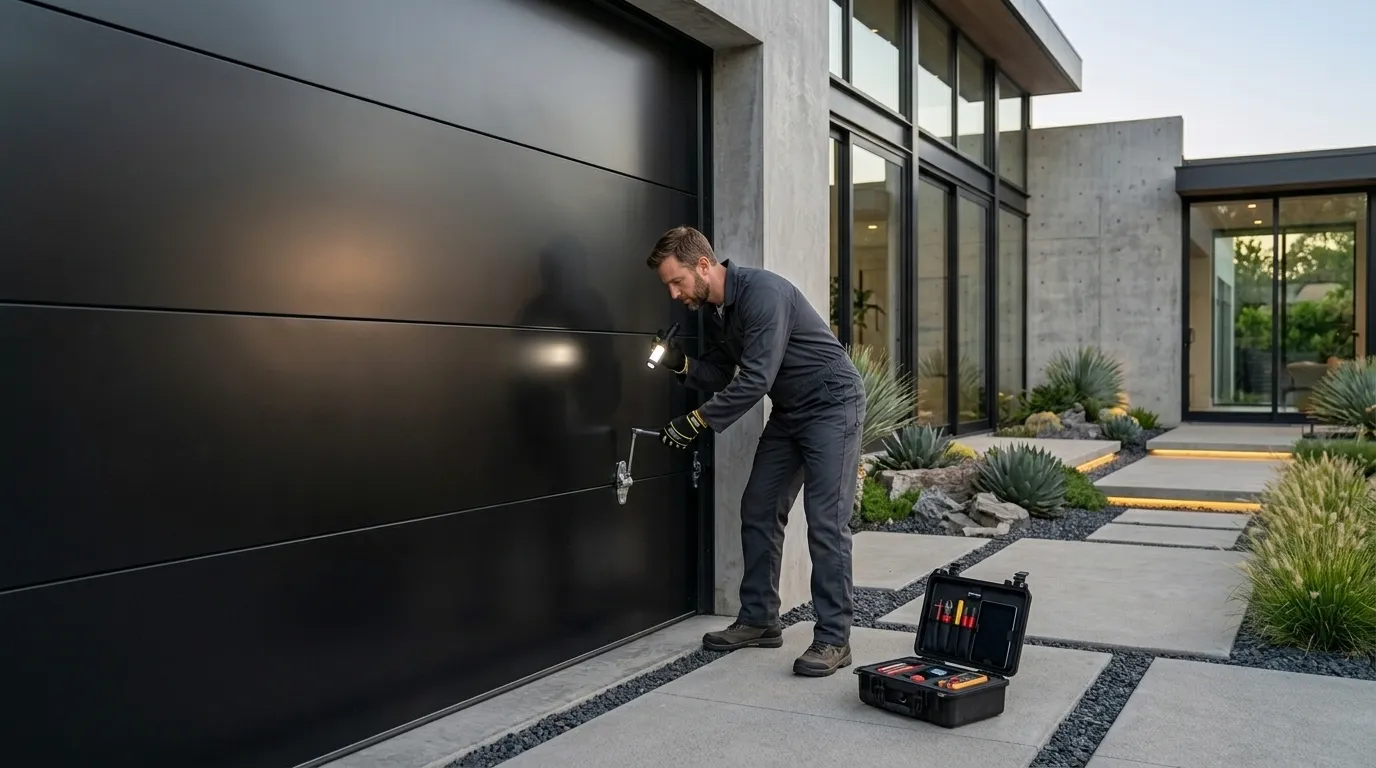
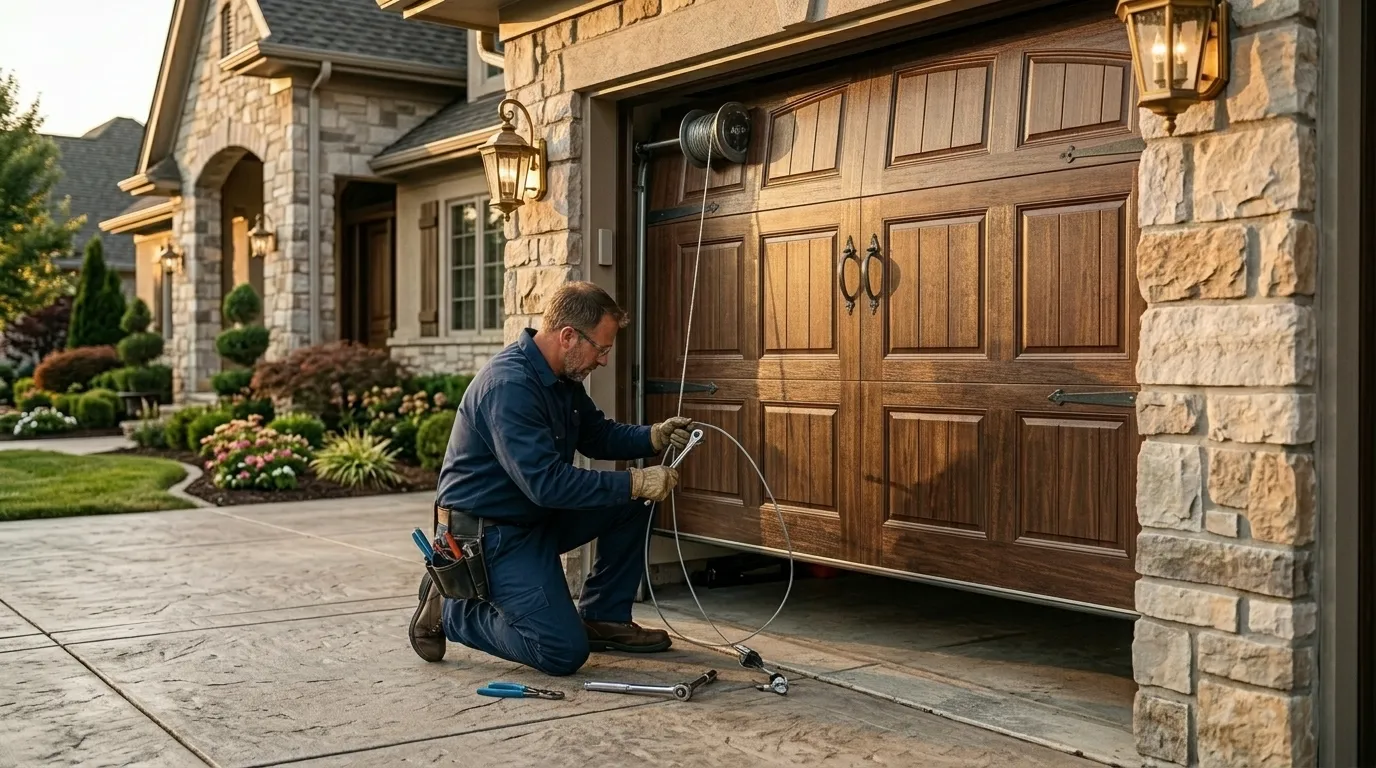
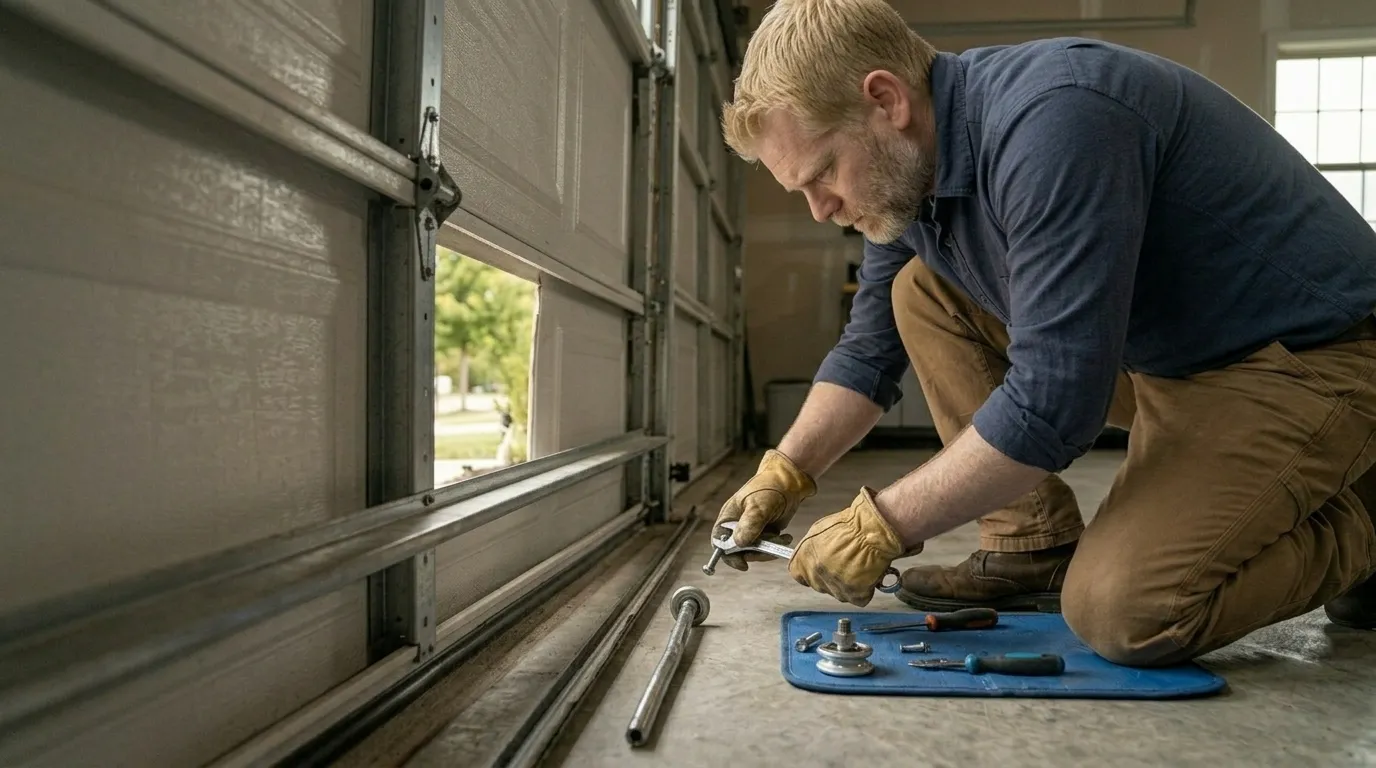
A standard maintenance visit on a two-torsion-spring double door, the kind common to Ammon's post-2000 builds, runs longer than a single-spring visit on an older narrow door simply because there's more hardware to check: two springs, two sets of cables, a wider track that needs squaring, and rollers on both sides. Balance testing on an insulated double panel also takes a beat longer since the tech has to account for the extra weight of the insulation layer when checking spring tension.
Winter cold is the other variable. In a severe cold climate, lubricant thickens and metal contracts, which changes how a torsion spring behaves under load compared to a summer check. A tech coming out from Idaho Falls will budget more time for a winter visit on one of these doors than a summer one, and that's worth knowing before you book, since it affects the window you're given.
Why This Fails Locally
Ammon's median income sits at $84,154 across 6,142 households, noticeably higher than the wider service area, and that shows up in what kind of door people bought when these houses went up around 2003: heavier insulated steel, wider spans, dual-spring setups built for a bigger door rather than a stripped-down single-spring model. That's a good door. But a heavier insulated double panel puts more sustained load on its torsion springs over twenty-plus years than a lighter single door does, and in a severe cold climate the steel contracts and expands through a wider swing every winter, which shortens spring life faster than mild-climate cycling would.
The other local factor is age clustering. When most of a neighborhood's doors went in within the same few years, they tend to start failing in the same few years too - not because of bad luck, but because torsion springs and nylon rollers are rated for a cycle count, and a whole subdivision built in 2003 is putting comparable wear on comparable hardware at the same time.
The Cost of This Job
I don't have a published price list to quote here, and I'm not going to guess at one - what a visit costs depends on whether it's a routine balance-and-lube check or a spring swap on a double door, and that's something to get a number on before the truck rolls, not after. What I can tell you is that a heavier insulated double door with two torsion springs generally costs more to service than a lighter single door, simply because there's more hardware and more weight involved in getting the balance right.
One honest limit: if a door's opener is original to a 2003 build and its main drive gear has already failed once, a second maintenance visit to nurse it along usually isn't worth it against just replacing the opener. Nobody wants to hear that during a routine visit, but patching a twenty-year-old gear a second time rarely holds.