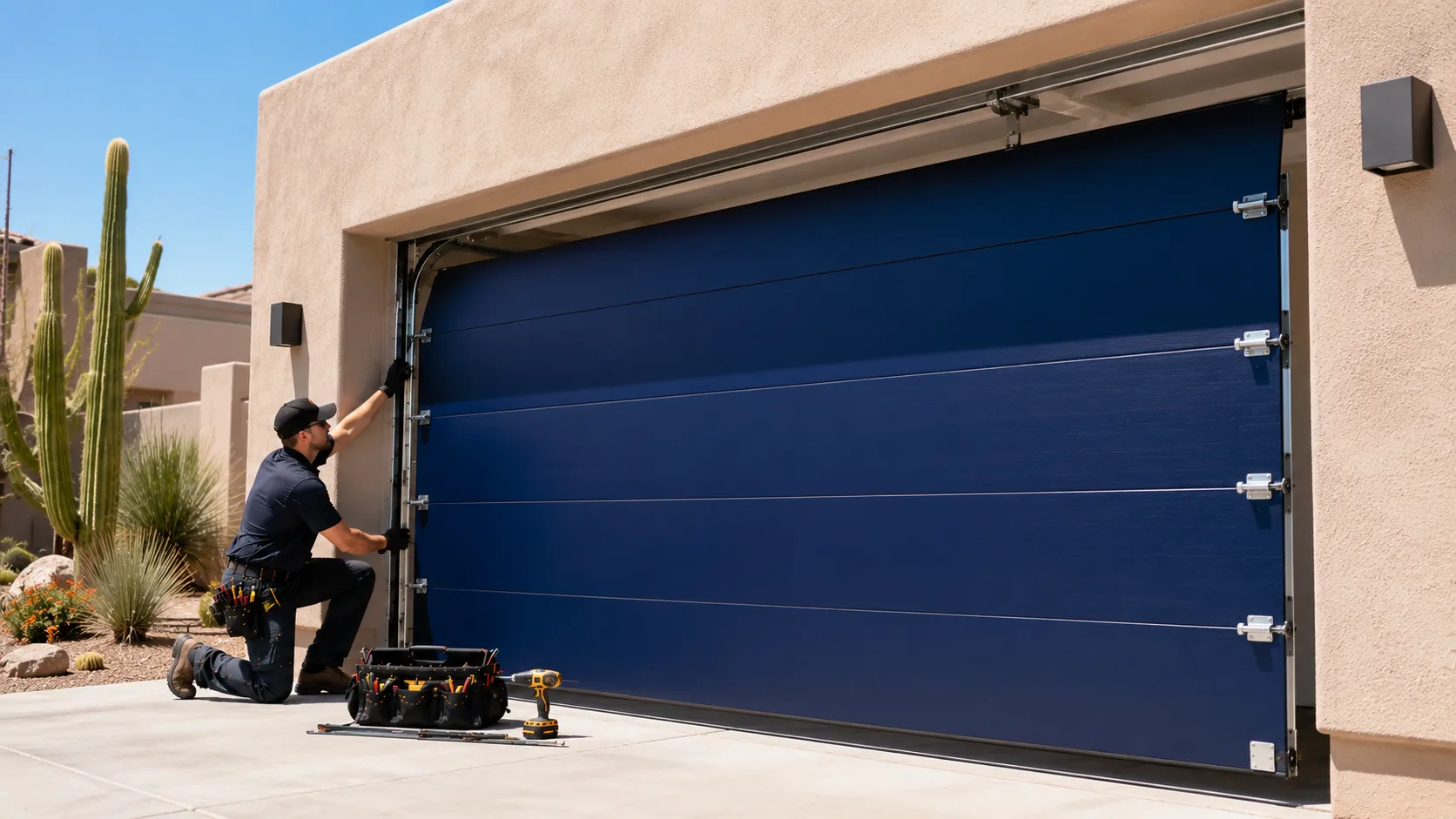
What You Are Seeing
Across the wider service area, the typical house was built back in 1976, and a lot of what we work on is original hardware from the 1960s and 70s. Ammon runs newer. The median year built here is 2003, roughly a generation past that. That gap matters more than it sounds like it should.
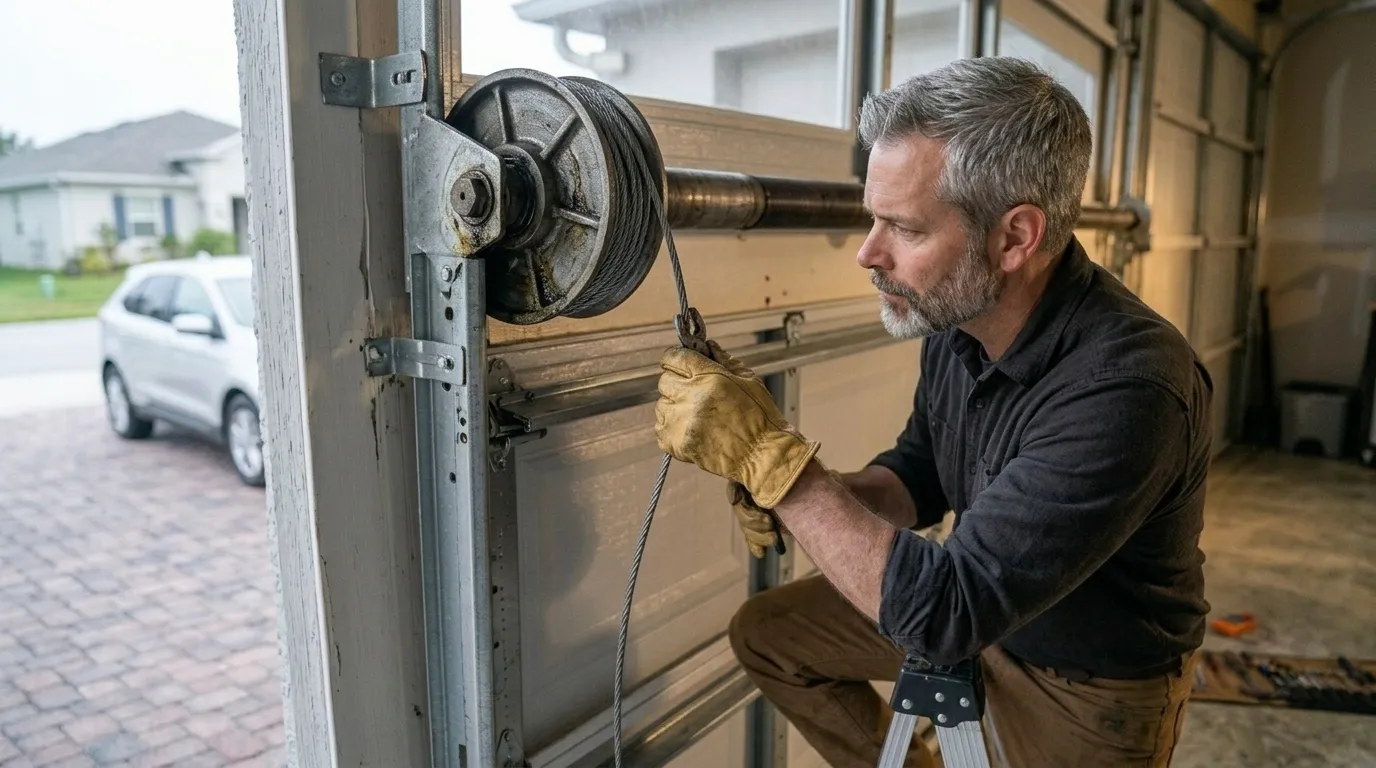
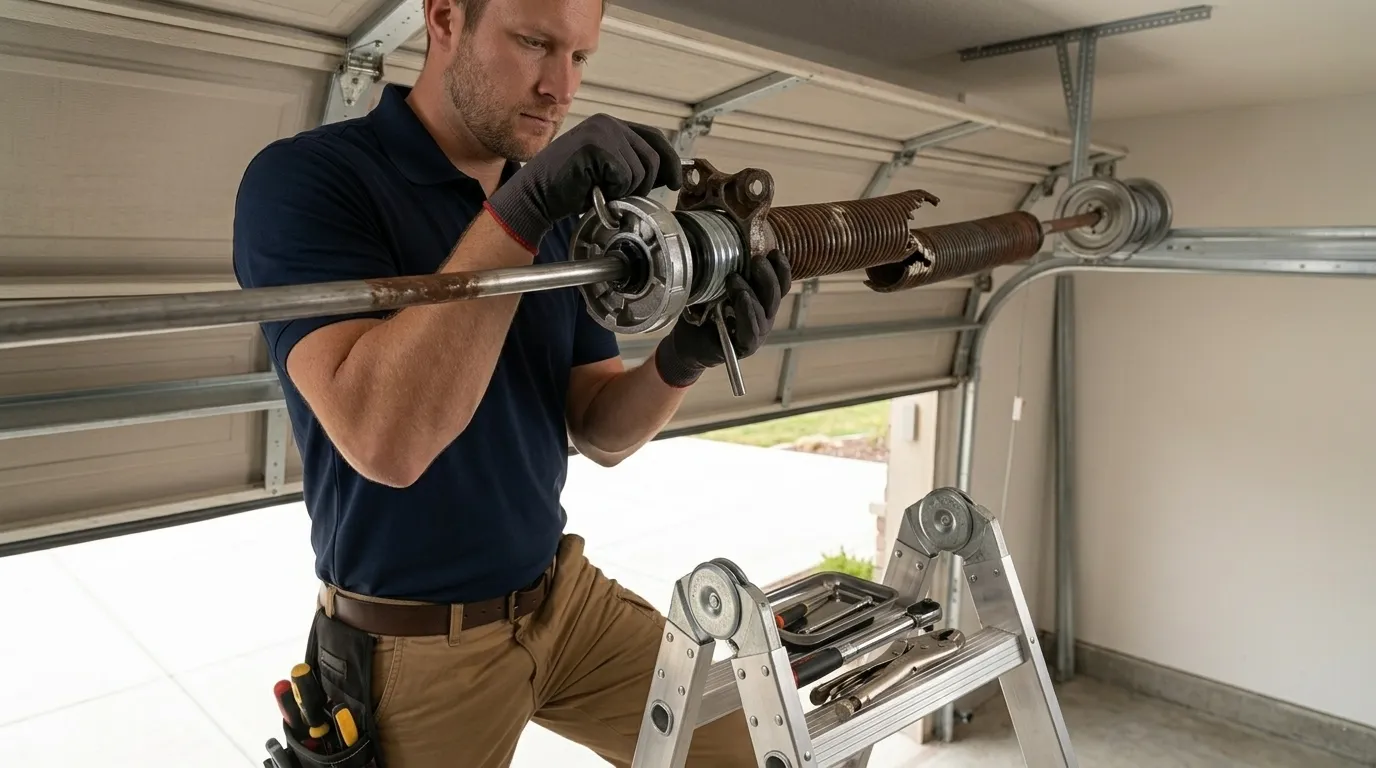
A door built in 2003 is on a torsion spring system that's had two or three service cycles by now, not the original from the build. The opener is more likely a chain or belt drive with a logic board, not a mechanical relay unit. The track is roll-formed steel, not the heavier gauge you see on older builds. None of that is worse - it's just a different set of parts, and it fails differently. Springs on newer doors tend to snap clean rather than stretch and sag first, which means less warning before the door won't move at all.
The rest of the numbers back this up. Ammon has about 6,142 households, in a service area where the total across all five named communities runs 10,269. Median household income here sits at $84,154, well above the $64,273 median for the broader area. Newer stock, higher income - it tracks with what we see on the trucks: fewer patched-together repairs, more doors that were installed once and haven't been touched since.
How Long It Takes
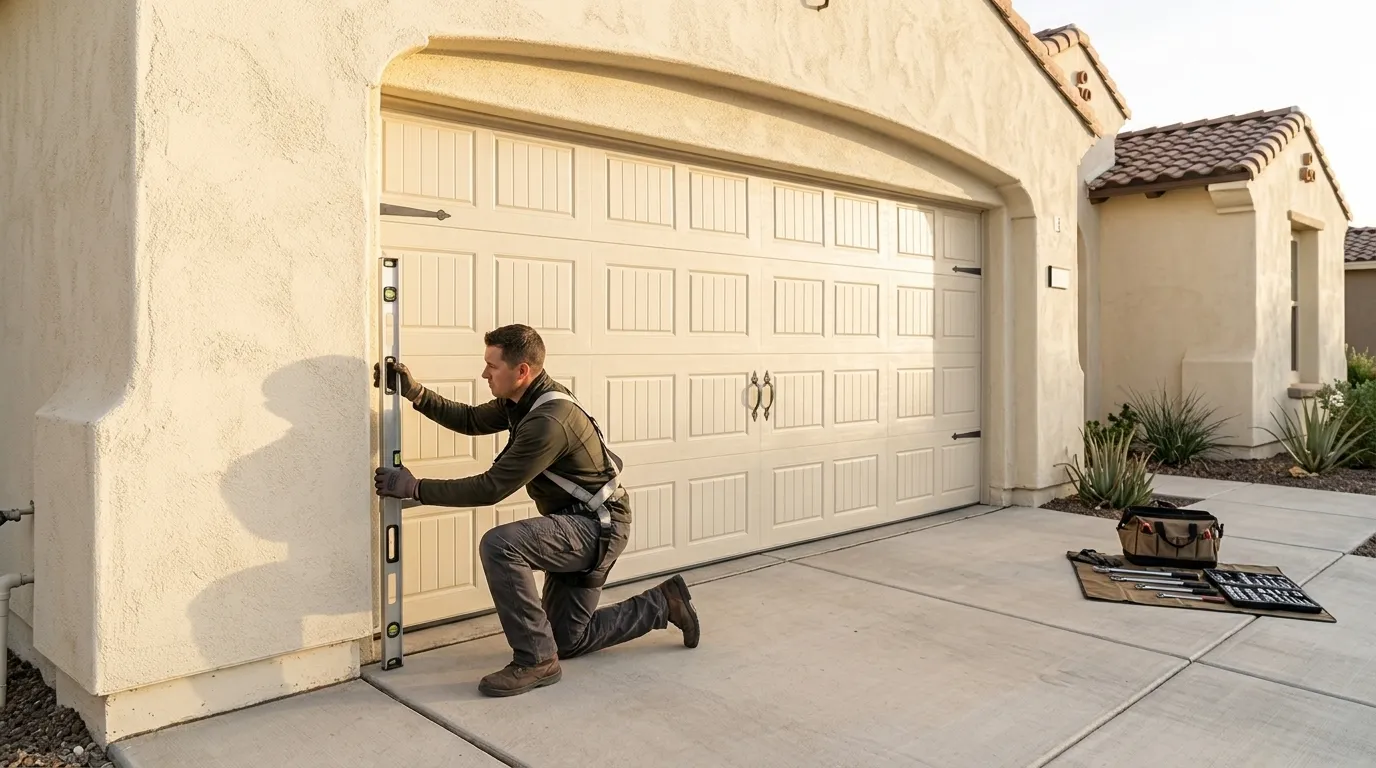
Most spring replacements and opener swaps run the same job length here as anywhere else in the area - the hardware being newer doesn't make the work faster, it just means we're less likely to be fighting a stripped bolt or a bent track bracket that's been shimmed twice already. A single spring on a standard double door is a same-visit job. A full opener swap, if the mounting and wiring are already in place, is also usually done in one trip.
What slows a job down in Ammon isn't the door's age - it's parts. If your opener is a less common model or the panel needs a manufacturer-specific replacement, that part isn't sitting on the truck. We tell you that up front rather than guessing at a timeline we can't hold to. That's the one honest limit here: we don't stock every panel and every opener board, and pretending otherwise helps nobody.
Why This Fails Locally
The climate band here is classified cold and severe, and that's true whether the door was hung in 1965 or 2005. Cold doesn't care about the build year - it hardens grease in the torsion spring assembly, shrinks weatherstripping until it pulls away from the slab, and makes cheap plastic rollers brittle enough to crack on a hard stop.
What does change with the build year is where the failure shows up first. On a 2003-era door, the first thing to go is usually the opener's logic board or the belt, not the spring - electronics age out before mechanical steel does in a lot of these newer installs. On the older stock elsewhere in the service area, it's almost always the spring or the original steel rollers first. If you own a newer Ammon house and your door is dead quiet with no grinding, no sagging, just nothing happening when you hit the button - check the opener before you assume it's the spring.
The Cost of This Job
We don't quote a number without seeing the door, and we're not going to put a figure here that doesn't hold up once a tech is standing in your driveway. What we can tell you is what drives the cost either way: whether it's a spring or an opener, whether the part is a common size or a manufacturer-specific order, and whether the track or hardware around the failure is damaged too or just the one part.
Given the newer stock in Ammon, jobs here skew more toward opener and electronics repair than pure spring replacement compared to older parts of the service area - and opener boards and belt kits generally cost more than a torsion spring kit. That's not a quote, it's just where the money tends to go on a house built closer to 2003 than to 1976.