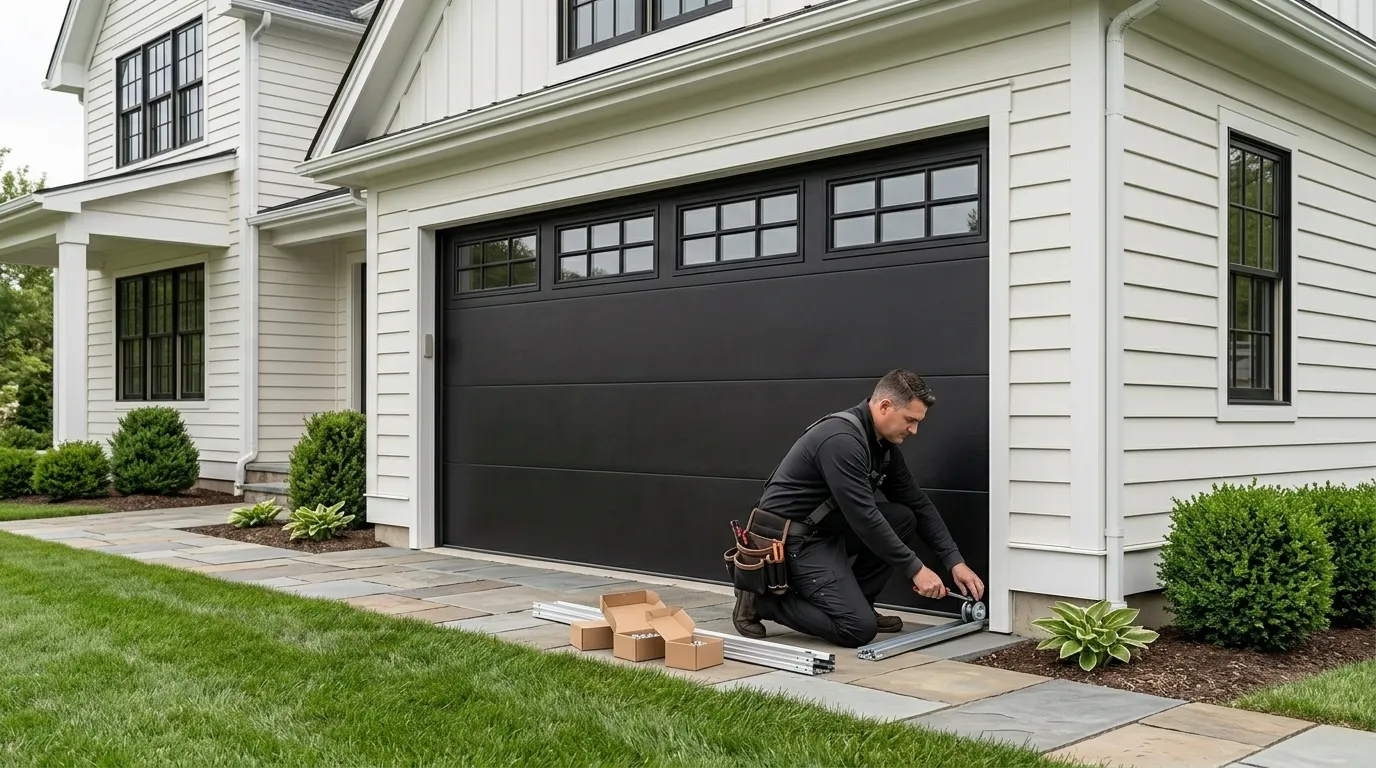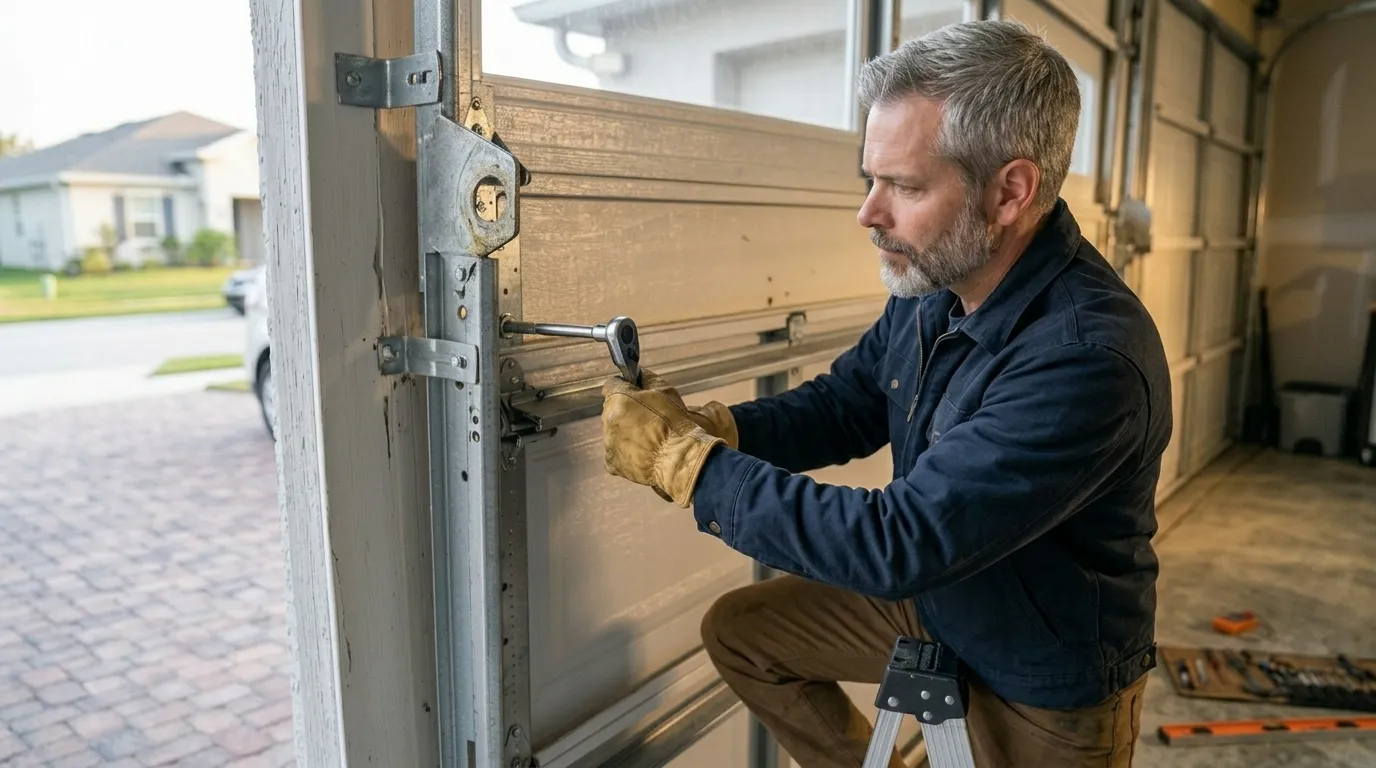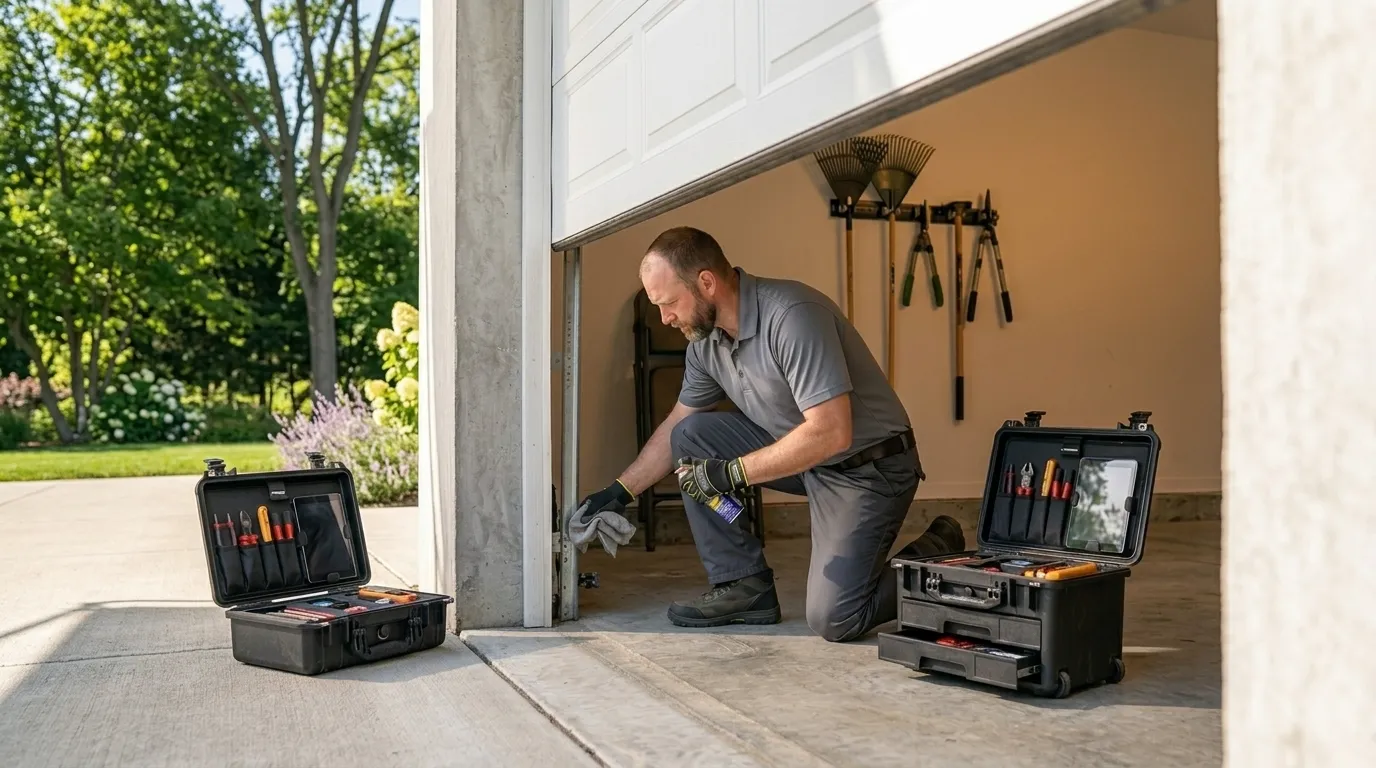
What You Are Seeing
Ammon's median household income runs around $84,154, noticeably higher than the roughly $64,273 median across the wider service area we cover. That number matters here more than it does in older neighborhoods, because it changes what "worth fixing" means. A household at this income level is less likely to squeeze five more years out of a dying opener and more likely to want the job done right the first time - new springs rated for the load, not a patched cable, a properly matched opener rather than a mismatched universal remote kit.
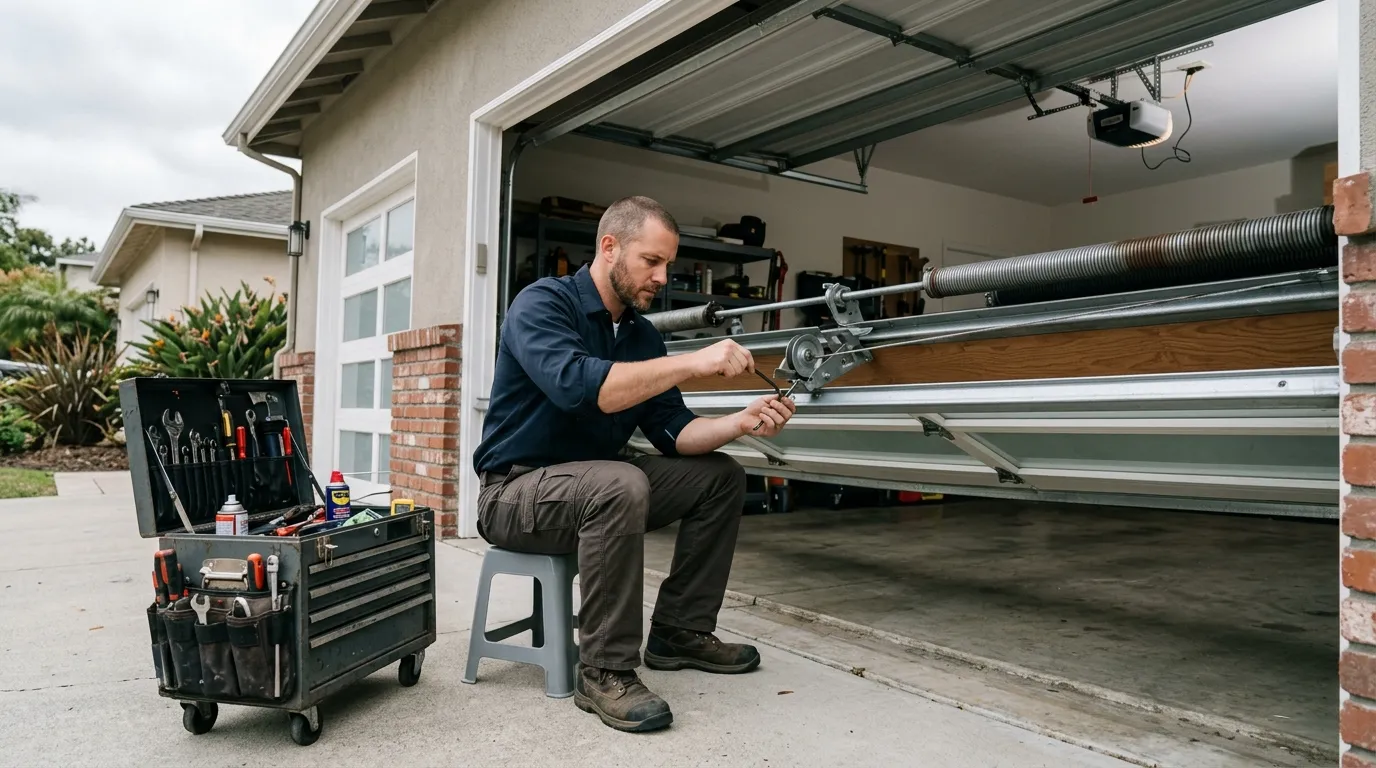
Ammon's housing stock also runs newer than a lot of what we see elsewhere in the area - the local median year built lands around 2003, decades past the 1976 median for the broader five-area service footprint. That means torsion springs on steel-jacketed sections rather than the older wood-panel doors with side hardware we deal with closer to the original Idaho Falls core. Faults here tend to be a spring at the end of its cycle count, a misaligned photo-eye sensor, or a roller that's worn out its bearing - not the rusted-through hinge or warped panel typical of a much older door.
How Long It Takes
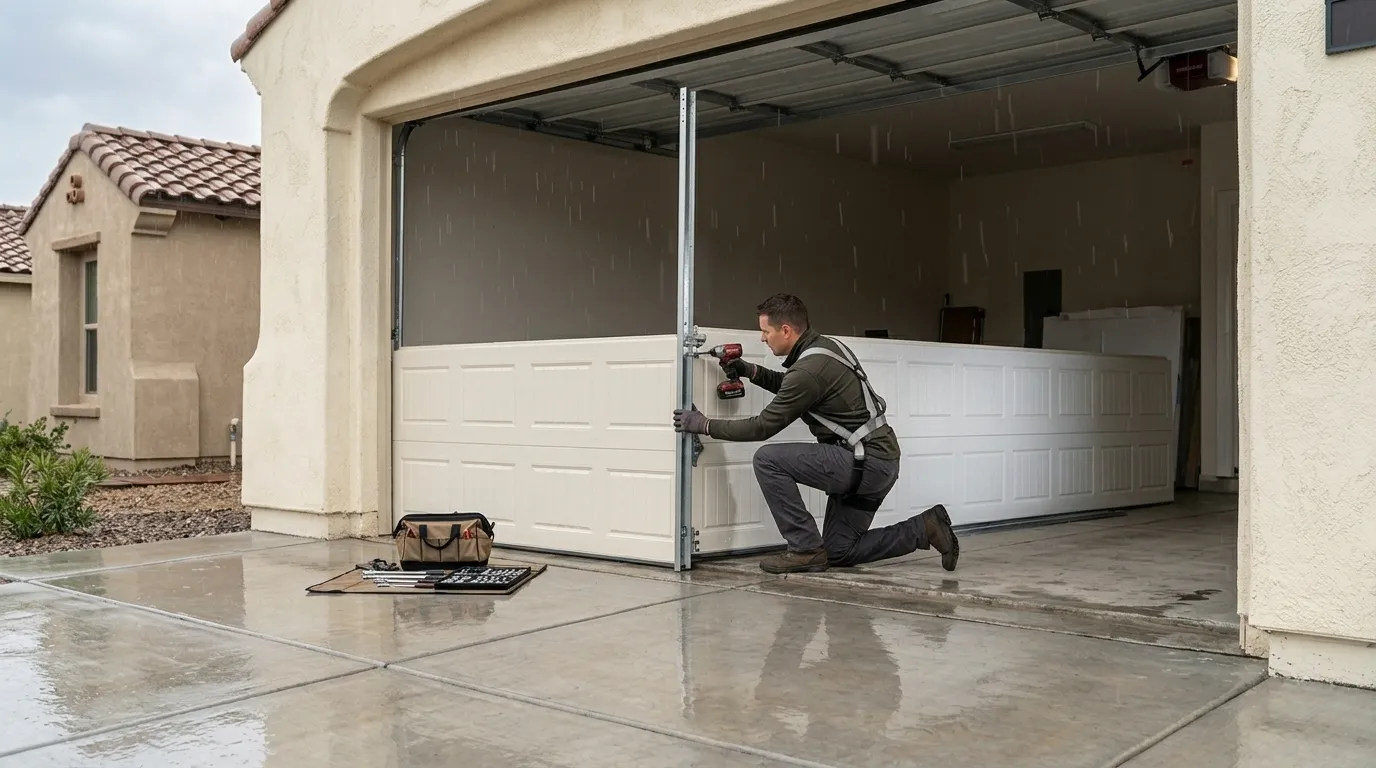
We don't quote a response time for Ammon specifically - we travel here from Idaho Falls, and we're not going to promise a window we can't hold to every time. What we can tell you is how the job itself usually breaks down. A broken torsion spring on a standard double door is a same-visit repair once we're on site - diagnosis, spring swap, balance check, done. An opener replacement takes longer because we're also setting travel limits and testing the safety reversal, which matters more on a newer door where the sensors are original equipment and haven't been fiddled with by three different owners.
What slows a job down is parts that aren't on the truck - a specific opener logic board, a spring size outside our common stock, or a track section that has to be cut to a nonstandard width. We'll tell you on the call if that's likely before we schedule, rather than surprise you at the door.
Why This Fails Locally
The service area sits in a cold, severe winter climate, and that hits every garage door the same way regardless of age: grease stiffens, metal contracts, and anything already close to failing tends to go in a cold snap rather than in July. On a 2003-era Ammon door, the part most likely to give first is the torsion spring - original springs on a 20-year-old door are well past a typical cycle life, and cold makes a marginal spring snap rather than just squeak.
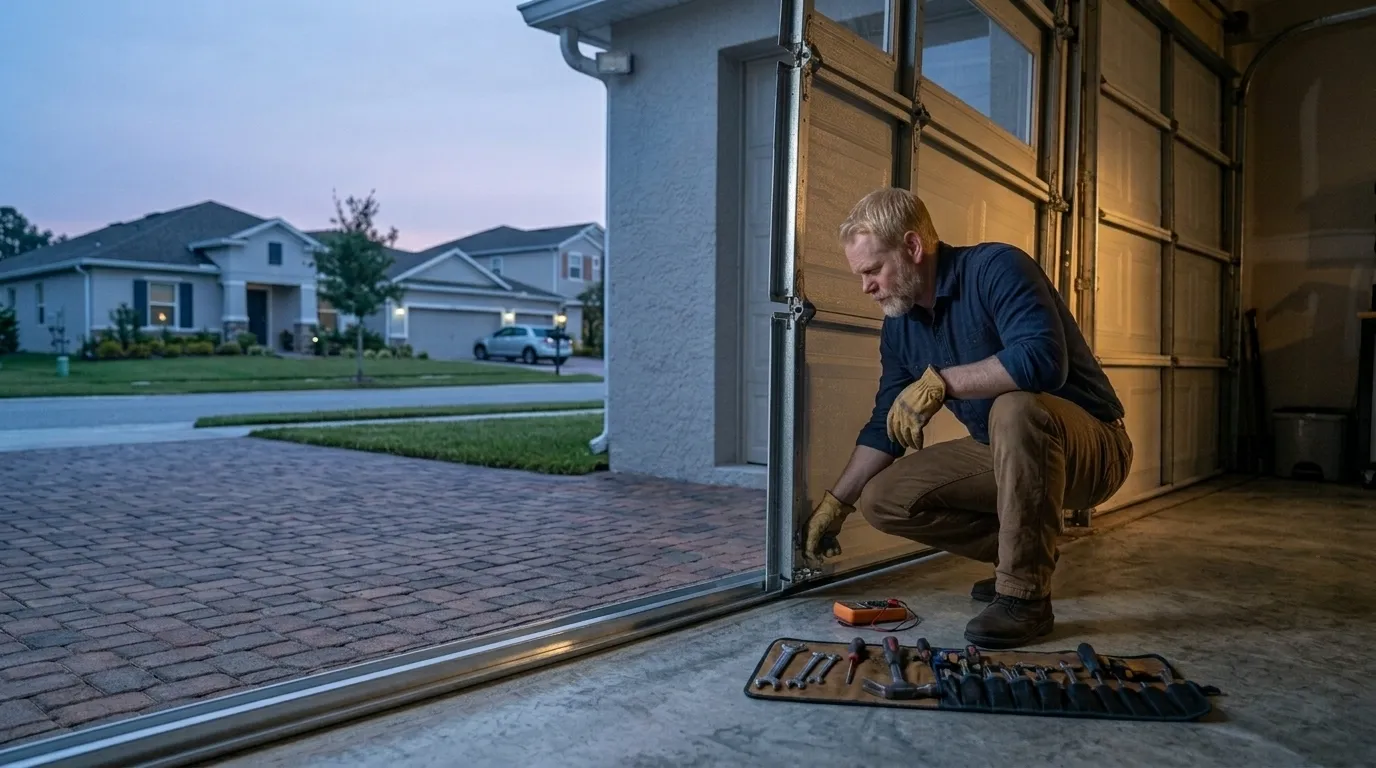
The other common failure on newer builds is the photo-eye safety sensor icing over or drifting out of alignment after years of the garage floor settling slightly - enough to throw the beam off by a fraction of an inch, which is all it takes for the opener to refuse to close. It's not a sign of a bad door. It's a sign of a door doing exactly what a 20-year-old door does in this climate.
We don't stock every logic board for every opener brand made in 2003, and if yours needs one, that can mean a short parts wait - worth knowing before you call.
The Cost of This Job
We don't publish flat prices here because the honest answer depends on what's actually broken, and quoting a number without seeing the door does homeowners no favors. What we can speak to is the decision itself. At Ammon's median income of roughly $84,154, the math on a 2003-built door usually favors repair over replacement - the door itself, the frame, and the track are typically still sound, and a spring or opener swap gets you another decade rather than starting over.
That calculus flips once the door itself is failing - delaminating panels, a bent track that keeps bending back, or an opener that's the third one in five years. We'll tell you straight if you're at that point rather than selling you a repair that won't hold. That's the one honest limit here: we fix what's fixable, and we say so plainly when something isn't.