What Local Conditions Do
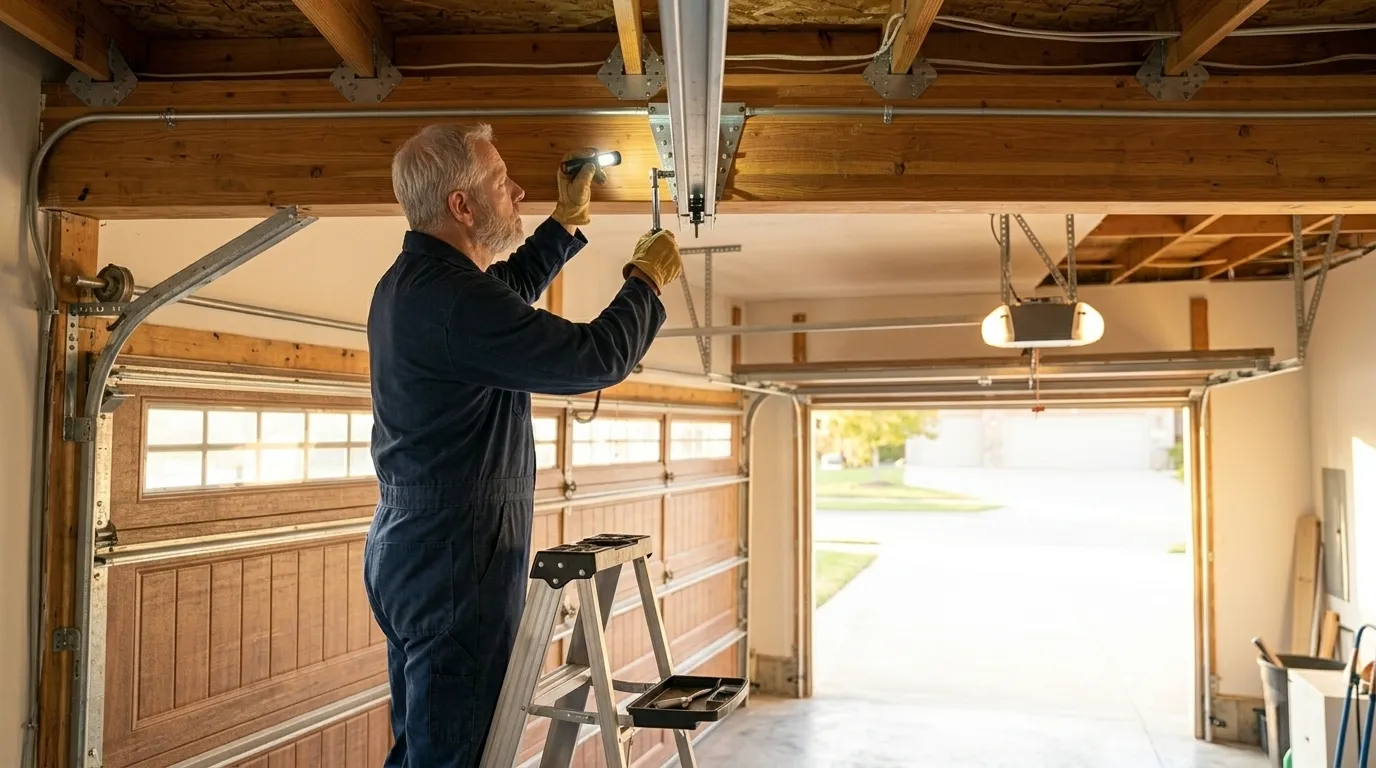
Most houses on this side of the valley went up between 1963 and 2003, with the median build year sitting around 1976. That matters because a door hung in the mid-70s is running original torsion hardware, or a replacement spring sized to match it, and that steel has spent forty-some winters expanding and contracting with the swing between a warm garage and a hard freeze. Across the five main pockets of housing stock here - the older 60s and 70s neighborhoods that make up most of what we work on - the springs are past the point where cold is just an inconvenience. Cold steel loses flex. A spring that's fine in July can snap in January doing the exact same lift it's done ten thousand times before, because the metal itself has gotten brittle and the temperature swing is the last straw, not the cause. We see this pattern most in the original torsion setups from that build era, less in anything replaced in the last decade with modern coated springs. If your door is original to a 70s-built house and you haven't touched the springs, that's the setup to watch.
The Cost of This Job
I can't quote a number here without a real look at what's on your door, and I won't put a figure on the page that isn't backed by something solid. What I can tell you is what drives the cost up or down: whether it's one spring or the matched pair (springs age as a set, so one going usually means the other isn't far behind), whether the drums and cables show the same wear, and whether the track and rollers are original to a house from that 60s-70s build window or already replaced. Original hardware from a 1976-era door often needs more than a spring swap - the whole torsion assembly can be outdated enough that parts aren't a drop-in match. That's the honest limitation: if your setup is old enough, a same-day 'just replace the spring' job sometimes turns into a bigger one once we're actually looking at the shaft and drums. We'd rather tell you that up front than surprise you with it standing in your driveway.
The Problem
Put the two things together - a housing stock where the median home is around fifty years old, and a climate that swings hard and cold every winter - and you get a specific failure pattern: springs that were adequate when installed but were never built for this many freeze-thaw cycles on this much steel fatigue. It's not a defect and it's not bad luck. It's math. A spring rated for a certain number of cycles under moderate conditions gets used up faster under severe cold stress, and a lot of the doors in this area are sitting well past that point without anyone having looked at them since the house was built. The fix isn't complicated - torsion springs get replaced, not patched - but knowing why it happened when it did is what tells you whether the rest of the hardware is close behind.