How Long It Takes
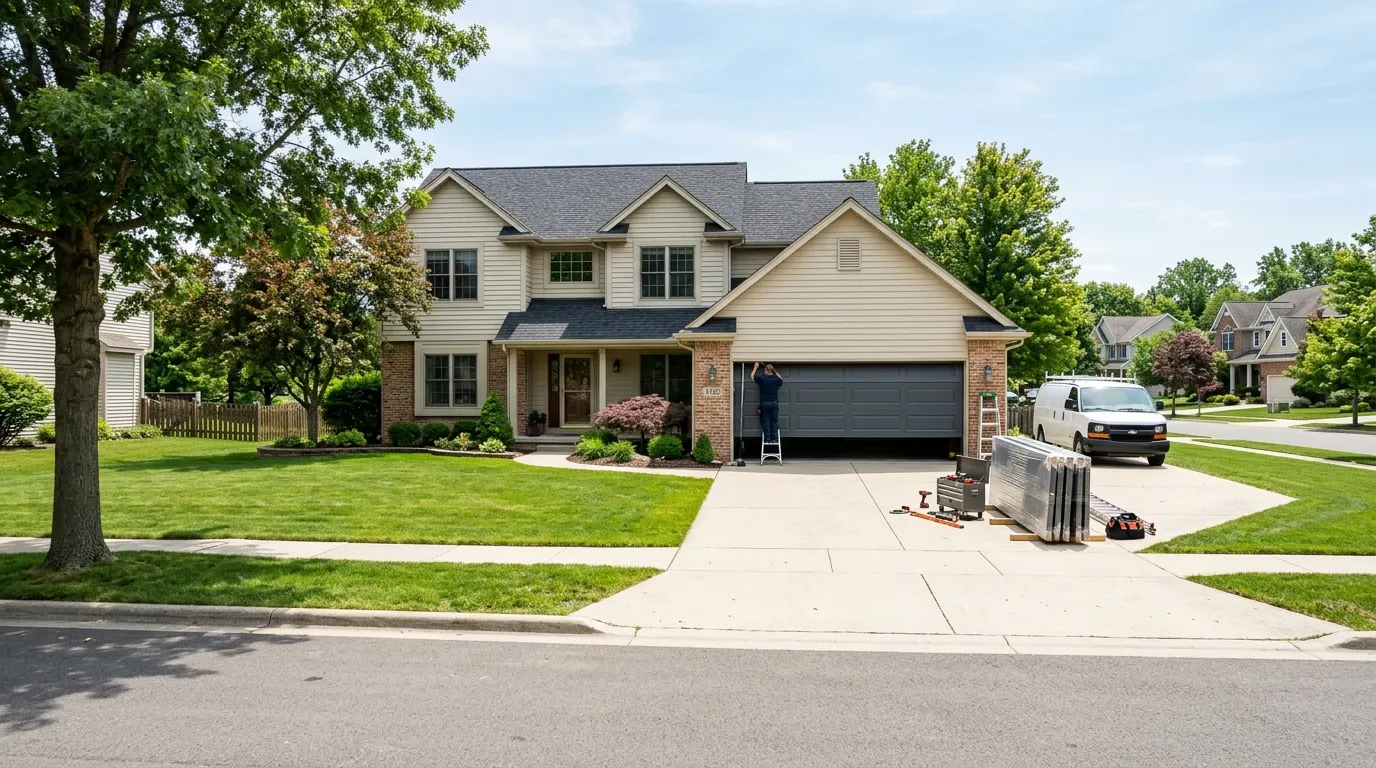
Ririe sits 17 miles out from Idaho Falls, which changes how a spring call here actually runs compared to a job inside the city. We're not dispatching from a shop around the corner - the truck that takes your call is loading spring stock and running the drive before it ever gets to your driveway. That drive doesn't make the repair itself take longer once the tech is on site; a torsion spring swap on a standard double door is still an hour or so of work. What it does mean is that we try to bundle what we bring. If you tell us the door is making that flat twang sound or won't stay up past waist height, we're loading both common spring sizes before we leave, because a second trip back out here costs everybody time neither of us wants to spend. Same-day is realistic on most calls, but it depends on what's already on the truck and where that truck is when your call comes in.
Getting It Booked In
Tell us the door won't lift, drops on its own, or the cable jumped the drum - that's enough for us to load the right spring size before we leave Idaho Falls. Ririe is small; with roughly 321 households, there's no dense cluster of same-week jobs out here the way there might be closer in, so scheduling tends to mean picking one time slot and building the drive around it rather than working a route of five doors in one neighborhood. That's fine, but it does mean the window we give you is the window - if you need to move it, tell us early so we can shift the truck's route instead of doubling back.
Where This Job Goes Sideways
This is a severe cold climate, and cold does specific damage to steel spring coils that owners don't always connect to the weather. Metal contracts in deep cold, and a spring that's already fatigued from age is more likely to snap on a hard freeze morning than on a mild afternoon - so late-year and early-year calls out here cluster around cold spells, not random days. The other way this goes sideways: a homeowner with an older door assumes a broken spring is the whole problem, but on a door built in the 1960s or 70s, worn rollers, a bent track, or a cable near the end of its life are usually failing on the same timeline as the spring. Replacing the spring alone on a door that old sometimes just moves the failure point to the next worn part within a season.
What You Are Seeing
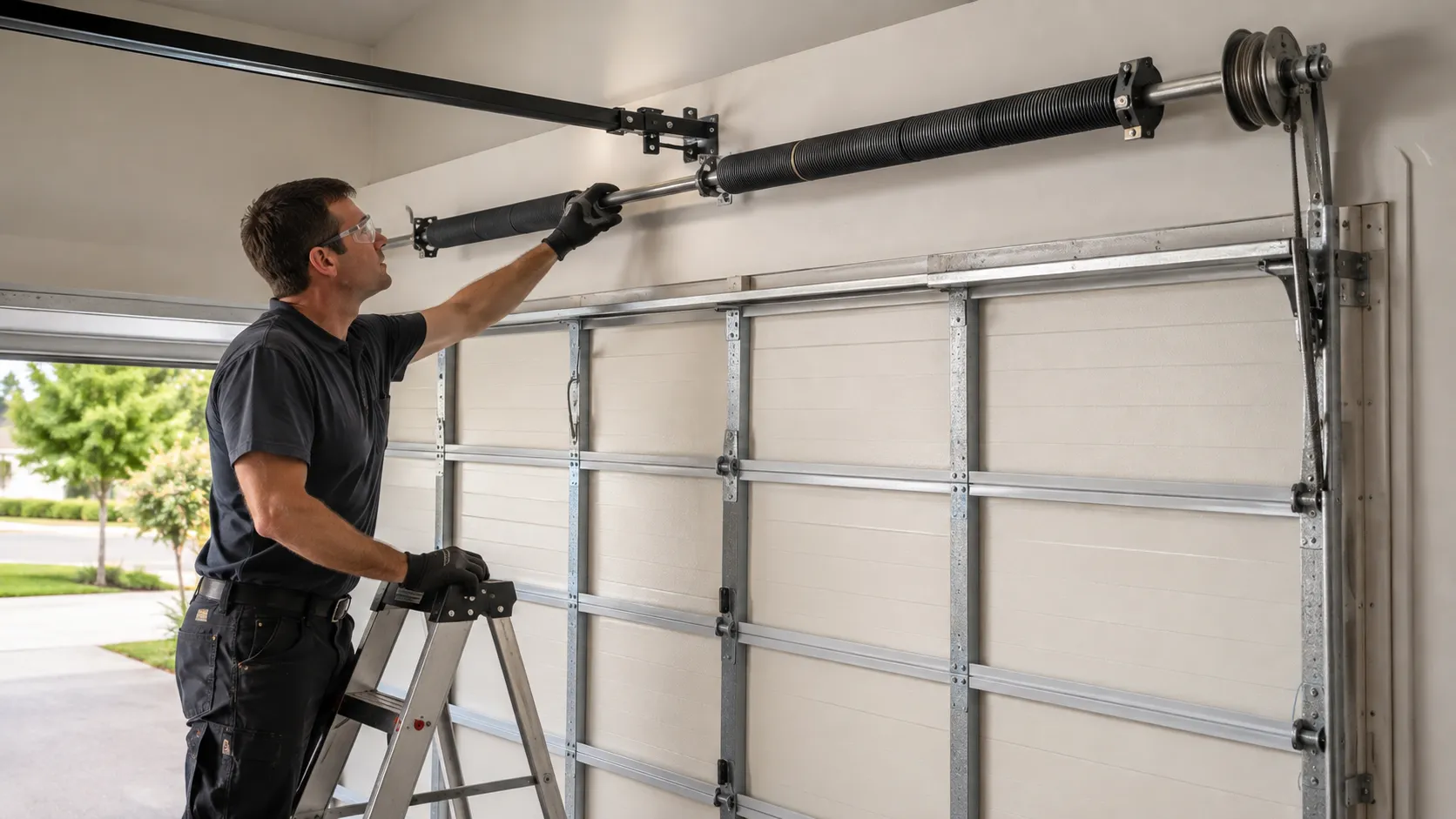
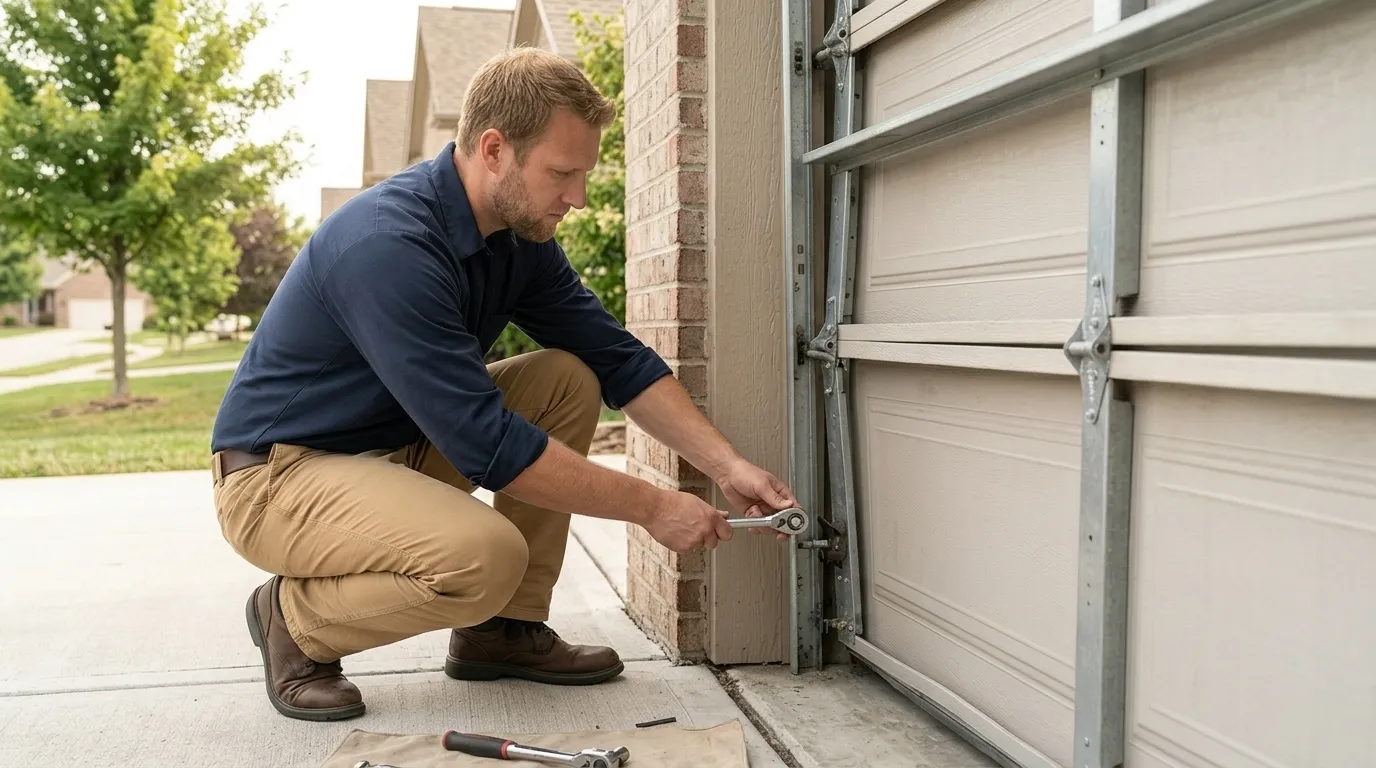
If the door won't budge past a foot or two and feels like dead weight, that's a broken torsion spring - the coil above the door that does the actual lifting. If one side of the door looks tilted or crooked while it moves, you likely have one spring still intact and one snapped, which is common on older two-spring setups typical of the area's 1960s-era doors. A loud bang from the garage, usually first thing on a cold morning, is almost always the spring going. What it's not: a slow, gradual struggle to lift over weeks usually points to worn rollers or a track problem instead, and no spring replacement fixes that on its own.