How Long It Takes
At a median household income of $64,273, a lot of homeowners in Ririe are doing the math on repair versus replace before they even call. That number matters here: on a door with a busted torsion spring or a bad opener board, a repair usually lands well under what a full replacement costs, and for most houses in this area that math favors fixing what's there. Where it flips is when the door itself is the problem - warped panels, a track that's been bent and rebent, or hardware so old the parts are gone. On a house built around 1963, that's not a rare call.
Because we're coming from Idaho Falls, 17 miles out, the job itself doesn't take longer once the truck is on-site - a spring swap is still a spring swap. What takes longer is anything that turns into a second trip: if we find a part on-site that isn't in the truck stock, that's a delay you don't have inside city limits. We try to diagnose over the phone first so the right parts are loaded before we drive out.
Getting It Booked In
Same process as anywhere else we cover - you call, you tell us what the door is doing (won't open, opens crooked, makes a bang, opener runs but nothing moves), and we get a rough idea of what's wrong before anyone drives the 17 miles. Because Ririe isn't a five-minute run for us, we ask more questions up front than we might for a job closer to the shop, mainly so the truck rolls out with the right spring size or the right hinge kit instead of a guess.
We don't keep a branch or a standing crew in Ririe - every job here is dispatched from Idaho Falls, which is worth knowing going in. It doesn't change what we can fix, it just means we're honest that this isn't a same-neighborhood callout. If your job needs a part we don't carry on the truck, that's the one thing that can turn a single visit into two.
Where This Job Goes Sideways
The failure we see most on houses from this era is a spring that's been replaced once already with the wrong size - close enough that the door worked, wrong enough that it wore out the opener or the cables faster than it should have. On a house built around 1963, this is usually the second or third repair on the same door, not the first.
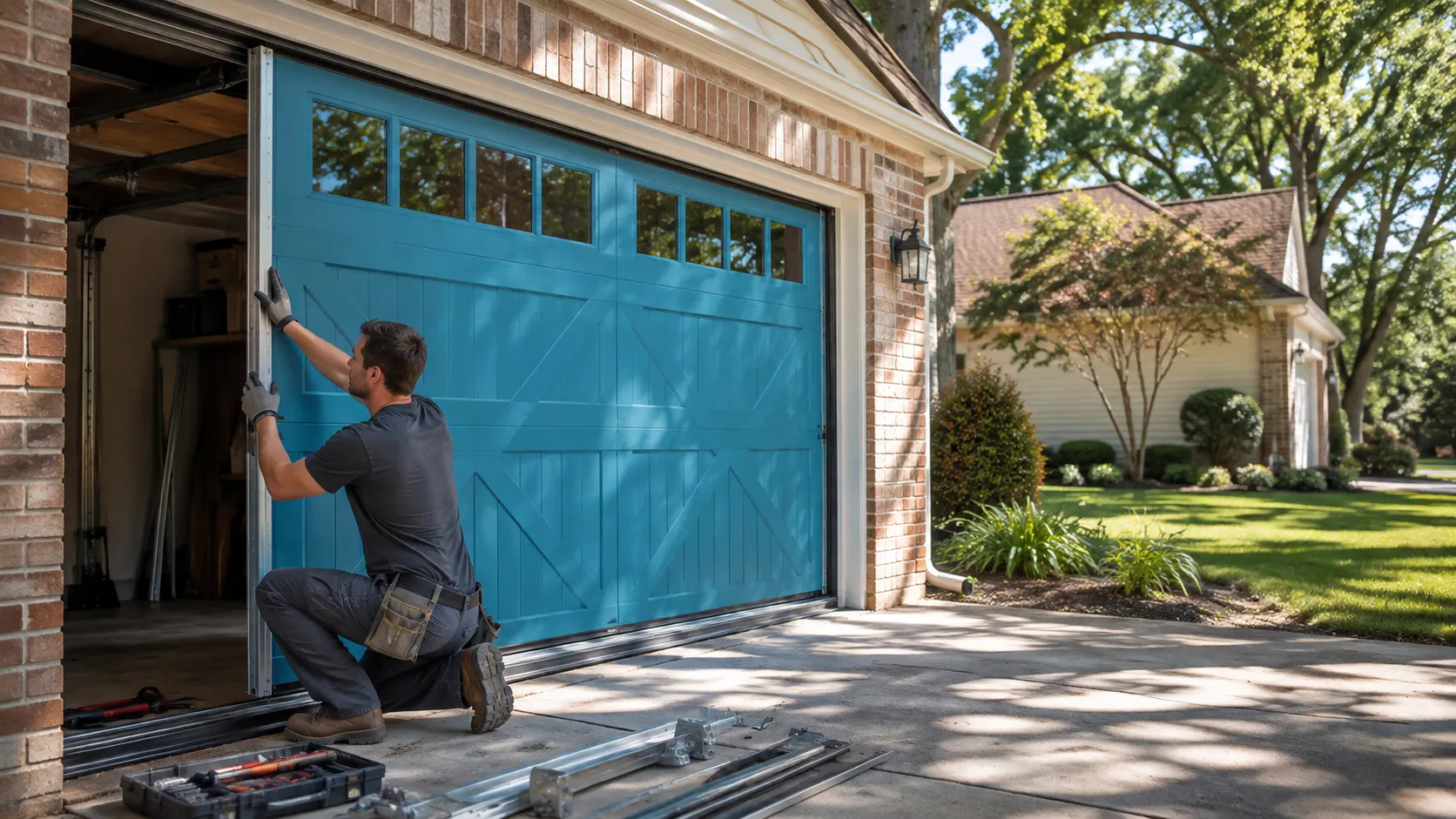
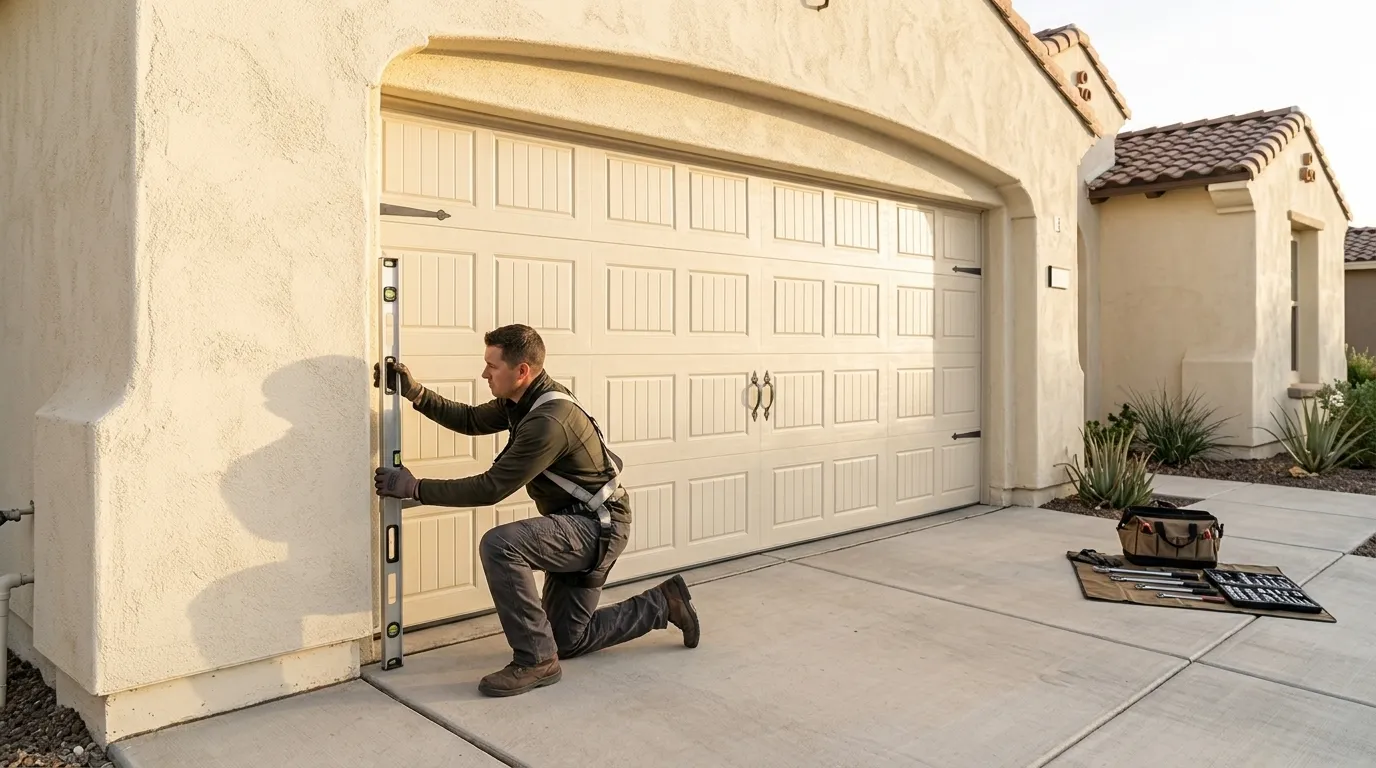
The other place it goes sideways is the track. Older single-car and narrow double garages sometimes have tracks that were never designed for today's heavier insulated panels, and if a homeowner swapped in a heavier door at some point without swapping the track and rollers to match, the door will bind, drop, or come off the rail under load. That's not a spring problem, and no amount of spring adjustment fixes it - the track and rollers have to come out.
What You Are Seeing
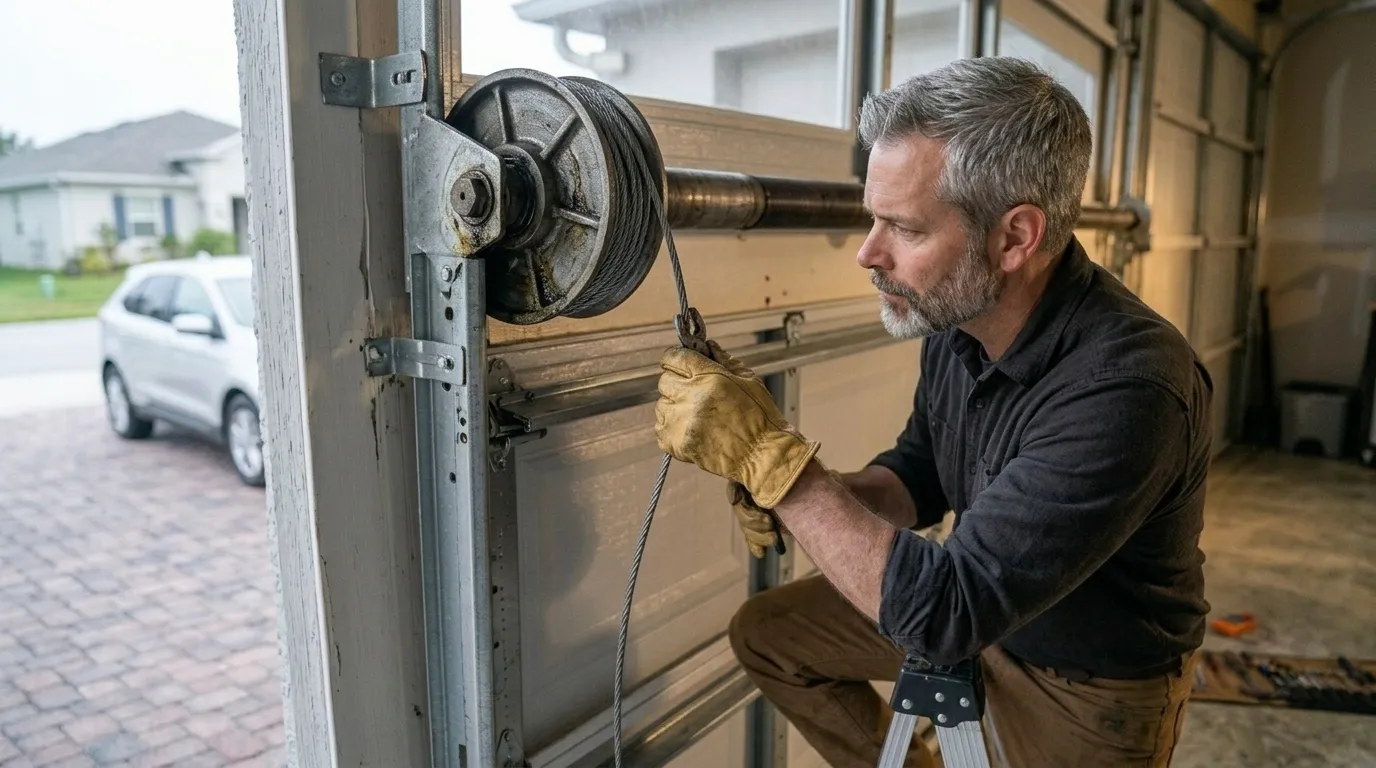
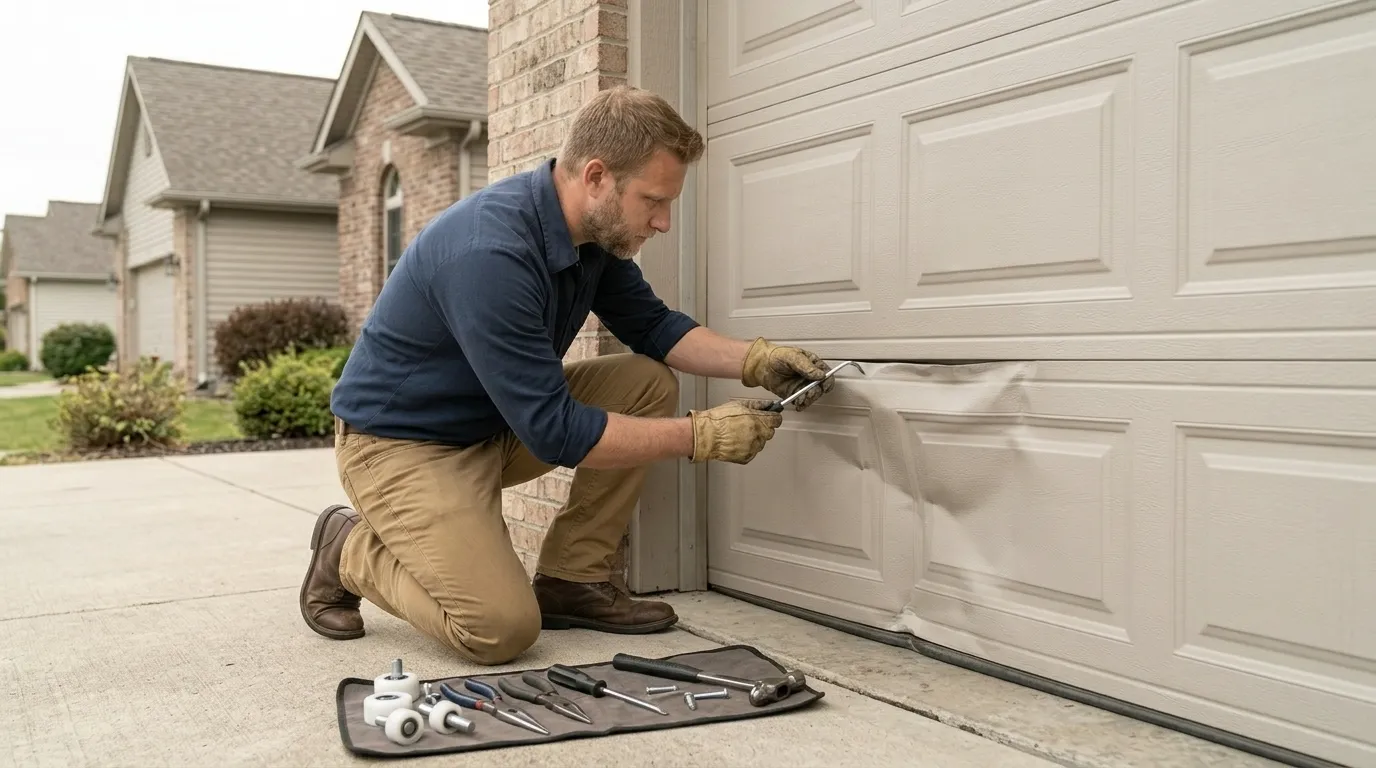
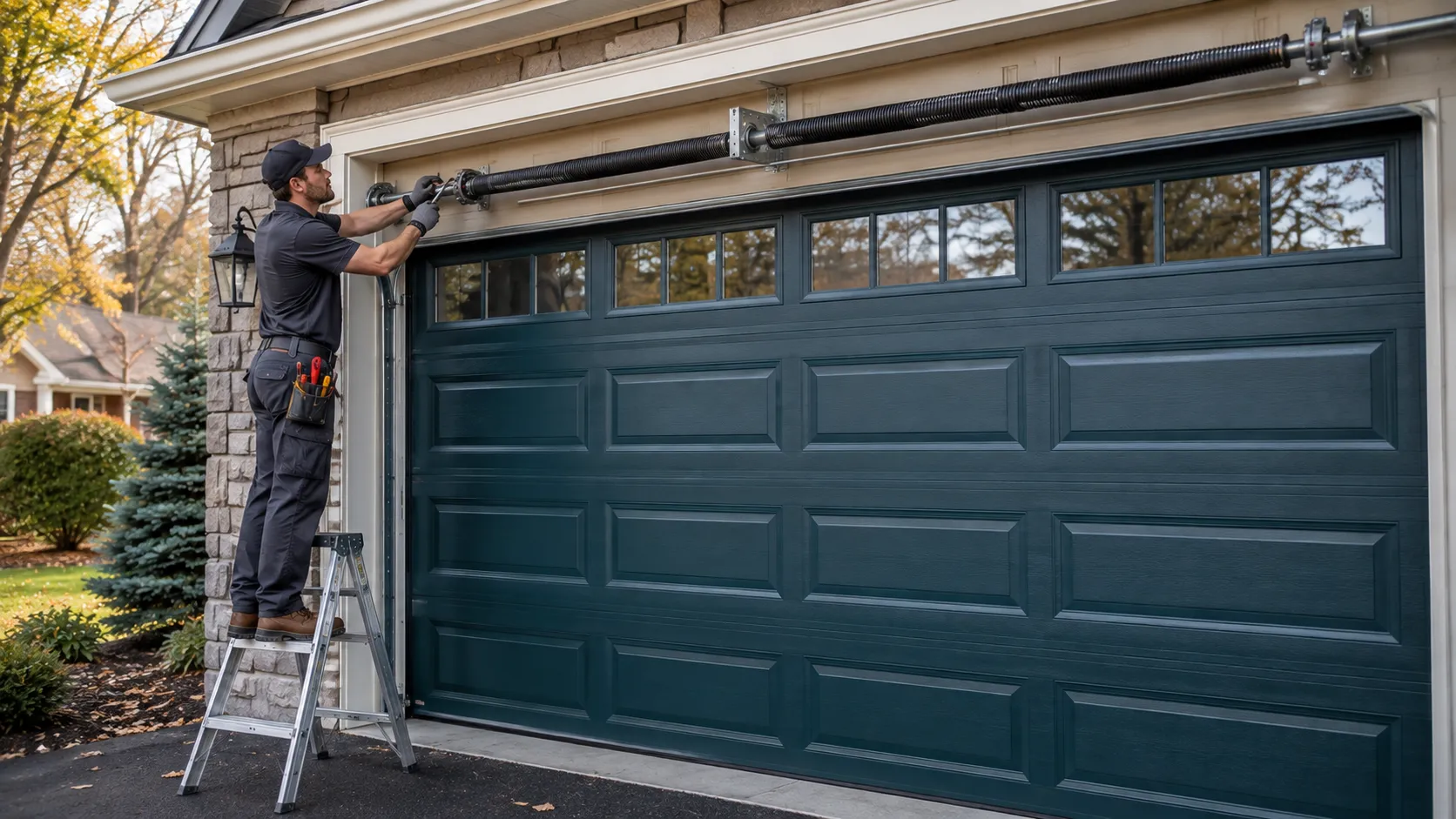
If the door is hesitating, catching, or making a grinding noise partway up, that's almost always the rollers or the track, not the opener - common on the older setups still running in this area. If it won't budge at all and the opener motor is straining, that's a spring, and on a door this old it's worth having someone look at the whole spring assembly, not just replace the coil.
A door that opens fine but slams down fast on the way shut is a spring that's lost tension, and that's not a wait-and-see problem - a spring under partial tension is more likely to snap outright than one that's already gone. If the opener runs but the door doesn't move, check the arm connecting it to the door before assuming the motor's dead; on older openers that arm disconnects easily and gets mistaken for a bigger failure.