What the Repair Takes
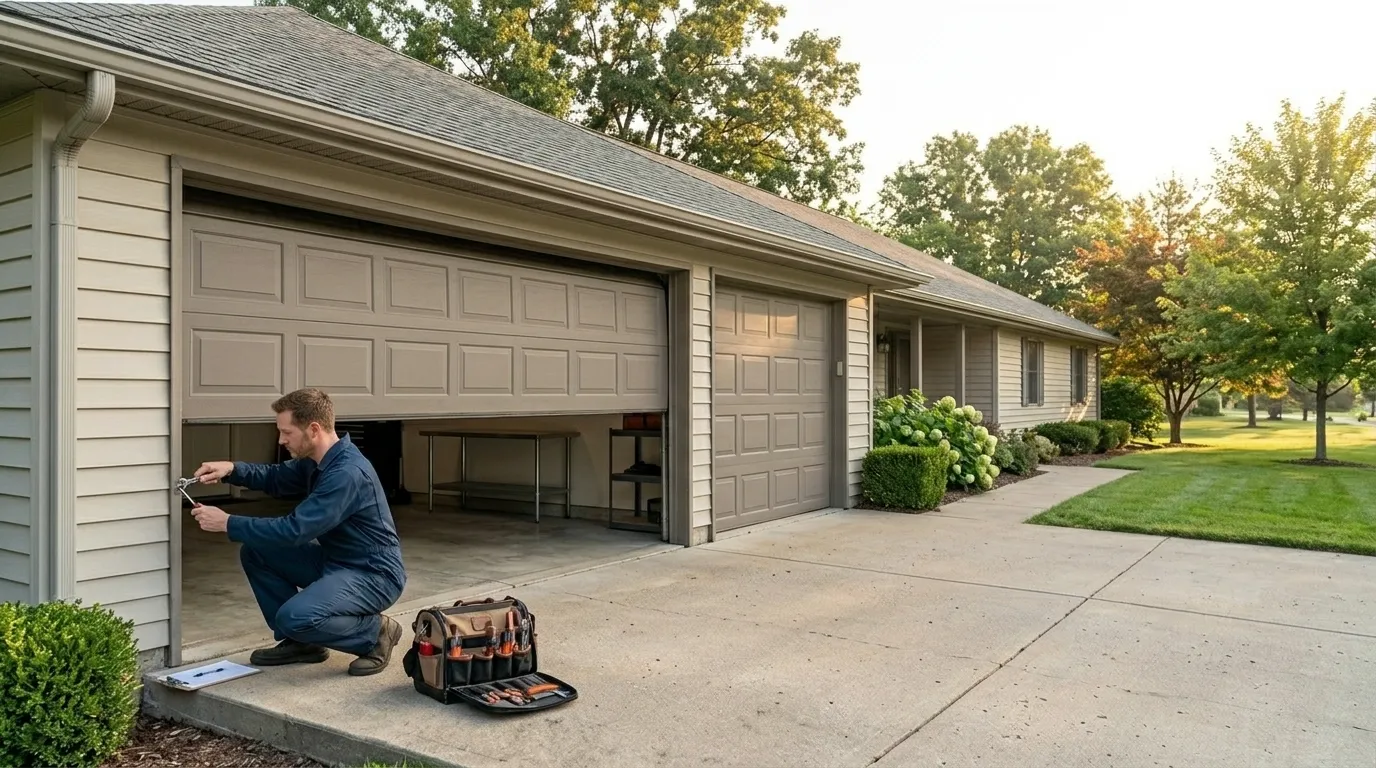
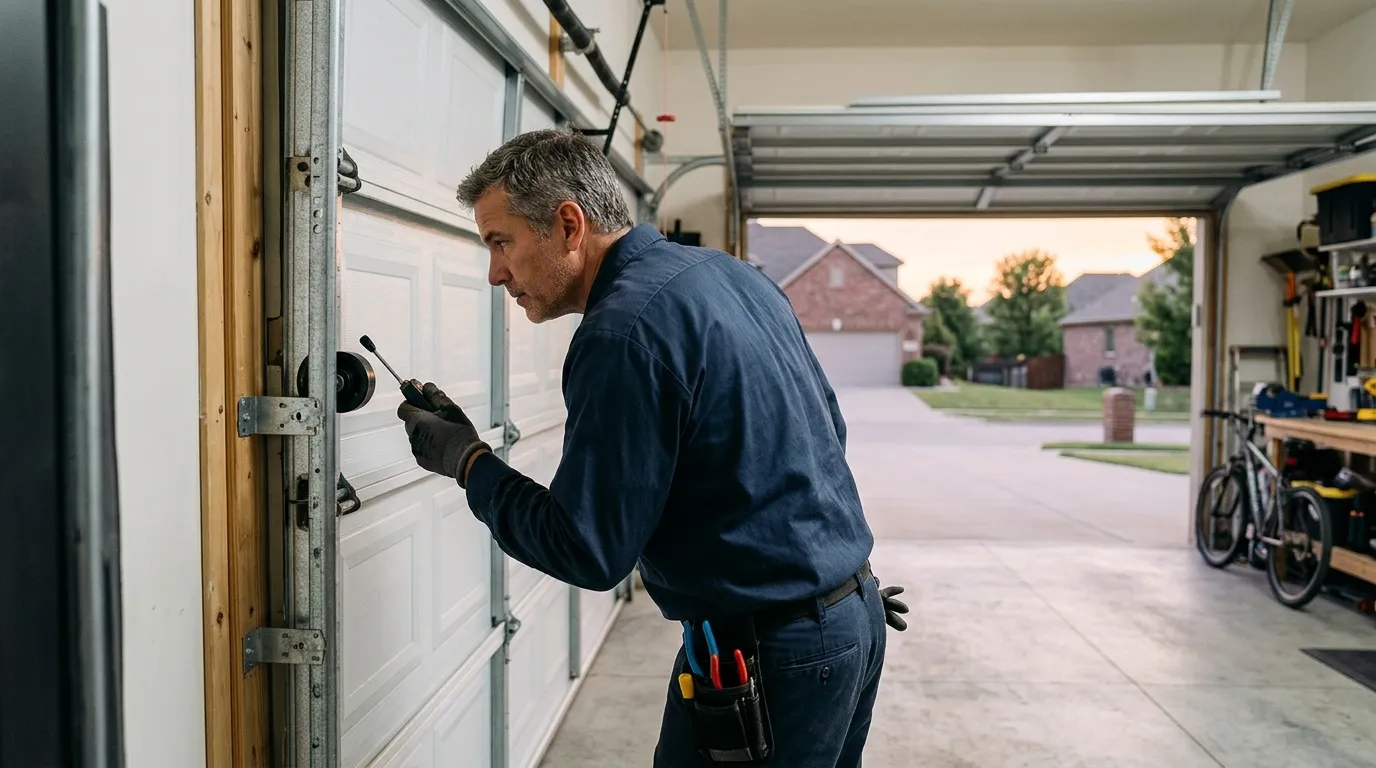
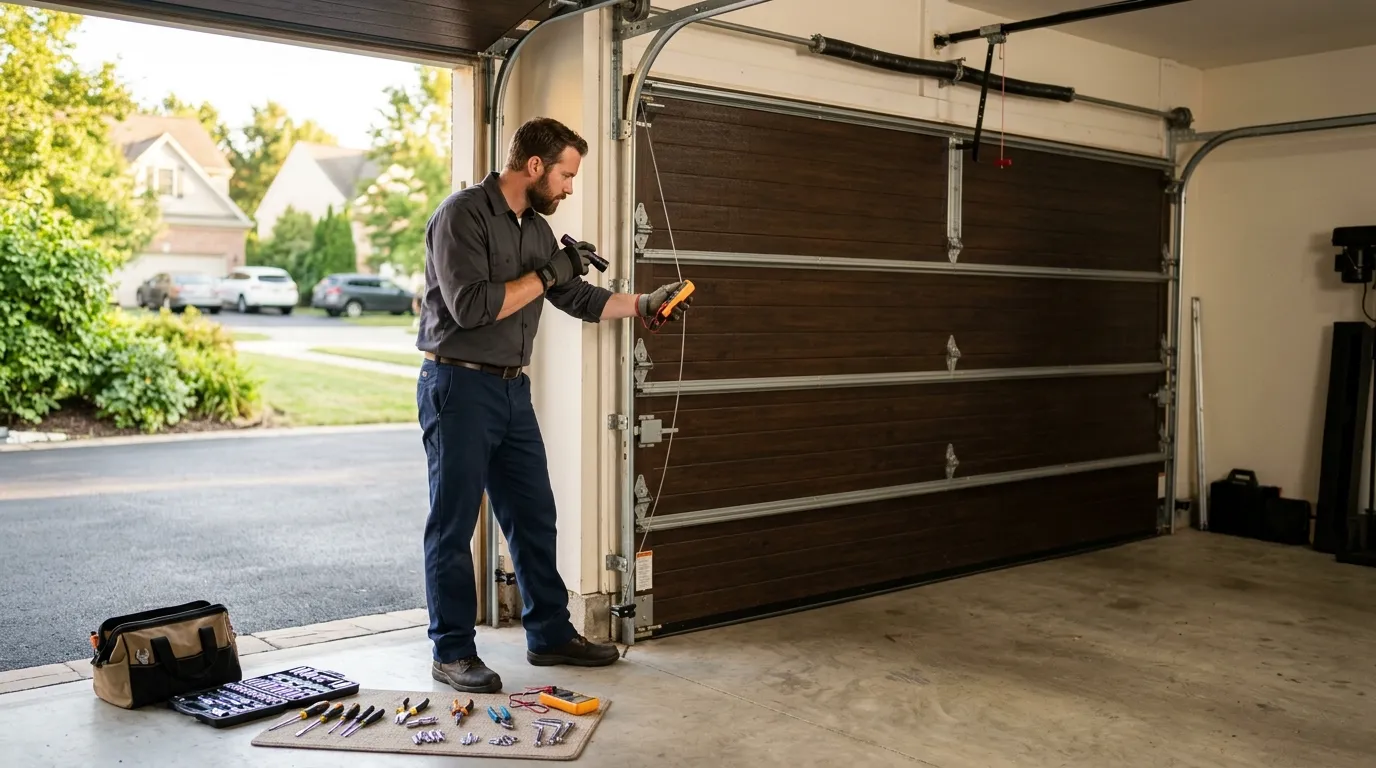
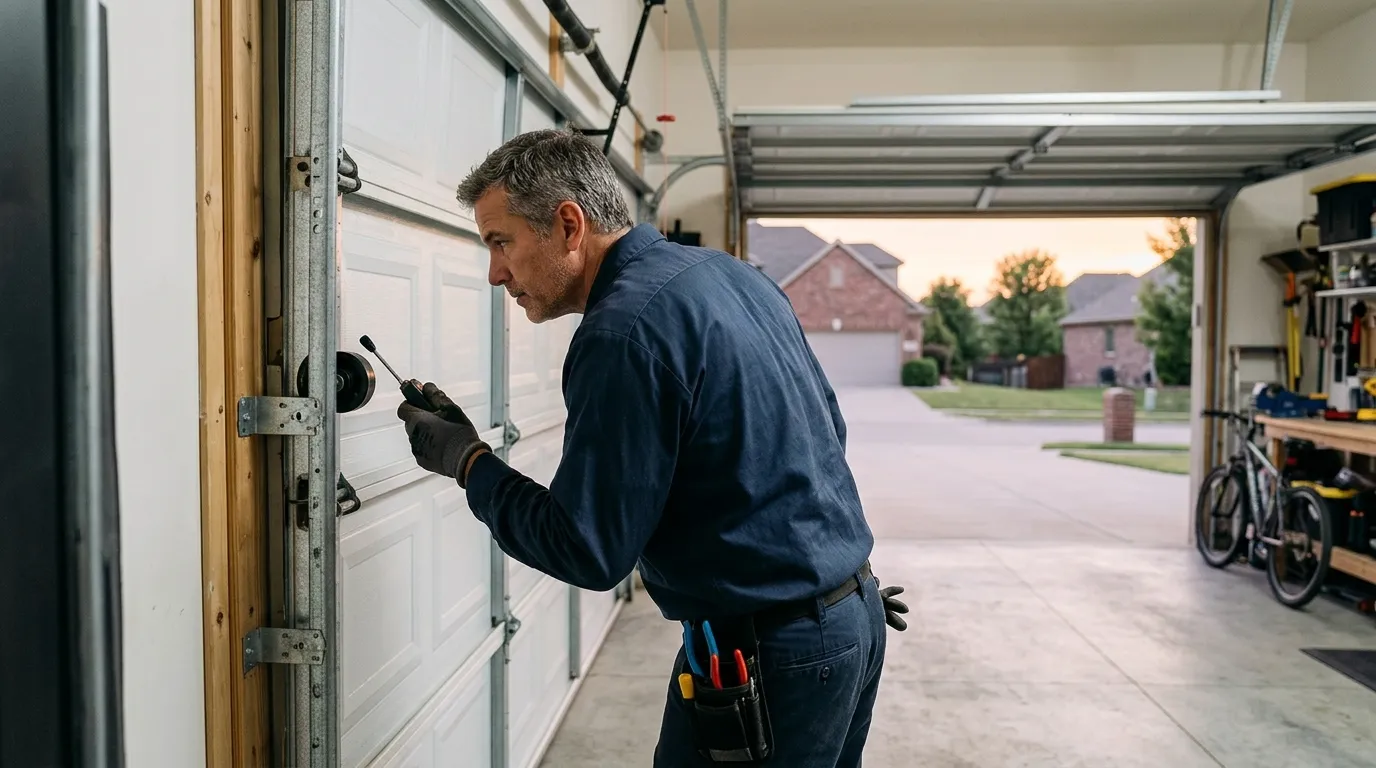
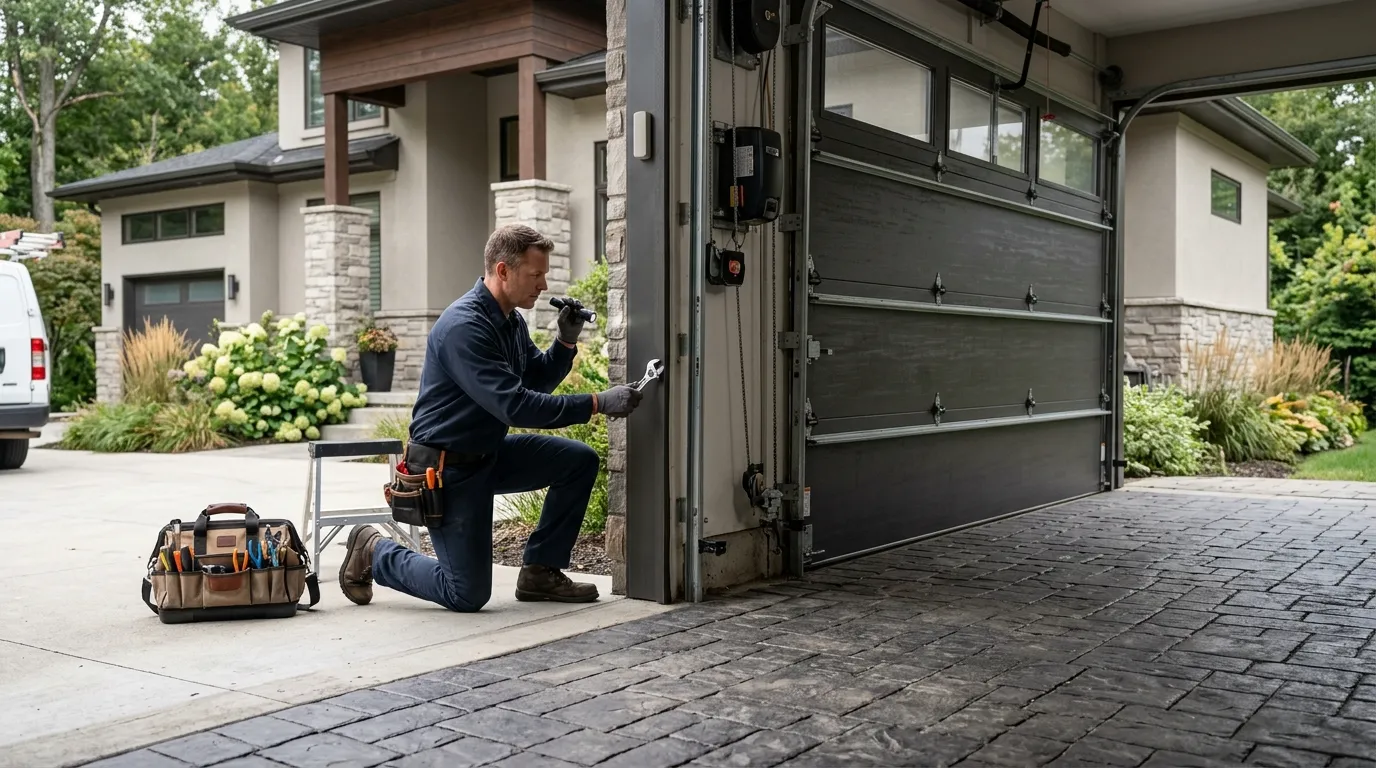
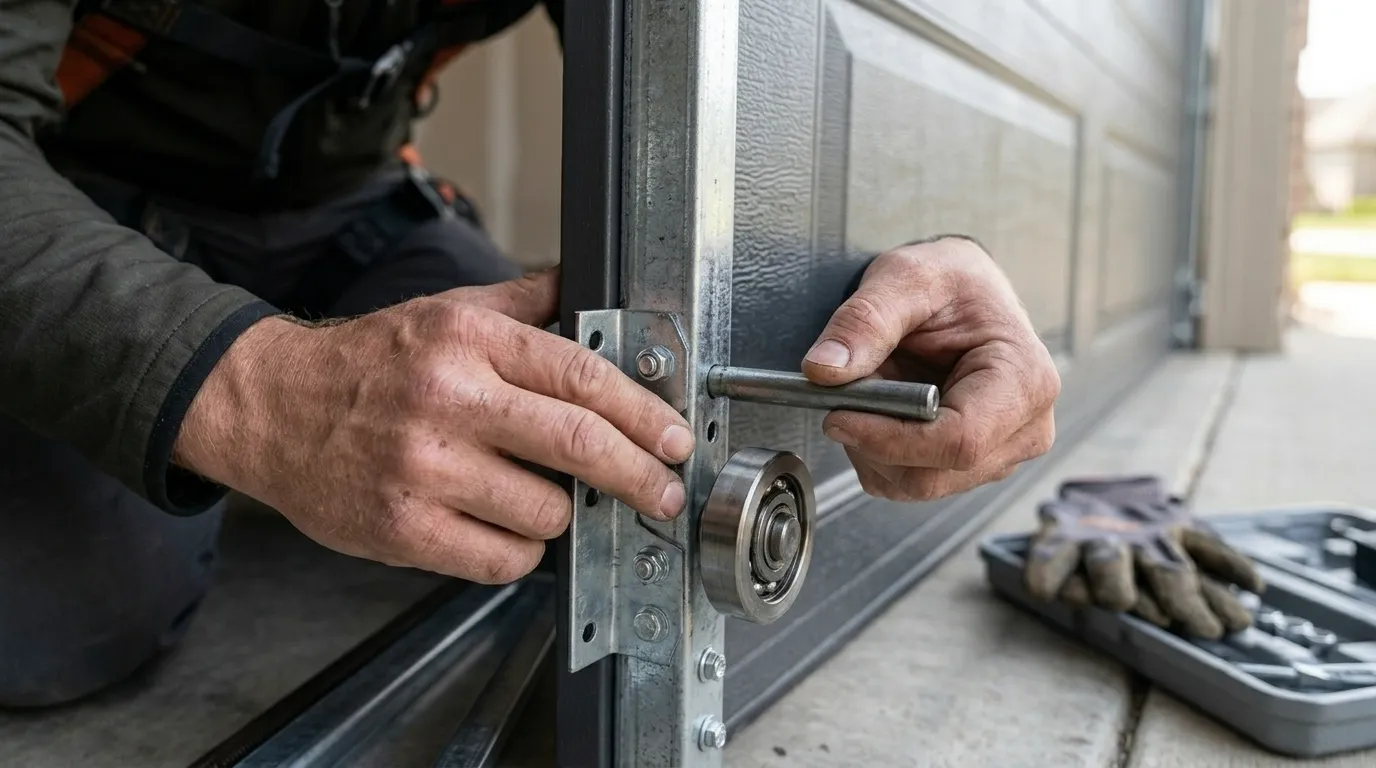
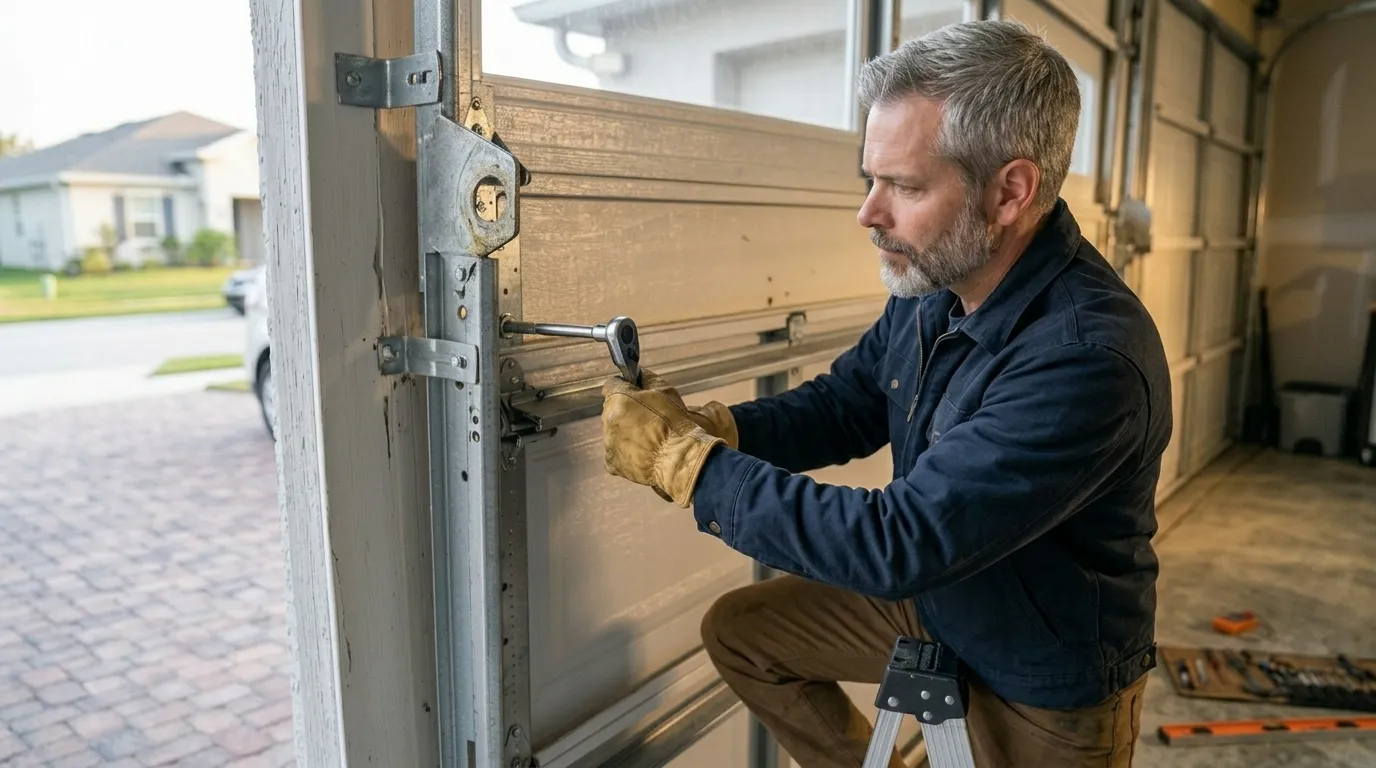
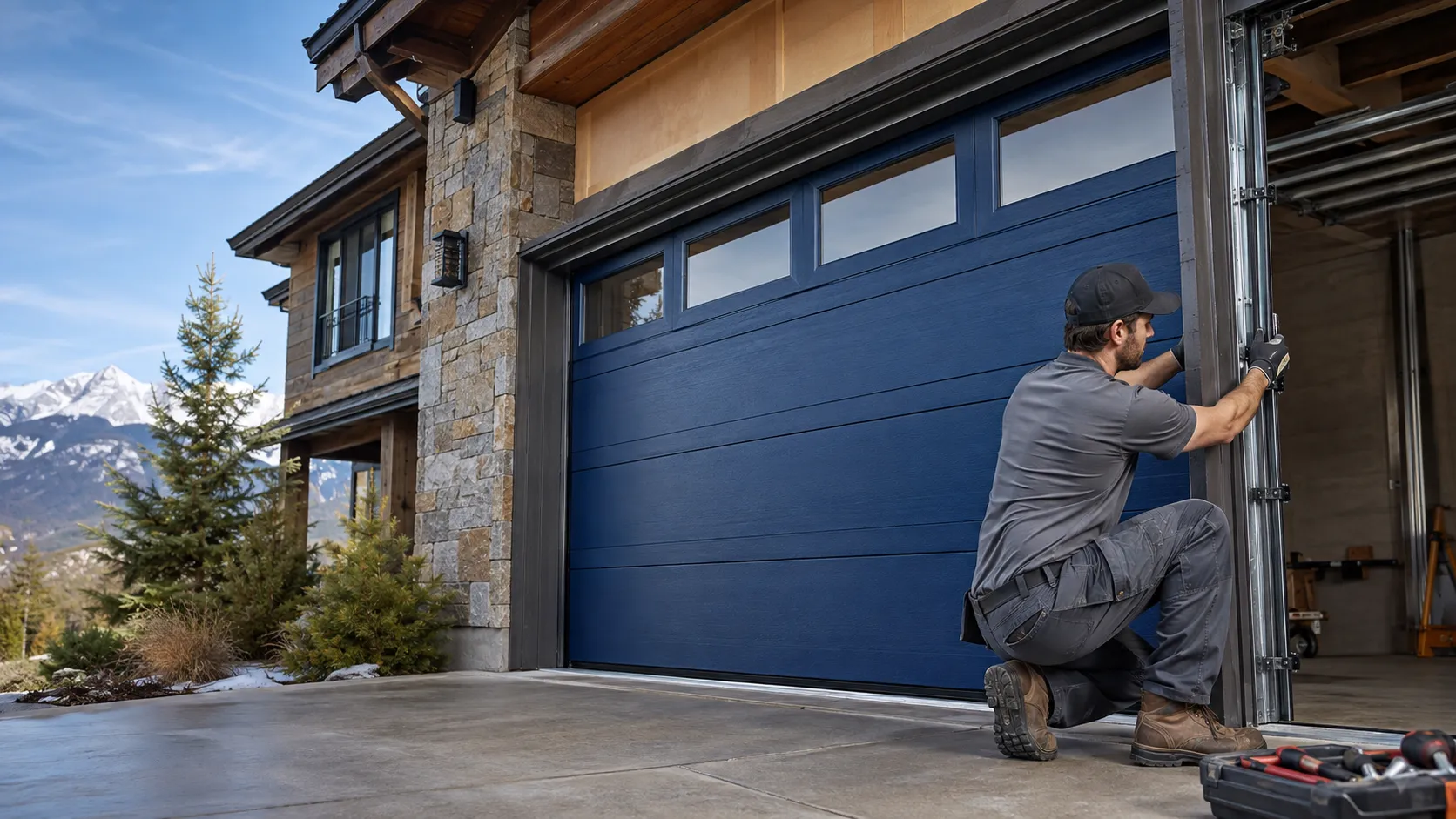
Rigby's housing stock centers on 1978, which puts most doors in this town well past the point where the original track and rollers are still doing their job right. A door that's jumped its track almost always did it because a roller wore down enough to let the panel walk sideways under load, or because a track bracket loosened over four-plus decades of the door slamming into it. The fix starts with getting the door back on its track without forcing bent rail further out of true, then checking every bracket bolt along the run. If the track itself is bent, bending it back is a temporary patch - replacing that section is the real fix. This isn't a five-minute reset job on a door this age; expect the tech to pull the door most of the way off the rail to check hinges and rollers before calling it done.
Why This Fails Locally
A house built in 1978 in Rigby has had roughly forty-five winters of temperature swings working on steel track and galvanized hardware, and a lot of that hardware is still the hardware that came with the house. Idaho's cold climate band means the grease in old rollers gets stiff every winter, and stiff rollers bind rather than roll - that binding is what walks a door off true over years, not weeks. Rigby sits 14 miles out from Idaho Falls, far enough that a homeowner here is usually dealing with a door that's been slightly off for a while before it finally jumps, rather than catching it early. With roughly 1,958 households in this area, a fair number of them are sitting on the same original track from the late '70s, quietly wearing the same way.
Where This Job Goes Sideways
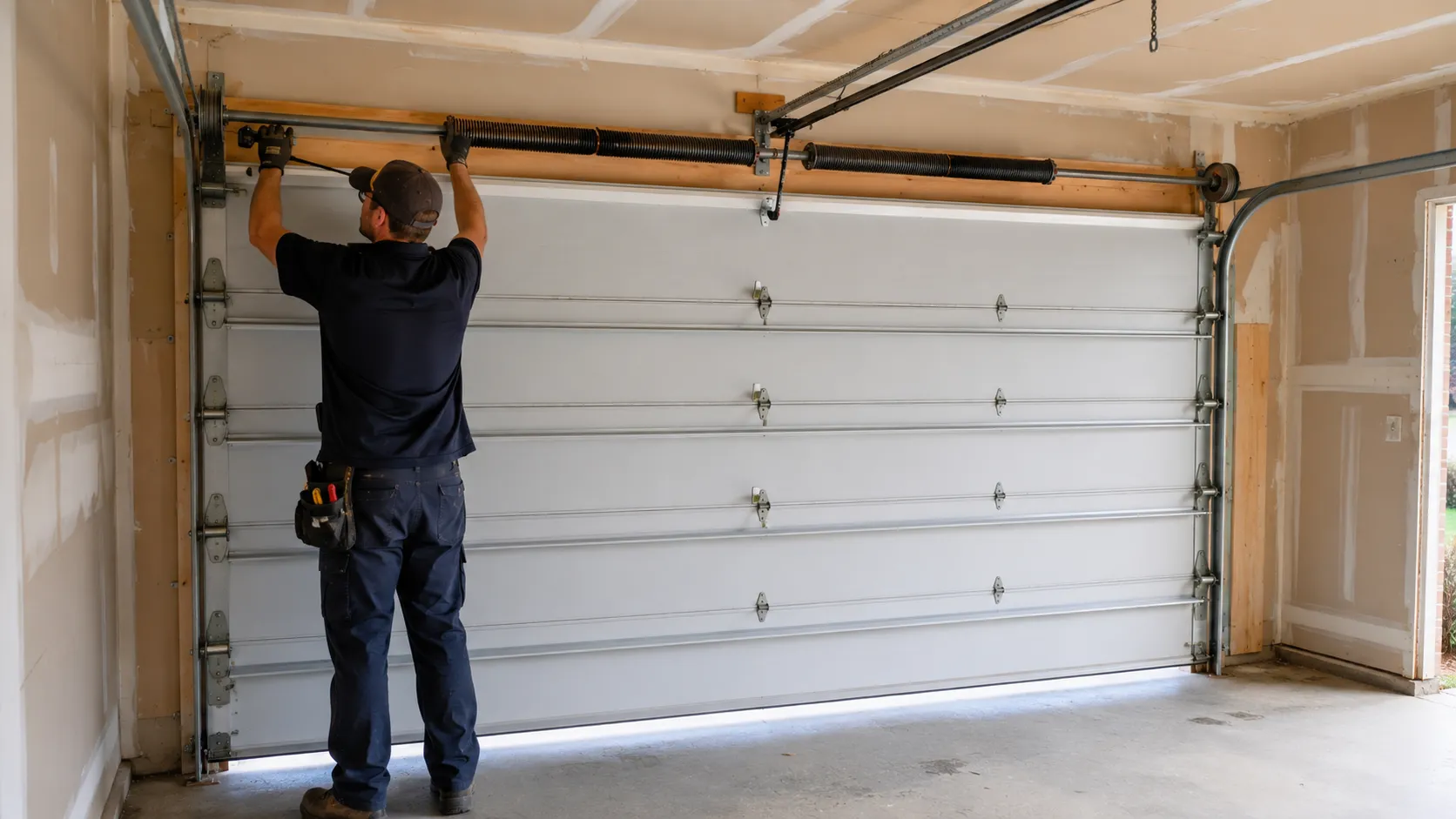
The complication isn't usually the track - it's finding out the door came off because a cable frayed or a spring lost tension first, and the track damage is the symptom, not the cause. On original 1978 hardware, a spring that's never been replaced is on borrowed time regardless of the track issue in front of you. Another way this goes sideways: a homeowner tries to force the door back onto the rail themselves, and the panel gets bent at the point where it caught. A bent panel on an otherwise sound door usually isn't worth replacing the whole door for, but it does mean that section stays visibly dented even after the track's fixed.
Doing It Yourself
If the door is only slightly off track and the opener still lifts it partway, you can sometimes reseat a roller back onto the rail by hand with the door manually operated and the opener disconnected. Do not do this with the door under spring tension you're not sure about - a spring on a door this age, never serviced, is not something to test your luck against. If the door won't move, or moved and caught halfway, that's a call, not a DIY attempt. The honest limit here: once a track bracket has pulled loose from 45-year-old framing, redriving the same screws into the same worn holes doesn't hold. That's a job for the tech's hardware, not a homeowner's cordless drill.